Kayaköy Ghost Village: History and Cultural Significance
Prime Turist local team · Updated: September 2026 · 9 min read
Kayaköy ghost village is a settlement in the Fethiye district of Muğla and one of the most intriguing historic sites in Turkey. Almost completely abandoned after the 1923 population exchange, it has since become a kind of museum that bears the traces of past civilisations. To understand Kayaköy's story and why it matters culturally, you have to look at the village's complex history and at Anatolia's multicultural past.
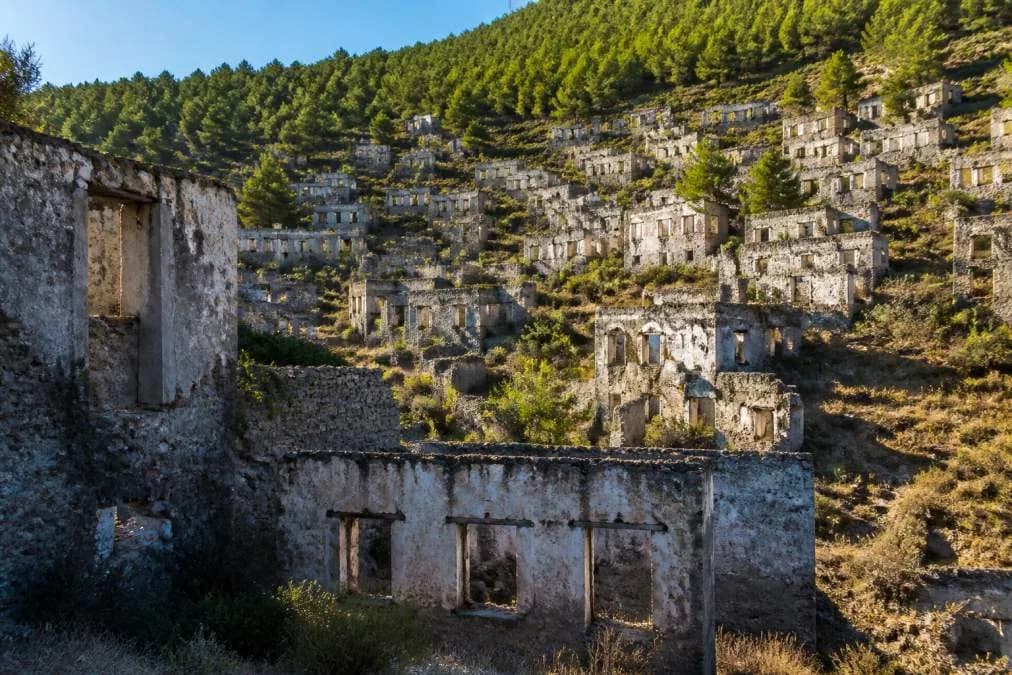
Kayaköy ghost village: historical background
Located in the Fethiye area, the settlement grew in the 18th and 19th centuries into a community where Greek and Muslim residents lived side by side. In Greek times Kayaköy was known as Levissi and was considered one of the most prosperous towns in the Aegean. With its stone houses, narrow streets and religious buildings, it was a fine example of Mediterranean architecture, and the people who lived here made their living from trade, farming and crafts.
Behind Kayaköy's present state lie deep historical ruptures. The population exchange at the start of the Republican era completely changed the village's social fabric, and over time people began to leave. Today, as visitors walk its empty streets, they come across the silent witnesses of a life that once was.
Kayaköy and the population exchange
The Turkish–Greek population exchange agreement signed in 1923 was a turning point in the history of the Kayaköy ghost village. Under this agreement, Muslims living in Greece were moved to Turkey, and Greeks living in Turkey were moved to Greece. Kayaköy's Greek population was also sent to Greece as part of the exchange, and the village was left deserted almost overnight.
After the exchange, Muslim migrants who had come from Greece under the same exchange were settled in Kayaköy. However, the newcomers struggled to adapt to the village's Greek architecture and social structure. Over time the stone houses were neglected; some buildings collapsed and others fell into ruin as a result of natural disasters. The earthquake of 1957 then caused major damage to the fabric of the ghost village.
As time went on, the migrants began moving to more modern, low-maintenance homes. The village's population steadily dwindled, and by the 1980s almost no one was left. Kayaköy was no longer a place to live but an archive of the past. Today, for travellers visiting Fethiye with an interest in history, the village remains one of the most tangible pieces of evidence of Anatolia's complex past.
The ghost village legend: why was it left empty?
Kayaköy did not empty because of the exchange alone; many economic, social and demographic factors lay behind it. After the exchange, the village went through an identity crisis. Its former Greek residents were gone, and the newcomers had only a weak attachment to its heritage. This identity crisis plays a very large part in the story of the Kayaköy ghost village and its cultural significance.
In the mid-20th century, economic opportunities in and around Fethiye began to emerge elsewhere. Fishing, farming and trade shifted to the coast, and villages on higher ground like Kayaköy steadily lost their importance. Young people moved to Fethiye town, İzmir or Istanbul in search of better jobs. This migration shrank the village's population dramatically.
Another reason Kayaköy was left empty was poor infrastructure. Basic services such as water, electricity and roads were never properly developed, which made living conditions difficult. On top of that, adapting the village's stone houses to modern living standards proved difficult and expensive. In the end, it is precisely this emptiness and silence that has given the ghost village its 'legendary' air. Today, this silence and these ruins have turned the village into a historical symbol.
Kayaköy's architecture and historic buildings
Kayaköy's architecture is one of the finest examples of traditional Greek architecture in the Mediterranean. The village's narrow, winding streets, stone houses and church ruins have preserved to this day a picture of what a Mediterranean town may have looked like in the early 19th century. The architecture of the Kayaköy ghost village is a physical reflection of its social and economic history.
The houses in the village are generally two- or three-storey stone buildings. The ground floors were used for storage or business, while the upper floors were designed as living space. Narrow windows, tall and solid doors and thick walls were all built to cope with the hot, harsh conditions of the Mediterranean climate. The roofs were covered with red tiles, and in many houses courtyards played an important role in providing ventilation and privacy.
Kayaköy's most striking buildings, however, are its religious ones. The village has the remains of at least two large churches. One is the building known as the Panagia Church. The other is the Hagia Triada Church on the hill. These churches still show the grandeur of Greek architecture, although today only their walls and some remains of columns survive. The cultural significance of the Kayaköy ghost village lies precisely in preserving and documenting these historic buildings.
What to see and explore in Kayaköy
For travellers visiting Fethiye with an interest in history, the Kayaköy ghost village is not to be missed. Exploring the village is like travelling through time: every street corner and every ruined wall has a story to tell. One of the most important historic sites in the Muğla region, the village transports visitors into the world of past civilisations.
The Panagia Church is the first place to see in Kayaköy. Once inside, the holes in the roof and the collapsed walls clearly show the effects of time and neglect. Around the church there are small graveyards and cross markings. This spot represents the spiritual heart of the Kayaköy ghost village.
As you walk through the village's narrow streets, you can glimpse traces of past lives through the doors and windows of the houses. Some houses still contain remnants of furniture, broken pieces of pottery and photo frames. These objects show that the village was abandoned suddenly and painfully. Another building that will catch your eye as you walk around is the Hagia Triada Church, which stands out for an architecture that may date from an earlier period in the village's history.
The best views of Kayaköy are from the points above the village, where you can take in the whole settlement. Sunset in particular, when the sun turns the stone walls of the houses golden, is the ideal time to capture the atmosphere of the ghost village. Because you visit the village on your own rather than on a tour schedule, staying on for sunset is entirely up to you; just plan your ride back in advance.
Why Kayaköy matters as cultural heritage
Although the Kayaköy ghost village is not on UNESCO's World Heritage List, it is extremely important to Turkey's cultural and historical heritage. The village is a living record of Anatolia's multicultural and multi-faith past. The question of what Kayaköy's story is and why it matters is, in fact, directly bound up with the most complex and emotionally charged question in Turkey's modern history.
Kayaköy's cultural value runs far deeper than its physical fabric. The village offers a key to understanding the social changes that took place in Anatolia after the population exchange of the early 20th century. Visiting it brings the pages of history books to life. Detailed information on Turkey's cultural heritage and conservation policies is available in the guidance published by the Ministry of Culture and Tourism.
Preserving the village and passing it on to future generations is an important part of the Muğla region's tourism strategy. The growing number of tourists in and around Fethiye has made historic sites like Kayaköy even more important. A visit to Kayaköy is not just a tourist activity but also a lesson in history and culture. Tourism companies operating in the region play an important role in protecting and promoting Kayaköy's cultural value.
What to know before visiting Kayaköy
A visit to the Kayaköy ghost village calls for a little preparation. The village lies about 13 kilometres from Fethiye town centre and can be reached by car, taxi or the dolmuş minibuses from Fethiye and Hisarönü; you can also walk in along the Lycian Way trail from Hisarönü or Ölüdeniz. A few practical tips before you go will make your visit more enjoyable.
Dress sensibly when you visit Kayaköy. Most of the village is out in the open with little shade, so bring a hat and sun cream to protect yourself from the sun. Comfortable walking shoes are a must, because the streets are narrow, stony and steep. In summer especially, it is wise to bring water and light snacks.
The best time to visit is early in the morning or in the late afternoon. At these times there are fewer tourists and you can better soak up the village's atmosphere. In the middle of the day, especially in summer, the sun can be very strong. Reading a little about the population exchange before you go will help you understand the village's history and architecture better. Kayaköy is not part of Prime Turist's tour programmes: visit the village independently and plan one of our tours, such as the Ölüdeniz boat trip, paragliding or the jeep safari, for another day of your holiday.
When holidaying in the Fethiye area, make the Kayaköy ghost village one of your must-sees. It is not just a historic site but also a unique destination for photography enthusiasts. More information is available in guides to Fethiye's history and tourism. Discovering this hidden treasure of Muğla means witnessing Turkey's rich cultural heritage up close.
The Kayaköy ghost village is one of Fethiye's most impressive historic sites, and every moment you spend here opens a window onto Anatolia's complex history. Visiting the village is not just about taking photos; it means stepping into the world of past civilisations. On a holiday in Fethiye, exploring cultural sites like Kayaköy will make your trip more meaningful. Pair your own day in Kayaköy with Prime Turist tours on other days, such as the Ölüdeniz boat trip, paragliding or the jeep safari, for a well-balanced holiday. Start planning now and discover the best and most affordable tour options in the Fethiye area!
Frequently asked questions
Why is Kayaköy called a ghost village? Kayaköy is called a ghost village because, after the 1923 population exchange, its Greek population migrated to Greece and over time the village emptied completely. Although hundreds of stone houses and church ruins still stand today, the village is no longer a living settlement but has become a historic monument. These empty buildings and silent streets create an atmosphere that visitors find captivating yet full of melancholy.
What is the history of the population exchange in Kayaköy, and how did it happen? Following the 1923 Treaty of Lausanne, a population exchange took place between Turkey and Greece. Kayaköy's Greek population migrated to Greece as part of this exchange. Although Muslims who came from Greece under the same exchange were settled in the area during this period, for various reasons no permanent community took hold in Kayaköy. This historical event is the main reason Kayaköy became an empty village.
What is Kayaköy's cultural and historical significance? Kayaköy is a living witness to the transition from the Ottoman era to the Republican era. The village's architecture bears the traces of Greek civilisation in Anatolia. Kayaköy preserves the traces of the population exchange, one of the most significant events of 20th-century history. The village has also inspired the worlds of art and cinema and has served as a filming location for many films.
Which buildings in Kayaköy are most striking? The most striking buildings in Kayaköy are its two churches, hundreds of stone houses and various religious buildings. The Upper Church and the Lower Church are examples of Byzantine architecture. The houses were built in the typical Anatolian Greek style, with narrow streets and stone-walled buildings. These architectural features reflect the Greek way of life in the village in the 18th and 19th centuries and take visitors on a journey back in time.