Sun Protection on a Fethiye Boat Trip: Top Tips
Prime Turist local team · Updated: September 2026 · 7 min read
Sun protection is the most practical thing to get right on a Fethiye boat trip, because a few careless hours at sea can ruin the rest of your holiday. Every season we see the same mistake: people bring their beach habits out to sea. On the water, sunlight bounces off the surface, so it reaches you from above and below, and your skin burns much faster than it would on land.
Why Sun Protection Matters So Much on a Fethiye Boat Trip
The worst part is that sunburn usually only shows up in the evening, back at the hotel. By then there's not much you can do.
Note: the biggest mistake is skipping sun cream on the first day because ‘it's cloudy anyway’. Thin cloud lets a large share of UV through, and the reflection off the water adds to the risk. The result: you spend the second day of your holiday in your hotel room.
Why Does the Sun Feel Stronger at Sea?
The surface of the water reflects UV rays, so the total amount you're exposed to on deck is noticeably higher than it would be on land at the same time of day. The breeze and the cool feeling delay the moment you notice your skin heating up, and sunburn usually appears in the evening. That's why sun protection on a boat trip needs a more disciplined plan than a day on the beach.
What to Bring on a Fethiye Boat Trip: Checklist
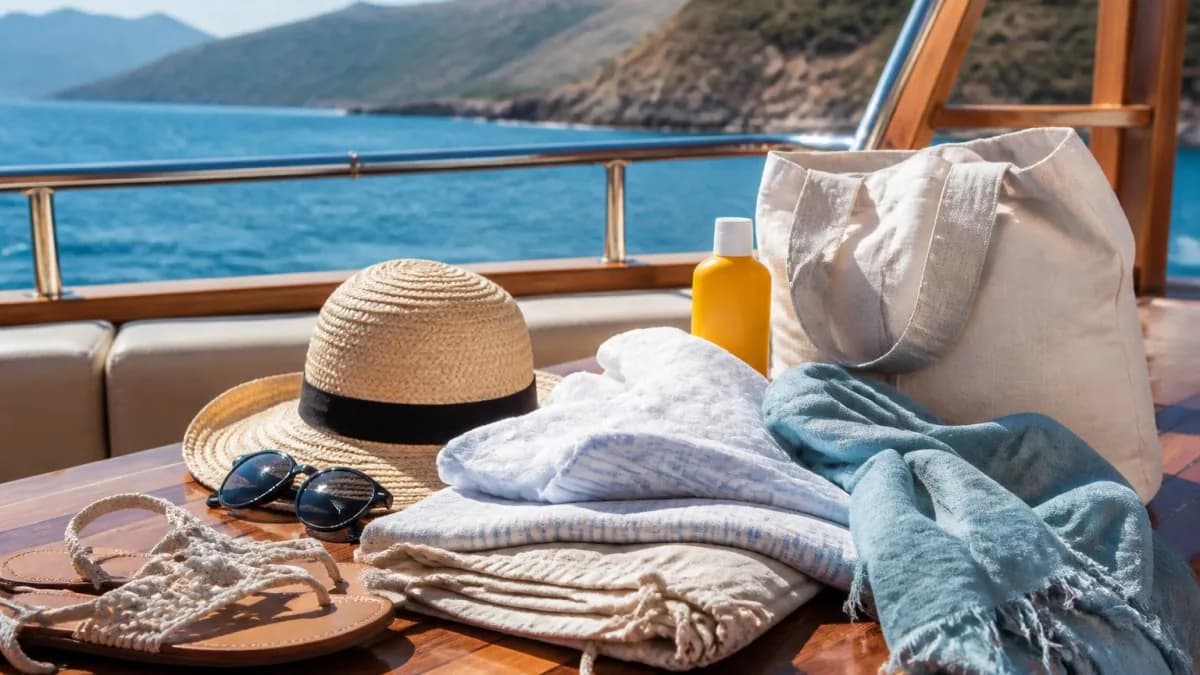
The list of what to bring on a Fethiye boat trip is short but non-negotiable: a wide-brimmed hat, UV-protective sunglasses, a thin long-sleeved top, high-factor water-resistant sun cream, lip balm and a waterproof bag. Get them ready the night before, not on the morning of the trip.
• [ ] Wide-brimmed hat (one that covers your ears and the back of your neck)
• [ ] UV400 sunglasses + a spare pair
• [ ] Thin, light-coloured long-sleeved top
• [ ] Water-resistant, high-factor sun cream
• [ ] Lip balm with SPF
• [ ] Waterproof phone case
• [ ] Spare T-shirt and thin towel
Spares and Practical Fixes
A small spare kit always comes in handy: a spare hat, a spare pair of sunglasses and a pocket-sized sun cream. Hats blowing away in the wind, sunglasses falling into the sea and sun cream tubes covered in salt water happen all the time on boat trips. Keeping them in a separate bag also stops them getting squashed next to your wet swimsuit.
Tip: don't keep your sun cream in the same bag as your sunglasses and phone. Salt water and sand make the cap slippery and some of the cream ends up wasted. A separate clip-on pocket is the most practical solution.
How to Protect Yourself from the Sun in Fethiye: Shade, Clothing and Timing
Sun protection in Fethiye rests on three things: shade, clothing and timing. At midday, move under the awning rather than staying on the open deck; wear UV-protective clothing; and use the lunch break around midday to get out of the sun. Most bays around Fethiye have little tree shade on the shore, so you need to find your shade on the boat.
Protection · When · Effect
Awning and shaded areas · Between 11:00 and 16:00 · Cuts direct exposure
Thin long-sleeved clothing · All day, especially at midday · Acts as a physical barrier
Hat and sunglasses · Throughout the trip · Protect your face, neck and eyes
Sun cream (every 2–3 hours) · Including after every swim · A buffer against reflected rays
Because the sea along the Muğla coast feels refreshing, people stay out in the sun for hours; that cool feeling is the biggest trap when it comes to sunburn.
Choosing Sun Cream: SPF, Water Resistance and How to Apply It
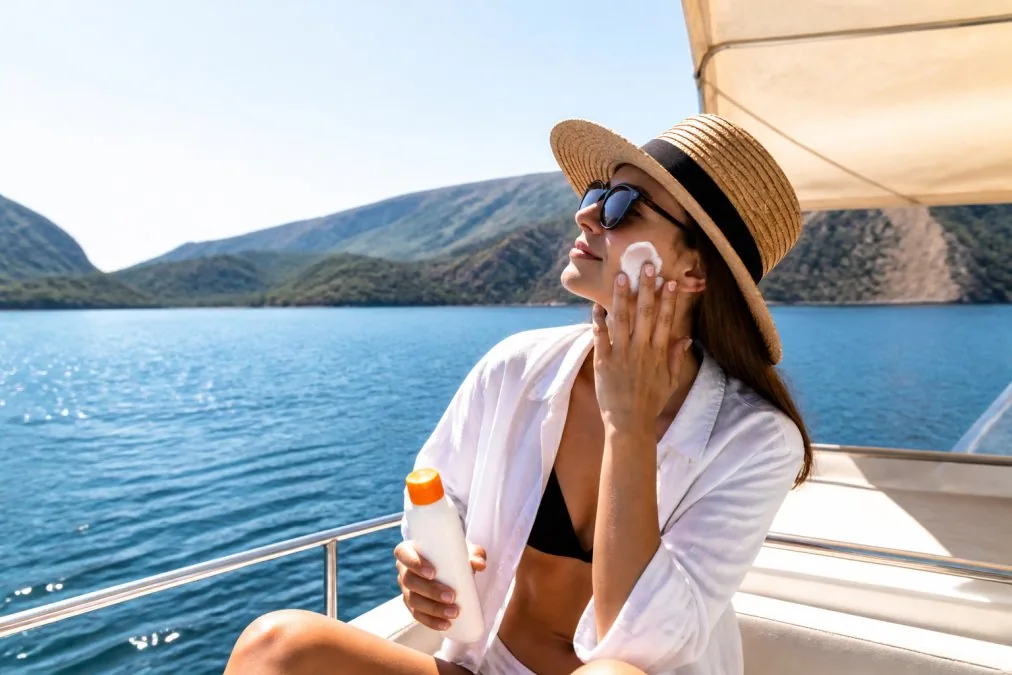
Choosing sun cream is less about the factor on the label and more about how often you apply it. A water-resistant, broad-spectrum cream of at least SPF 30 does the job, but you must reapply it after every swim. Most people put it on once in the morning and forget about it. That's the most common mistake on a boat trip.
Practical rules for applying it:
• Put it on 20–30 minutes before you set off
• Don't skip your face, ears, the back of your neck and the tops of your feet
• Reapply after every swim
• Reapply after drying off with a towel
Special Products for Your Face and Lips
The skin on your face is thinner than on your body and gets irritated faster by salt water. Use an oil-free, non-comedogenic product on your face and an SPF lip balm on your lips. Lips are the most often forgotten and the first to crack.
In short: on a boat trip, sun cream goes on several times during the day, not just once. Whatever the factor, there's no protection without reapplying.
A Sun Protection Plan for Children and Sensitive Skin on a Boat Trip
For children and sensitive skin, the plan needs more frequent breaks and more layers than for adults. For children, a thin long-sleeved UV swimsuit, a wide-brimmed hat and breaks in the shade come first. For babies, rely on shade and clothing rather than sun cream; it's best to ask a doctor before using any cream.
A practical plan for families:
1. Everyone puts sun cream on before you set off
2. Keep the shady side of the awning for the children
3. Reapply sun cream after every swim
4. Take a 30-minute break in the shade around midday
For children of around seven to ten, this routine is safe and gives a rhythm that doesn't spoil their fun.
Sunstroke and Sunburn: First Aid
Signs of sunstroke are dizziness, nausea, headache and extreme tiredness. If you see them, get the person into the shade straight away, loosen their clothing and give them plenty of water. With serious symptoms, tell the crew immediately so they can arrange medical help. For mild sunburn, a cool shower, plenty of fluids and moisturiser are enough.
What not to do:
• Don't press ice directly onto the burn
• Don't pop blisters
• Don't add to dehydration with alcohol and caffeine
In Türkiye, the emergency number for medical help is 112; in a serious situation, don't waste time.
Conclusion: Stay Protected and Enjoy Your Trip
Sun protection on a Fethiye boat trip comes down to a simple routine: use the shade well, wear the right clothes and reapply your sun cream regularly. These three habits stop you spending the rest of your holiday with sunburn. On our boat trips around the bays and islands of Fethiye, lunch is served on board and there's shade on deck when you need a break from the sun, so you can set the pace of your day. Plan your trip today!
Frequently asked questions
What should I look for in a sun cream for a Fethiye boat trip? Choose a water-resistant, broad-spectrum (UVA and UVB) cream of at least SPF 30. Sweat and seawater wipe it off quickly, so reapply every 2 hours and always straight after swimming. Put it on 20 minutes before going out in the sun, and don't neglect easily missed areas such as your face, ears, the back of your neck and the tops of your feet. For sensitive skin, fragrance-free products with mineral filters cause less irritation.
How can I avoid sunstroke on a boat trip? Stay in the shade when the sun is strongest, between 11:00 and 16:00, wear a hat and sunglasses and drink plenty of water. Avoid alcohol and heavy meals; drinks with electrolytes, such as salty ayran or mineral water, help. If you start to feel dizzy, sick or sweat heavily, move into the shade straight away, put a wet towel on and tell the crew. If the symptoms don't pass, you may need medical help.
How should I protect children from the sun in Fethiye? For children over 6 months, use creams with physical filters (zinc oxide or titanium dioxide); chemical filters can cause reactions on sensitive skin. A UV-protective swimsuit, a wide-brimmed hat and sunglasses are a must. Build a routine of sitting in the shade, drinking water often and reapplying cream after every swim and at least every two hours. Keep babies out of direct sun; reflected UV reaches the skin even in the shade.
What's the first aid for sunburn on a boat? Move the person into the shade straight away and apply a cloth soaked in cold (not iced) water. Put on a moisturiser or after-sun containing aloe vera; oily products can clog the pores and trap the heat. Give them plenty of water; a simple painkiller can help with the pain. Don't pop blisters, as this risks infection. If the burn is large, or there's a fever or dizziness, tell the crew and see a doctor if needed.