Fethiye Local Food Route: A One-Day Guide
Prime Turist local team · Updated: October 2026 · 10 min read
A local food route in Fethiye is a one-day plan that starts with a warm bazlama in the morning and ends with dinner in a garden restaurant, done on foot with the odd short drive. A good route starts in one neighbourhood, follows the natural order of the day's meals and focuses on one thing at each stop. Start at around 08:00 and, with lunch and an afternoon break, you'll finish comfortably by early evening. Put the stops in geographical order and do the town centre in the morning, as traffic builds in the afternoon. Four or five unhurried stops make a far more satisfying day than trying to fit in more. Street-food stalls are at their liveliest in the morning, and the route is calmer on a weekday, as finding a table in the centre is harder at weekends.
Fethiye's Local Food Route: Where to Start
This route is a one-day plan around Fethiye, the seaside town in Muğla: it starts with a warm bazlama on the street in the morning and ends with dinner at a garden table, done on foot with the odd short drive. At Prime Turist we notice that many of our guests leave their food plans until the last minute, around their tours, yet good local food deserves a day of its own. Below we explain where to start and the best order for the stops.
A good route follows three rules: it starts in one neighbourhood, it follows the natural order of the day's meals, and it focuses on one thing at each stop. These are easy to follow in Fethiye, because the centre and the Babataşı, Cumhuriyet and Tuzla neighbourhoods are close together. Start at around 08:00 and, with lunch and an afternoon break, you'll finish comfortably by early evening.
Tip: rather than picking stops at random, put them in geographical order. Traffic in Fethiye builds in the afternoon, so do the stops in the centre in the morning and leave the seafront for later in the day; it will save you hours.
What to Eat in Fethiye: The Essentials
In short: fresh seafood, vegetable dishes cooked in olive oil, bazlama and dishes made with wild greens. The area is known for its farming and for the quality of its fresh fruit and vegetables, and you'll taste that on almost every table.
When you plan your route, balance three groups of flavours:
• Seafood: squid, sea bream, sea bass and, in season, octopus.
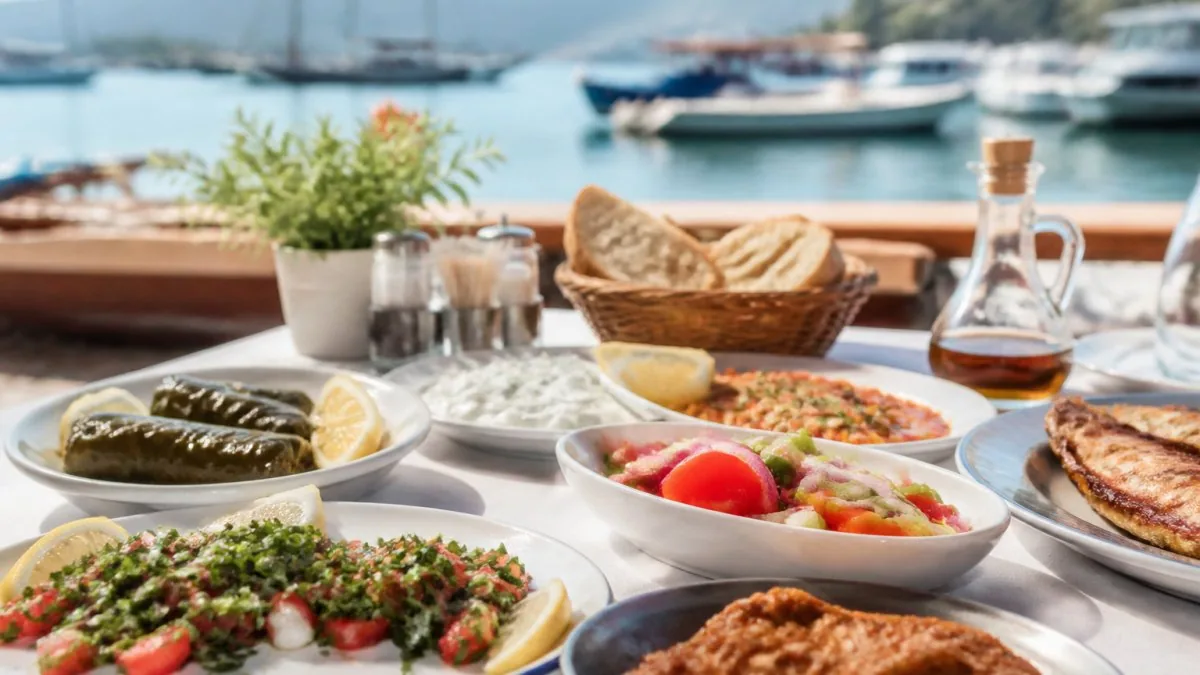
• Olive-oil dishes (zeytinyağlı): artichokes, green beans, stuffed vine leaves (sarma) and sautéed wild greens.
• Breads and pastries: bazlama, gözleme and warm bread at breakfast.
If you want to try everything in one day, keep portions small. Many places in Fethiye are happy for you to share plates, which saves money and lets you fit in more stops. If you're in town on a Tuesday, the weekly market is a great place to see the local produce and try gözleme fresh from the griddle.
Traditional Dishes of Fethiye
Fethiye's traditional cooking combines the olive-oil-based style of Aegean cuisine with local wild greens and seafood. Many dishes still follow home and village cooking traditions, and they're as much a part of the area's culture as its ruins.
These are the dishes you'll see most often:
• Wild greens (ot yemekleri): gathered according to the season and cooked with onion and olive oil.
• Artichokes in olive oil: at their freshest in spring.
• Stuffed courgette flowers (kabak çiçeği dolması): on menus from early summer.
• Fresh fish: grilled or steamed and simply prepared.
To get to know the local cooking better, ask for the dish of the day at a traditional lokanta; it's the easiest way to taste these dishes as locals eat them.
Fethiye Street Food: Snacks on the Go
Fethiye's street food is about quick snacks eaten standing up rather than sit-down meals, with bazlama, gözleme and tantuni leading the way. Stalls are at their busiest in the morning, many open early and most keep going until late afternoon.
Three practical rules make street food easier. First, choose the busy stall: a steady stream of customers usually means fresh ingredients. Second, while you wait for your order, watch what's being cooked and when. Third, eat it hot: bazlama and gözleme lose their texture as they cool.
Note: if a stall sells both sweet and savoury, the oil and griddle may be shared. If you want something sweet, a separate stall usually gives a more consistent result.
The Stops on the Route, One by One
The route is made up of five types of stop, all within reasonable reach of each other in central Fethiye, laid out here as a morning start. We deliberately don't name individual businesses: places open, close and change from season to season, so treat these as types of stop and choose on the spot or ask locals for their favourites. If you're driving, allow extra time for parking in the centre.
Breakfast: a garden café
Start with a slow breakfast at a garden café or bakery in Cumhuriyet or the centre. A Turkish breakfast of cheese, olives, tomatoes, cucumber, eggs and fresh bread, or simply a warm bazlama with butter and honey, sets you up for the day.
A note: menus, opening hours and prices change during the season. Call ahead to check opening times and, if you're a group, book a table.
Lunch: an esnaf lokantası
For lunch, look for an esnaf lokantası, a traditional tradesmen's restaurant where ready-cooked dishes are displayed in trays and you choose by pointing. The streets around Babataşı and the centre are good places to look, and they're easy to walk between.
Don't go by ratings alone: a place with only one or two online reviews can look either perfect or terrible. Look at what's on the counter and how many locals are eating there before you decide.
Afternoon: a Mediterranean-style café
For an afternoon break, a café with a garden serving Mediterranean dishes, meze and fresh juices works well. Places with a large number of reviews give you a much broader picture than those with only a handful.
As these café-bars are made for lighter meals, it makes sense to have a snack here rather than a full meal. Check the address and opening hours before you set off.
Early evening: tantuni and a flexible last stop
The last two stops are a tantuni counter and a restaurant you choose on the day. Tantuni, finely chopped meat cooked on a griddle and wrapped in thin flatbread, is quick and light enough to round off the afternoon.
Our advice for these two: have tantuni as a light finish in the early evening, and choose the final restaurant only after you've seen the menu in person. If you've set your heart on a particular place, ring ahead to check it's open.
Stop · Area · Time of day · Best for
Garden café · Cumhuriyet · Morning · A slow breakfast in the garden
Esnaf lokantası · Babataşı · Lunch · Home-style ready-cooked dishes
Garden café-bar · Centre · Afternoon · Mediterranean dishes, a light break
Tantuni counter · Centre · Early evening · Quick tantuni
Restaurant of your choice · Centre · Flexible · Decide by the menu on the spot
How to Plan a Day Out in Fethiye
Plan your day as a timeline: start with street food between 08:00 and 09:00, carry on with lunch and an afternoon break, and finish in the early evening. The most common mistake is choosing stops without putting them in geographical order. Putting two stops in the same neighbourhood back to back saves you a lot of time.
Here's how to plan it step by step:
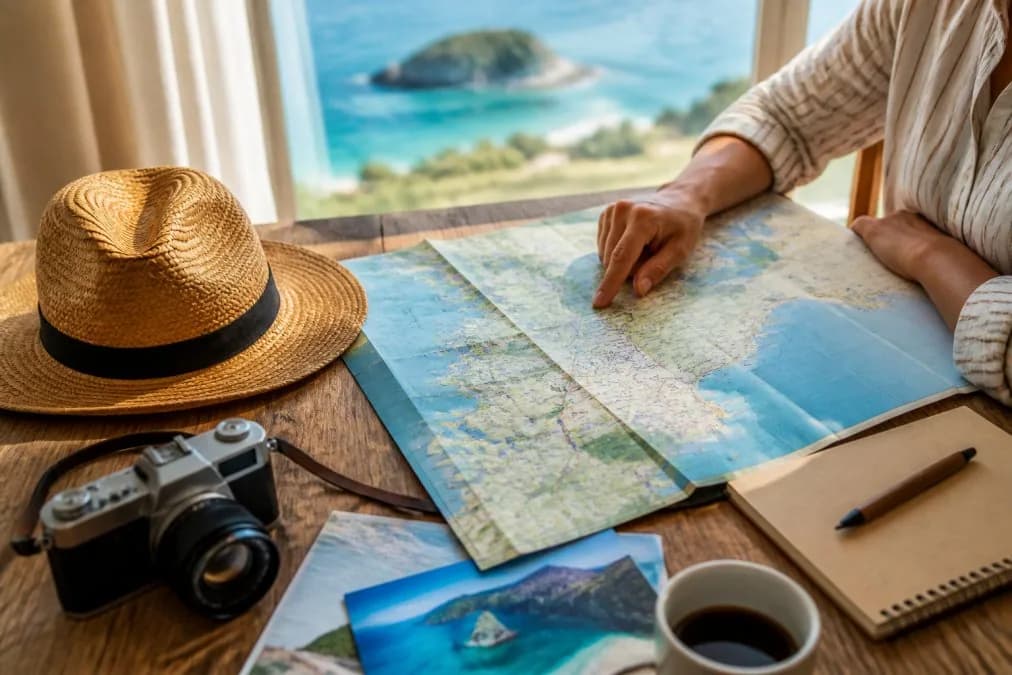
1. Mark the stops on a map and group them by neighbourhood.
2. Set the order of meals: pastries in the morning, a main meal at lunch, a light break in the afternoon.
3. Check walking distances. The stops in the centre are close together.
4. Call ahead to confirm opening times and book where needed.
5. Choose a back-up stop in case somewhere is closed.
If you want to plan your whole holiday this way, our guide Planning a Fethiye Holiday: A Step-by-Step Guide covers activities, timing and itineraries together.
In short: a good food route isn't the one with the most stops. Four or five, visited without rushing and properly tasting something at each, make a far more satisfying day.
Common Mistakes and Practical Tips
The most common mistake is filling up on a heavy lunch and then skipping the stops that follow. Portions in Fethiye tend to be generous, so keep lunch light and leave room for later.
The second is setting off without checking opening hours. Hours can change during the season, and some places close on certain days of the week. A quick phone call saves a wasted journey.
The third is relying only on popular lists. A place with lots of reviews won't necessarily suit you, and one with a single glowing review can be misleading. Read the two together.
Tip: do the route on a weekday. Finding a table in central Fethiye is harder at weekends, while on a weekday you'll get through the same route at a much calmer pace.
One last note: carry water and plan a break in the shade around midday. On the Muğla coast the summer midday sun is harsh, and it affects both your appetite and the rhythm of the day.
Conclusion: A Day Full of Flavour
Setting aside a day for food rather than just the sea shows you Fethiye from a completely different angle. Four or five well-ordered stops, opening times checked in advance and light portions: put those together and you have one of the most memorable days of the holiday. At Prime Turist we suggest combining it with your tours: spend one day on a boat trip, where lunch is served on board, and keep a separate day for the food route, or do the evening stops after a half-day activity such as the ATV safari or paragliding. With boat trips, cultural day trips, nature tours and adrenaline activities to choose from, you can plan the rest of your holiday in one place. For more ideas, take a look at the other guides on our blog.
Afiyet olsun, as they say in Turkey: enjoy your meal!
Frequently asked questions
What should you eat in Fethiye? Fethiye's food comes from the Mediterranean tradition: fresh seafood, olive-oil dishes, wild greens, and street food such as bazlama and tantuni are the highlights. In one day you can try both traditional lokantas and the café-bars along the seafront. The area is known for the variety of its fresh fruit and vegetables, so choosing seasonal vegetable dishes is the best way to get the most from the menu.
What are Fethiye's traditional dishes? Many of Fethiye's traditional dishes come from home and village cooking. Wild greens cooked in olive oil, goat's milk products and local breads and pastries are among the flavours to look out for on your route. Asking for the dish of the day at a traditional lokanta is the easiest way to taste them as locals do.
Where can you find street food in Fethiye? The busy pedestrian streets of the centre are a good place to start, and on Tuesdays the weekly market is the liveliest spot. Bazlama, tantuni and similar snacks are sold throughout the day, and many stalls open early. Going before lunch avoids the busiest hours and gives you the best chance of finding everything fresh.
How do you plan a one-day food route in Fethiye? A good order is breakfast at a café in the centre, then street food towards midday. In the afternoon, take a break at a garden restaurant serving Mediterranean dishes, and finish the day at a bar on the seafront in the early evening. Keeping the stops within walking distance and focusing on one signature dish at each makes the route both enjoyable and relaxed.
Where can you eat local food in central Fethiye? The streets around the Cumhuriyet and Babataşı neighbourhoods are a good place to look for local food close to the centre, with traditional lokantas and garden cafés among them. If you're after Mediterranean dishes, the café-bars with gardens are worth a look. Check opening hours and menus before you go to avoid a wasted trip.