Fethiye Tuesday Market & Local Crafts: A Shopping Guide
Prime Turist local team · Updated: October 2026 · 9 min read
In short: the best way to start exploring Fethiye's handicrafts and local markets is to combine the Tuesday market with the craft and souvenir shops of the old town (Paspatur) in a single route. At the Tuesday market you'll find fresh produce and local food, while the shops offer handmade pieces such as leather, textiles, ceramics, jewellery and wood carving. The Tuesday market is the busiest market day, when locals and visitors come together. Early morning is calmer; the stalls get crowded later in the day. With woven textiles, turn the piece over and check the knots and stitching on the back. Comparing two or three stalls for the same item shows you the difference in quality. Second-hand and flea markets, held from time to time, are a budget-friendly alternative.
Fethiye Handicrafts and Local Markets: Where to Start?
When people think of Fethiye's handicrafts and local markets, the first thing that comes to mind is getting lost among the stalls. At Prime Turist, one thing we often tell our guests is this: shopping in this corner of Muğla is as much a cultural experience as a museum visit.
Fethiye's handicrafts and local markets cover a wide area, from the weekly market to the craft shops of the old town and Çalış. In this guide we explain where to go in a day and what to look out for at the stalls.
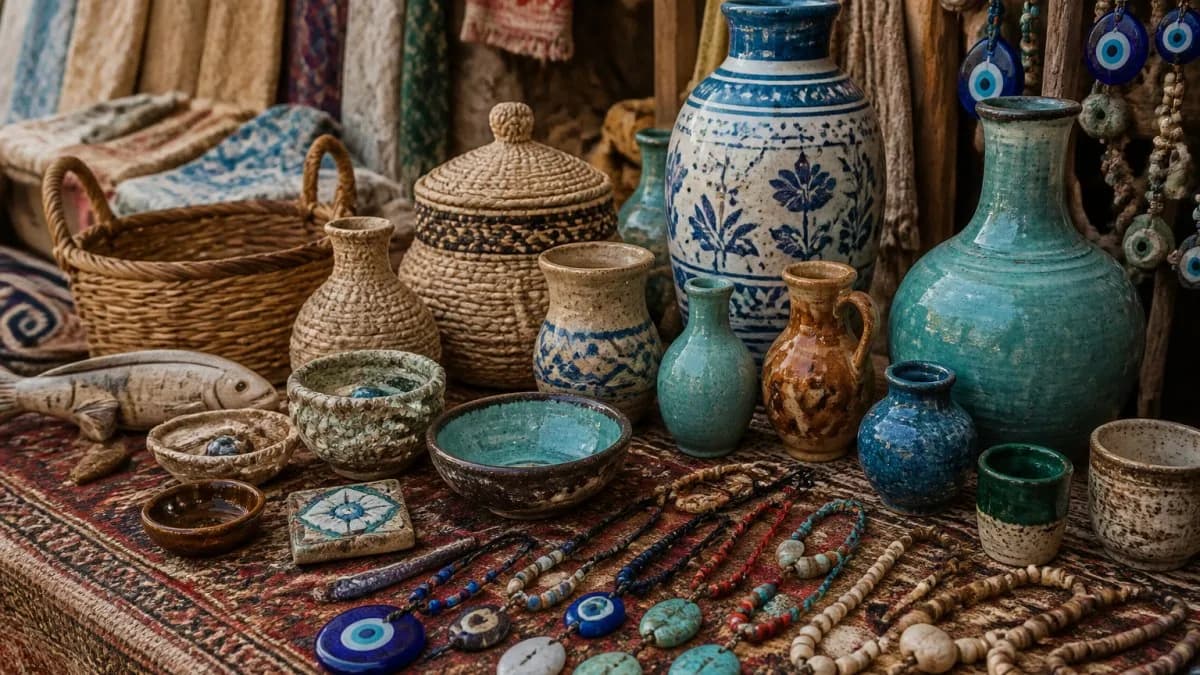
The crafts that stand out in the area are embroidery and needlework, ceramics, handmade jewellery and wood carving; these are the handmade goods you'll see most often in the town's markets and shops.
Below we go through the market days and tips for the stalls one by one. First, let's get the calendar clear.
Fethiye Market Days: Where to Go on Which Day?
Market days are the most important thing to plan your shopping around. The market held on Tuesdays is the town's best-known shopping spot; on other days, smaller neighbourhood markets set up in different districts.
The Tuesday Market and Other Markets
The Tuesday market is Fethiye's busiest market day, when locals and visitors come together. Fresh fruit and vegetables, local produce and handmade goods are sold side by side. The markets held on different days of the week cater both to local people and to visitors.
If you'd like to see what it's like before you go, you can find walk-through videos of the Tuesday market online. Early morning is calmer; the stalls get busier later in the day.
Farmers' Stalls and the Changing Seasons
Farmers' stalls are where local growers sell their produce without a middleman. As the seasons change, so do the stalls: summer fruit gives way to different produce in autumn.
To get a feel for these changes in advance, market photos and videos shared on social media give you a good idea. If you plan what to buy according to the season, you won't be disappointed at the stall.
Craft Shops in the Old Town and Çalış: Where to Find Handmade Goods
The craft and souvenir shops of Fethiye's old town (Paspatur) and the Çalış area are the first places to look if you're after handmade goods. You'll find a wide range, from leather and textiles to jewellery and souvenirs.
As you wander around, you'll notice that the difference between two shops selling the same item often comes down to the workmanship. Put machine stitching next to hand stitching and you'll see the difference straight away. Don't hesitate to ask where an item was made; sellers of genuine local work can usually answer that clearly.
If you're curious about the area's cultural heritage, have a look at our guide to the history of Kayaköy, the abandoned stone village near Fethiye. For a traveller interested in crafts, it's a natural next step.
What to Buy in Fethiye: Handmade Goods and Local Flavours
The answer to what to buy in Fethiye falls into two parts: handmade goods and local food. You can find both at the same market, but knowing which stall to look at for what makes things easier.
Textiles, Ceramics, Jewellery and Wood Carving
Weaving and kilim-making are among the region's known crafts. Hand-woven kilims and natural dyes are popular both as gifts and as collector's pieces. Ceramics and handmade jewellery are smaller-budget options that carry just as much local craftsmanship.
With wood carvings, look closely at the finish. Smooth sanding and neat joins at the edges show that the piece has been worked by hand in a workshop.
If you'd like to take home some local flavours, the market is the place: olive oil, honey and local spices are among the most popular buys.
Market Stalls That Support Local Farmers
Stalls run by local farmers are the most valuable part of Fethiye's markets. Buying directly from growers keeps more of the money in the local community and helps keep the region's farming and food traditions alive.
The idea is simple: the fewer middlemen there are between grower and buyer, the more both of them gain. At the stall, ask whether the produce comes from the seller's own garden or farm. If the answer is clear, the seller is very likely the grower.
Muğla is known for its pine honey and olive oil, so look out for growers selling their own.
Fethiye Market Shopping Tips: What to Check at the Stall
Good market shopping comes down to the details. This short list makes things easier at the stall:
• [ ] Check the label or the producer's details
• [ ] With woven textiles, look at the back; that's where the quality of the knots and stitching shows
• [ ] Run your hand over ceramics to feel for cracks in the glaze
• [ ] For jewellery, ask about the purity of the metal and how the stones are set
• [ ] Look for signs of damp or cracks in wooden items
• [ ] For local foods, check the production date and that the packaging is intact
Important: You may see different prices for the same item at different stalls. Comparing two or three stalls before you buy also helps you see the difference in quality of handmade goods.
You can add a second-hand market to your route too. Second-hand and flea markets are held in Fethiye from time to time and offer a different kind of shopping experience; ask locally for dates.
Second-Hand Markets and Other Places to Shop
A second-hand market is a budget-friendly alternative in Fethiye, full of surprises. Rather than handicrafts, you'll mostly find used household goods, books and clothes.
If you want to combine several places in one day, a table helps:
Place · Best for · When to go
Tuesday market · Fresh produce and local food · Tuesday morning
Farmers' stalls · Buying direct from growers · Varies with the season
Old town (Paspatur) and Çalış shops · Handmade gifts · An afternoon or evening stroll
Second-hand market · Budget-friendly finds · When one is on (dates vary)
You can also preview the markets around Fethiye on video before you go; footage like this gives you an idea of the variety of stalls.
Combine Market Day with a Prime Turist Trip
Spending the morning at the market and then heading off on an activity is one of the most efficient day plans in Fethiye. At Prime Turist, you can plan boat trips, safaris and cultural day trips all in one place.
Day boat trips leave at around 10:00 and return in the early evening, so it's best to keep the market and the boat trip for different days. If you'd like an activity after a morning at the market, the ATV safari has a late-afternoon session. We also offer private airport transfers, including from Dalaman, and can combine them with boat trips and safaris in the same plan.
If you're thinking of combining market day with sightseeing, it's worth checking the entry details for museums and archaeological sites in the area first, so you can plan your route around them.
Fethiye's handicrafts and local markets, visited on the right day and in the right order, can turn into some of the most memorable hours of your holiday. With a wide range of trips focused on culture, nature and history, Prime Turist makes it easy to explore beyond the stalls too. Start planning and discover both Fethiye's markets and its bays.
Frequently asked questions
Which local markets are there in Fethiye? Fethiye has markets on different days of the week in different districts, selling fresh fruit and vegetables, local produce and handmade goods. The Tuesday market is the best known, and at many markets you'll also find stalls where local growers sell their own seasonal produce. Second-hand and flea markets are held from time to time for anyone looking for a different kind of shopping. Market days and locations can change, so check the current schedule locally before you go.
Where can you find handicrafts in Fethiye? The best places to look are market stalls and craft shops, especially in the old town (Paspatur) and in Çalış. Embroidery and needlework, ceramics, handmade jewellery and wood carving are common in Fethiye. Before buying, ask whether the item was really made locally; that's the surest way to make your search for handicrafts lead you to the right place.
On which days are Fethiye's markets held? Fethiye's markets are spread across the week and around town; the Tuesday market takes its name from the day it's held and is the best known. Farmers' stalls change with the seasons: what you'll see in September is different from the summer produce. Market days and hours can change from time to time, so confirm the current schedule before you go to avoid finding empty stalls.
What should you look out for when shopping at a market in Fethiye? The most important tip is to ask where a product comes from: buying crafts and produce made by local people also supports rural life in the region. When buying textiles or ceramics, examine the workmanship closely and ask whether natural dyes have been used. For fruit and vegetables, choose what's in season. Going early in the morning rather than at the busiest time gives you a better choice and time to chat with the sellers.
Where can you buy handmade souvenirs in Fethiye? Market stalls and craft shops are the most practical options. Embroidery, ceramics, handmade jewellery and wood carving stand out in Fethiye, and weaving and kilim-making are also among the region's known crafts. The shops of the old town (Paspatur) and Çalış are good places to see these items together. When buying, check that the item was made in Turkey, so your gift really is a local souvenir.