How Long Is a Paragliding Flight in Ölüdeniz?
Prime Turist local team · Updated: July 2026 · 13 min read
To answer how long a paragliding flight lasts, a few factors need to be taken into account. A tandem flight from Babadağ down to Ölüdeniz usually takes 30–45 minutes from take-off to landing. Part of that time is spent working the air and heading towards the landing area; the rest is yours to enjoy the view.
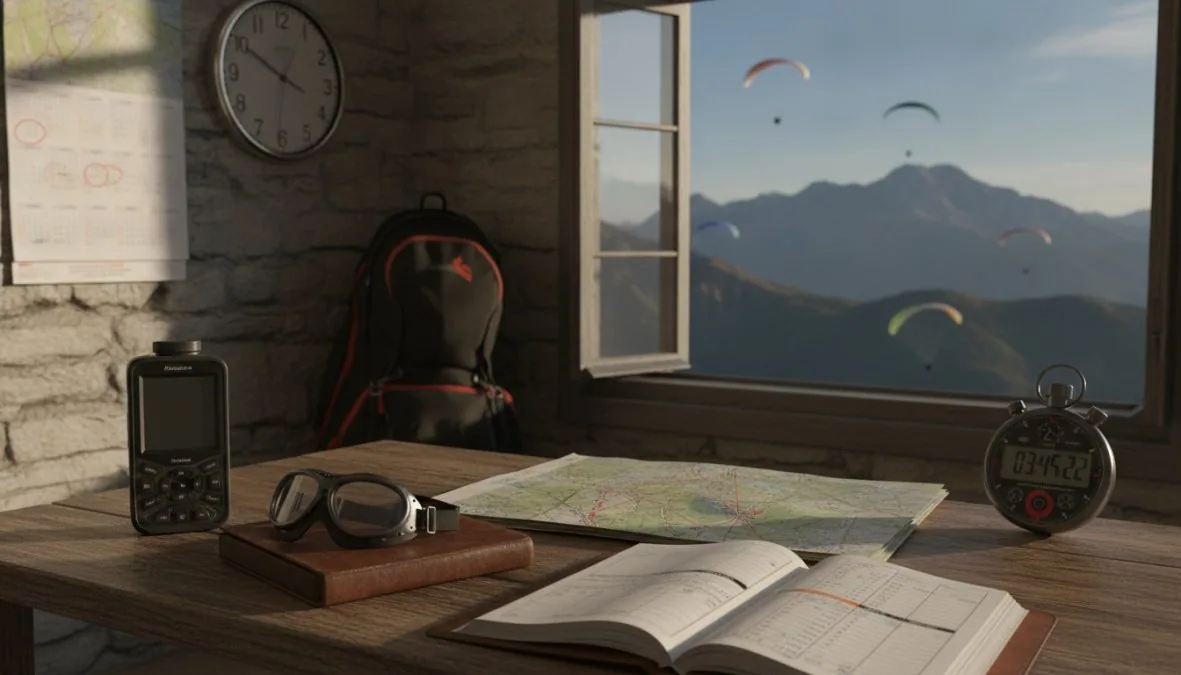
How Long Does a Paragliding Flight Last?
On flights from Babadağ near Fethiye, the pilot's experience and the weather can make the flight a little shorter or longer. A flight usually lasts 30–45 minutes, and on days with good thermals it can stretch to the full 45 minutes. If the wind isn't right, the flight is moved to another time or another day.
If you're planning to go paragliding in the Fethiye area, it's worth knowing that the season and the time of day matter. Early-morning flights tend to be shorter, while the middle of the day usually offers longer flights.
Tip: you're in the hands of your pilot, and experience counts. Experienced pilots read the thermals well and can make the most of the air.
The Standard Flight Time
For a standard tandem flight, the answer to how long you'll be in the air is usually somewhere between 30 and 45 minutes. After launching from the take-off on Babadağ, the pilot works the air for a while, then you glide high above the coast and take in the view before descending towards the beach.
Prime Turist's Babadağ flight aims for this time frame too. On days with strong thermals, the flight gets closer to the top of the range, and you get more sea views and more time in the sky.
Your weight can also play a small part: under the same conditions, a lighter passenger may sink slightly more slowly. But the weather and the pilot's choices have a much bigger influence.
What to Expect on a Tandem Flight
A tandem flight means that someone with no experience flies together with a licensed pilot. How long the flight lasts depends on the pilot and the weather. On tandem flights, safety and control come first, so the pilot adjusts the flight to the conditions of the day.
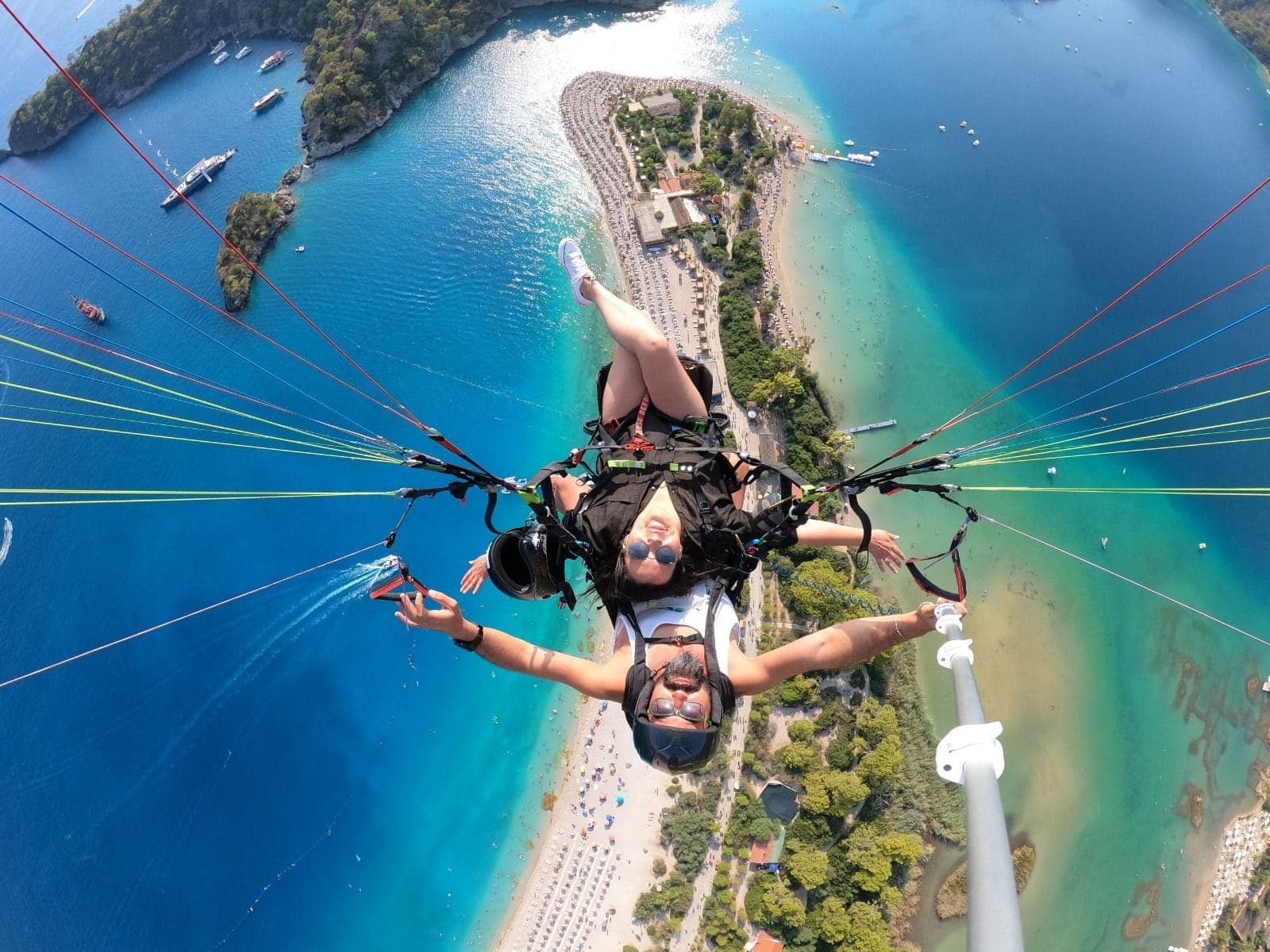
During the flight, the pilot can take photos and videos of you with an action camera. On a 30–45-minute tandem flight you don't just live the experience; with the optional photo and video package (2,000 TL per person, included if you choose a female pilot) you also take home great footage.
Prime Turist's tandem flight from Babadağ lasts 30–45 minutes, depending on the weather. The best thing about a tandem flight is that you need no experience at all: the pilot controls everything.
In short: on a tandem flight, safety and comfort are what matter most. The flight is planned around the passenger's comfort.
What Affects the Flight Time
Many variables play a part in how long a paragliding flight lasts. Understanding them helps you plan your flight better. The weather, the height, thermals and the season are the main factors.
When paragliding in the Fethiye area, the weather is checked before every flight. The pilot assesses the conditions and plans the flight accordingly. Wind, cloud and temperature all have a direct effect on how long you stay up.
Weather and Wind
The weather is one of the most important factors in how long a paragliding flight lasts. Wind affects how quickly the glider loses height, and strong wind can push it down faster and shorten the flight.
The geography of Babadağ has a big effect on the wind. The slope of the mountain deflects the wind upwards, which helps extend the flight. As the wind is usually lighter in the morning, morning flights can be shorter.
Light to moderate wind gives ideal conditions: the pilot can control the glider easily and make the most of the flight. Strong wind can shorten the flight considerably or stop flying altogether. The pilots on the mountain decide on the day whether conditions are suitable.
Rain, fog or low cloud on the mountain can stop flights completely. Safety always comes before flight time.
Watch out: strong wind can lead to a flight being postponed. If the weather isn't right, the flight is moved to another time or day; if it can't go ahead, you can choose a new date or get a full refund.
Height and Losing Height
Losing height is the basic arithmetic of a paragliding flight. A paraglider is always slowly sinking, and the rate depends on the wing, the passenger's weight and the conditions.
The flight starts from the take-off at around 1,700 metres on Babadağ and ends on the beach at Ölüdeniz, close to sea level. That big height difference is what makes a long, scenic glide possible, and by using rising air the pilot can stay up even longer.
The mountains around Fethiye create big height differences. The higher the take-off, the longer the possible flight. And because Ölüdeniz is right at sea level, the landing area is ideal.
The Role of Thermals
Thermals are among the most important natural factors in how long a flight lasts. A thermal is a column of warm, rising air. By finding these columns, the pilot can climb and extend the flight.
Around Fethiye, ground warmed by the sun creates thermals during the middle of the day, and the breeze between land and sea plays a part too. Experienced pilots use these thermals to extend a tandem flight to as much as 45 minutes.
Thermals change with the season. In summer (June–August) they are stronger and more frequent, so flights tend to be at their longest. In winter, thermals are weaker and flights are shorter.
To climb in a thermal, the pilot flies the glider in tight circles. These turns are made deliberately to extend the flight, but never so many as to make the passenger uncomfortable.
How Flight Time Changes with the Seasons
How long a paragliding flight lasts varies noticeably with the season. The climate around Fethiye offers different flying in every season: long flights on strong summer thermals, shorter and calmer flights in winter.
Longer Flights in Summer
In summer (June–August), flights are at their longest. The sun heats the land strongly, creating strong thermals. On Babadağ in summer, tandem flights usually get close to the top of the 30–45-minute range.
Summer mornings, before the thermals build, give shorter flights. The middle of the day and the afternoon offer the best thermal conditions, and flights between about 11:00 and 16:00 have the most potential for a long flight.
The hot, dry summer in this region creates excellent conditions for paragliding. On very hot days, though, strong thermals can make the flight more lively; the pilot adjusts the flight to keep you comfortable.
Flight Times in Winter
In winter (December–February), flights tend to be shorter. The sun heats the ground less, and thermals are weak and rare. Flights still go ahead in winter whenever the weather allows, and a tandem flight still lasts 30–45 minutes, staying closer to the lower end of that range on days with weak thermals.
Winter can also bring stronger winds, and some wind directions can shorten or stop flights. Winter flying around Fethiye is all about safety and control.
But winter has beautiful flying days too. On clear, calm days, a winter flight can be a real pleasure, and paragliding from Babadağ is one of the activities that runs all year round in Fethiye.
In spring (March–May) and autumn (September–November), flight times are in the middle. Flights usually last 30–45 minutes in these seasons too, and as the weather tends to be more settled, many people prefer them.
Is Paragliding Safe?
Done properly, paragliding is a safe sport. However long the flight, safety always comes first. Licensed pilots, equipment checks and training standards are what make paragliding safe.
Safety Measures and the Reserve Parachute
Every tandem flight carries a reserve parachute, ready for use in an emergency. The pilot checks all the equipment before the flight.
The harnesses attach you securely to the pilot. Throughout the flight, you stay clipped into a system controlled by the pilot. Professional paragliding companies in Fethiye follow established safety standards.
The landing area matters too: it needs to be flat and open. Flights from Babadağ land on the beach at Ölüdeniz, which offers just that.
Tip: if you have any questions about the equipment or the safety checks, don't hesitate to ask your pilot before the flight. Safety checks are never skipped.
Licensed Pilots and Training
A licensed pilot is the foundation of paragliding safety. Pilots are trained and have to build up flying experience before they can take passengers.
Tandem flights are flown by pilots who are licensed to fly passengers, which requires additional training and experience beyond flying solo.
Pilots have regular medical and equipment checks, and paragliding training includes both theory and practice.
The Best Places for Paragliding
How long a flight lasts also depends on the geography of where you fly. The Fethiye area is one of the best-known paragliding destinations in Turkey and is famous around the world.
Babadağ and the Fethiye Area
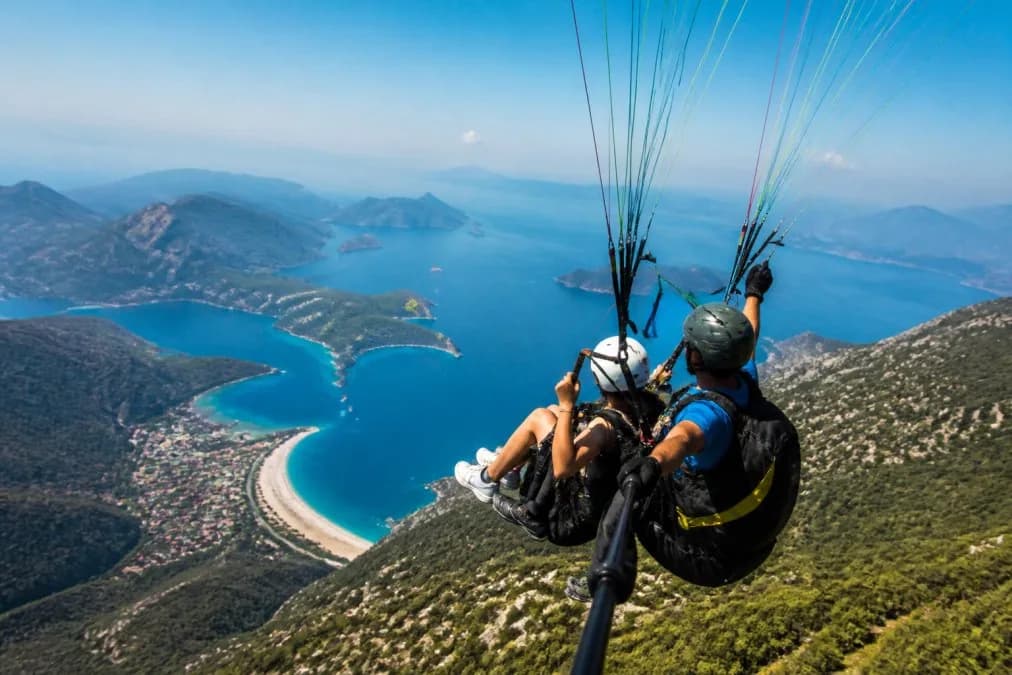
Babadağ is Turkey's most famous paragliding mountain. At 1,969 metres high, it offers excellent take-off areas, and the landing is on the beach at Ölüdeniz. Flights from Babadağ take you over the blue water of the Ölüdeniz coast.
The shape of Babadağ deflects the wind upwards, which creates great conditions for long flights. Its position right by the sea makes the flight unforgettable.
Fethiye is known as the centre of paragliding tourism in Turkey. Professional companies have been offering flights here for many years, and many visitors to Fethiye want to fly from Babadağ.
During the flight you can see the Ölüdeniz lagoon, the beach and the coastline around it. The sea views make the experience even more special.
The Take-off and the Landing Area
The take-off is where the flight begins. The take-off areas on Babadağ are wide and safe. You and the pilot run a few steps together and lift off; on a tandem flight, the pilot takes care of the launch.
The landing area is where the flight ends. At Ölüdeniz you land on a flat, open stretch of the beach. A safe landing is the final step of the experience: the pilot controls it, and you touch down safely.
The landing area is well organised and maintained. During the landing, the pilot tells you what to do, and the landing is usually soft and controlled.
How the Most Is Made of Your Flight Time
To make the most of your time in the air, a few things help: an experienced pilot, checking the weather in advance and choosing the right season.
Using Thermals
Using thermals is the most effective way to extend a flight. The pilot finds a thermal and circles in it to gain height. Thanks to these turns, the flight can last up to 45 minutes.
Spotting thermals takes experience. The pilot reads the shape of the clouds, the movement of birds and the flow of the air. Around Fethiye, the middle of the day is the best time for thermals.
As a passenger, you'll feel it when the pilot catches a thermal: the glider turns in tight circles. Your pilot will tell you what to expect beforehand. Using thermals is the key to a long flight.
Planning with Weather Data
Checking the weather data before the flight helps to fly at the right time. Wind, cloud and temperature all matter for planning, and the forecast for the area helps decide the flight times.
Mornings usually bring calmer wind, but thermals can be weaker. The middle of the day brings stronger thermals, and in the late afternoon they may start to fade.
If you're planning to fly in Fethiye, keep an eye on the forecast. Light to moderate wind is ideal; if rain or fog is expected, the flight may be postponed.
Your Paragliding Experience: First Steps
To go paragliding, there are a few steps to follow: check the age and weight rules, book your flight and get ready for the day.
Age and Weight Limits
There is no age limit for a tandem paragliding flight with Prime Turist. If you have a health condition, let us know before you book, and if you're unsure, check with your doctor.
There is a weight limit. At Prime Turist, passengers up to 100 kg fly at the standard price; for passengers between 100 and 130 kg, a heavy-passenger pilot is arranged at an extra charge. The upper limit is 130 kg. Weight limits matter for the glider's performance and for safety.
Anyone planning a paragliding flight should check these limits. Health issues such as heart conditions or pregnancy can be a reason not to fly.
Booking and Getting Ready
It's best to book your paragliding flight in advance. Prime Turist offers tandem paragliding from Babadağ, and booking is quick and simple: pay a 20% deposit by card or bank transfer, or pay everything on the day. Free cancellation up to 24 hours before the flight.
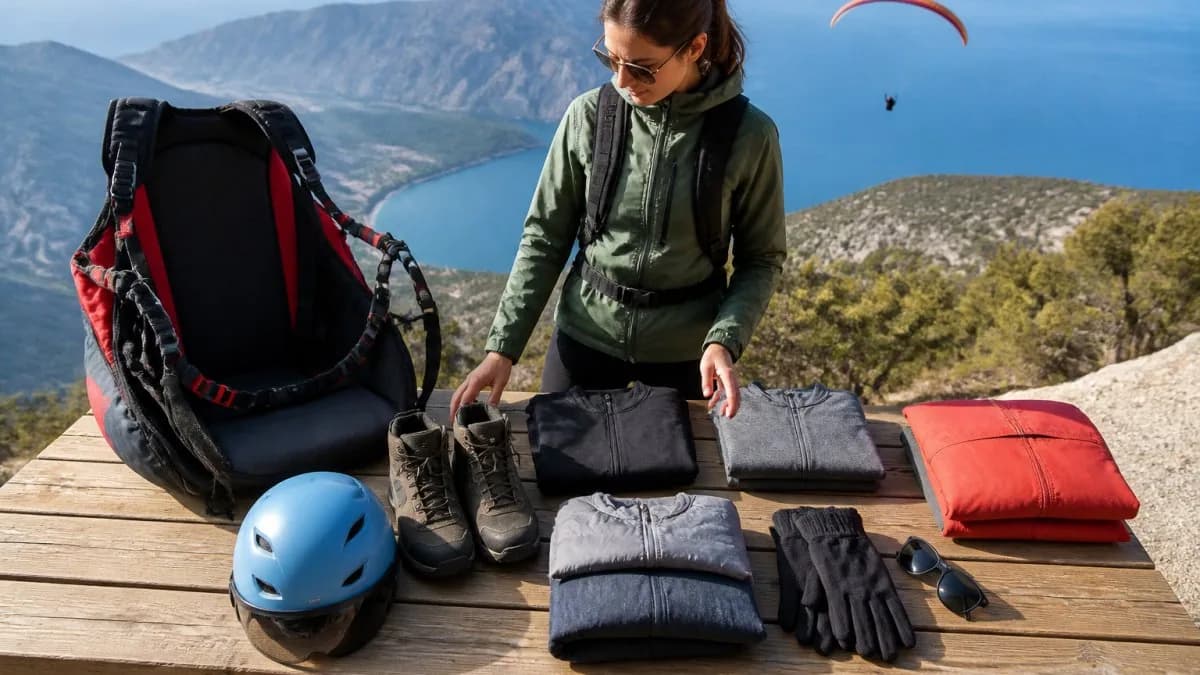
Before the flight you get a short briefing, where the pilot explains what to do during take-off and landing. Comfortable clothes and closed shoes such as trainers are recommended.
On the day, you're taken up Babadağ to the take-off (hotel pickup is optional, at an extra charge), and the take-off, the landing area and the weather are checked. Getting ready takes about 30–45 minutes, and then you fly. The whole outing takes about 4 hours.
Step · Description · Time
Booking · Reserve online or by phone · 5–10 minutes
Getting ready · Putting on the gear and equipment check · 20–30 minutes
Briefing · Instructions from the pilot · 10–15 minutes
Take-off · Launching from the take-off area · 1–2 minutes
Flight · Time in the sky · 30–45 minutes
Landing · Safe landing in the landing area · 2–3 minutes
How long a paragliding flight lasts depends on several factors; a tandem flight from Babadağ usually takes 30–45 minutes. The conditions around Fethiye are excellent for longer flights. With Prime Turist's paragliding from Babadağ, you see Fethiye's most beautiful scenery from the sky. Experienced pilots plan around the weather to give every passenger a full, comfortable flight. To live this adrenaline-filled experience, get in touch with Prime Turist and enjoy unforgettable moments in the sky above Fethiye.
Frequently asked questions
How long does a paragliding flight usually last? A tandem flight from Babadağ to Ölüdeniz usually lasts 30–45 minutes. The flight can be a little shorter or longer depending on the weather, the wind, the height and the pilot's experience. With good thermals, the flight gets close to the top of that range.
What affects the length of a paragliding flight? The main factors are the weather, the wind, the height, thermals and the take-off used. The season plays a part too: longer flights are possible in summer, while winter flights tend to be shorter. The pilot's experience and the passenger's weight can also have an effect.
How does the weather change the flight time? The weather directly determines how long you stay up. With strong thermals, the flight can be noticeably longer. If the wind gets stronger, the glider can lose height faster and the flight can be shorter. The pilot takes the forecast and the conditions on the day into account when planning the flight.
What helps to fly for longer? Making good use of thermals, flying in suitable weather and flying with an experienced pilot all matter. In summer, especially in the middle of the day, thermals are more active. Launching from a high take-off like Babadağ and reading the air well are the keys to a longer flight.