What to Bring on a Fethiye Boat Trip: Full Packing List
Prime Turist local team · Updated: October 2026 · 19 min read
‘What should I bring on a Fethiye boat trip?’ is a question on thousands of holidaymakers' minds every summer – and most people either wear themselves out carrying too much or ruin their day by forgetting something crucial. At Prime Turist we've organised hundreds of boat trips in Fethiye and the Muğla region, and in this guide we set out clearly which items you really need and which supposed ‘essentials’ are just dead weight taking up room in the boat's storage. The list below also covers the family, health and sustainability details that other guides skip. Read on: with the right preparation, a day trip becomes a whole different experience.
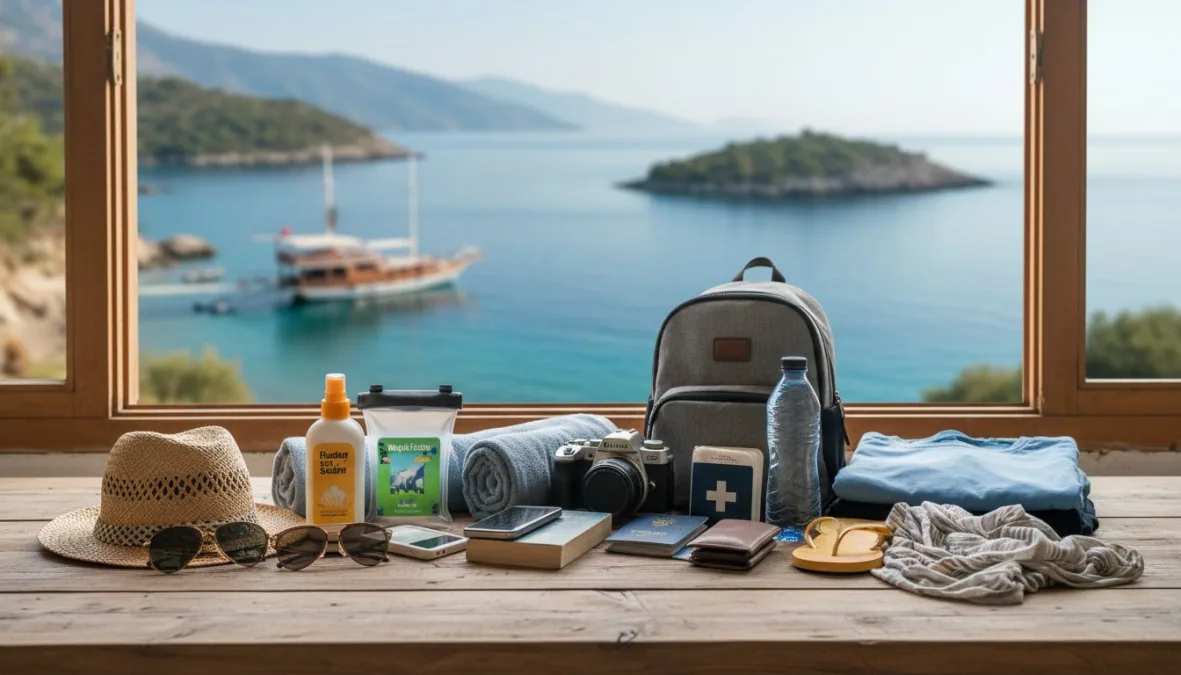
What to Bring on a Fethiye Boat Trip: The Complete Checklist
Getting ready for a boat trip is different from getting ready for a beach day. Space on board is limited, the time between bays is long and Fethiye's Aegean sun is far stronger than you think. In the sections below we look at each category separately, and at the end you'll find a complete checklist for quick reference.
Personal Items You'll Need on the Boat
These are the basic personal items to pack before you set off:
1. Waterproof bag or pouch: Everything can get wet on a boat. A separate waterproof pouch for documents, phone and cash is a must.
2. Spare swimsuit or bikini: Your swimsuit gets wet at the first bay. A dry spare keeps you comfortable for the afternoon swim stops.
3. Beach towel: Choose a microfibre beach towel instead of a standard bath towel; it dries quickly and takes up little space.
4. Personal medicines and a small first-aid kit: Carry the basics for scrapes, insect stings or a headache.
5. Cash: Bay restaurants and small vendors often don't accept cards.
6. Light snacks and water: Even if refreshments are served on the trip, carrying your own water bottle keeps thirst at bay.
7. Photocopy of your ID or passport: Leave the original at the hotel; a photocopy is enough.
Tip: Pack everything into a small, squashable backpack rather than one big bag. Luggage space per person on a boat is very limited, and large bags get in the way of both you and other passengers.
Swimming and Snorkelling Gear
A mask and snorkel are essential kit on Fethiye boat trips. Swimming in the clear water of the bays on the 12 Islands route without a snorkel is like walking into a museum with your eyes shut.
Swimming and snorkelling gear to take with you:
• Your own mask and snorkel set (even if the tour company provides one, your own is more hygienic)
• Swim fins (optional, but handy in bays with currents)
• Water shoes (essential for bays with rocky bottoms; flip-flops won't do)
• Life jacket (bring your own for small children, as the ones on board may be standard sizes)
Most guides get water shoes wrong. Many people turn up in flat beach flip-flops, and on the stony seabeds of the bays near Butterfly Valley (Kelebekler Vadisi) and Ölüdeniz, that choice leads to real pain.
What to Wear on a Boat Trip: Comfortable, Practical Choices
Most people take either too few or too many clothes on a boat trip. The right clothing list is actually quite short.
Must-haves:
• Light, quick-drying shorts or a skirt
• A thin long-sleeved shirt or loose T-shirt (for sun protection)
• Hat: Choose a straw or wide-brimmed style; a baseball cap leaves your neck exposed
• Sunglasses: A UV400 model matters both for eye health and for cutting glare
• A thin cardigan or light jacket for the evening (the deck can get cool on windy days)
Leave behind:
• Jeans or heavy fabrics
• Heels (dangerous on deck, and they damage the surface)
• Lots of outfits (two sets are enough for a one-day trip)
Trainers deserve a separate note: if you have a walk to Fethiye harbour before departure, comfortable trainers are fine, but switch to water shoes on the boat.
Note: Avoid light-coloured clothes. Salt water and sunscreen leave permanent stains on light fabrics. Dark or mid tones are practical and do away with the staining problem.
Choosing Sunscreen and Staying Safe in the Sun on a Boat Trip
In Fethiye the UV index regularly reaches 9–10 between June and September, which is in the high-risk category. On deck, sunlight reflected off the water does far more damage to your skin than it does on land.
What to look for in a sunscreen:
• Go for SPF 50+. SPF 30 isn't enough; protection drops quickly in the water and under reflected sunlight.
• Choose a water-resistant formula. Creams labelled ‘waterproof’ keep protecting you for a certain time even after a swim.
• Use coral- and marine-friendly formulas. Sunscreens containing oxybenzone and octinoxate are harmful to marine ecosystems. NOAA's research on coral reefs and sunscreen chemicals offers comprehensive data on this.
• Reapply every 2 hours. Don't wait after swimming; put it on straight away.
• Lip protection: Lips are among the areas most often sunburnt, yet most people overlook them.
Sunglasses are also an essential part of sun protection. Polarised lenses cut the glare from the water's surface and reduce eye strain, which makes a real difference over hours at sea.
Fethiye Boat Trip Routes: Which Bay Are You Heading To?
Knowing which bay you're going to has a direct bearing on what you should pack. The differences between Fethiye boat trip routes aren't only about distance; the type of seabed, swimming depth, shore access, busy times and how family-friendly they are all matter too.
Find out your route in advance and prepare for it. Many people book a generic ‘boat trip’ without asking about the route – which means turning up at the right bay with the wrong kit.
The 12 Islands Route
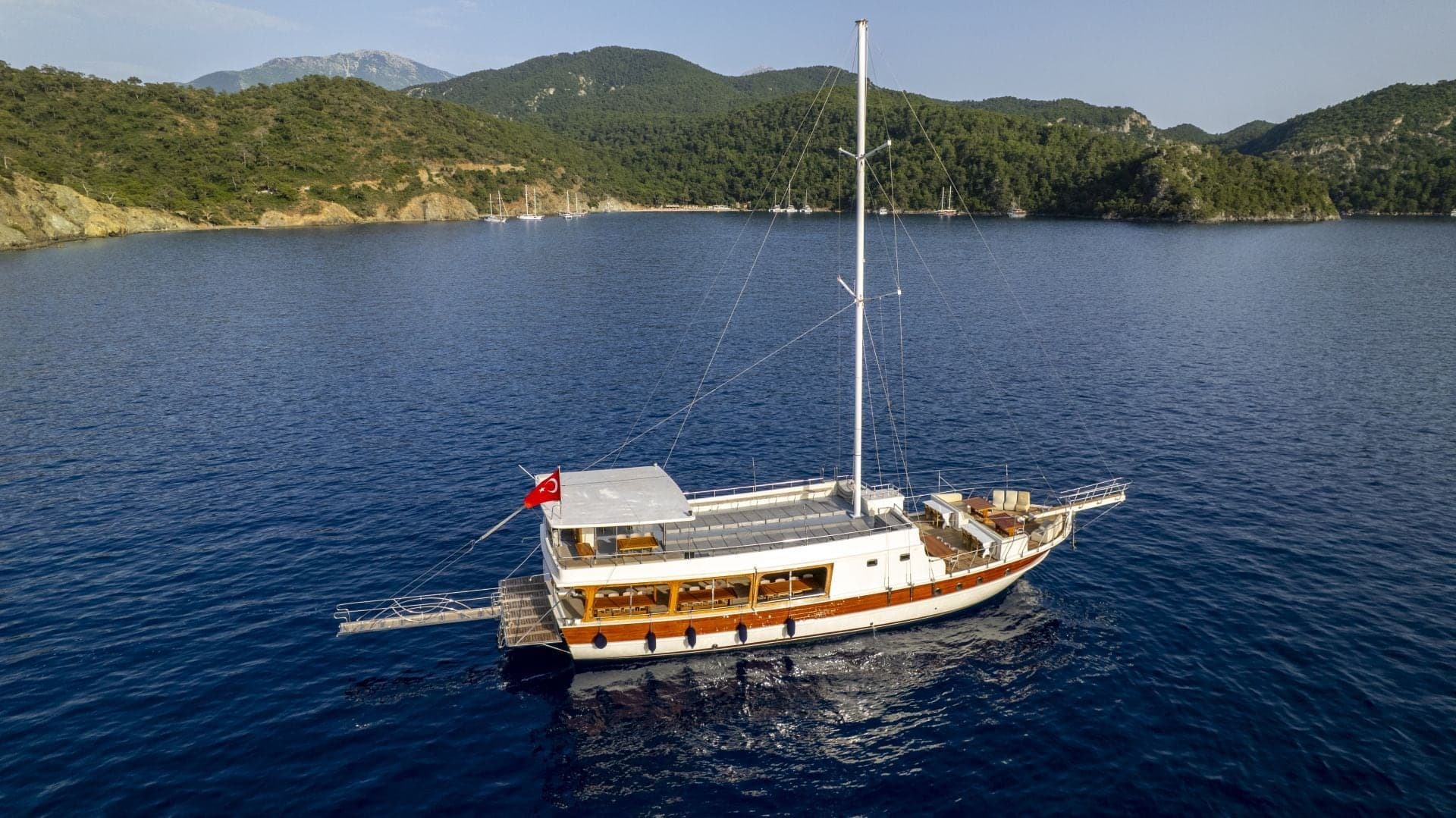
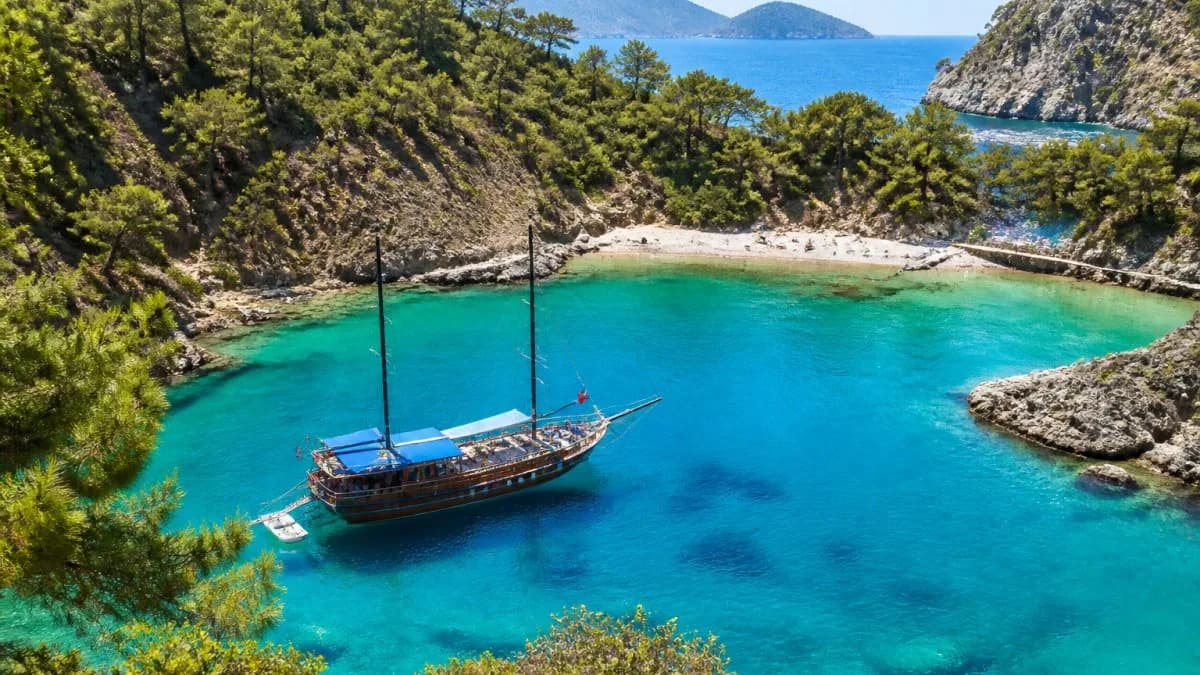
The 12 Islands route is Fethiye's most popular day-trip route. Starting off Göcek, it usually includes stops such as Tersane Island, Hamam Bay, the Yassıca Islands and Cleopatra's Baths. The trip lasts 8–9 hours on average, usually departing between 09:00 and 10:00 in the morning and returning between 17:00 and 18:00.
• Seabed: Mostly stone and rock; some bays have large pebbles and rocks on the bottom.
• Water shoes: Strongly recommended; getting ashore in flip-flops is difficult.
• Snorkel: The marine life in the clear water is this route's biggest draw; a snorkel set is a must.
• Family-friendliness: Medium. Small children need their own life jacket and a UV-protective swimsuit; the crossings between bays take 20–40 minutes, so bring snacks and a few small activities.
• Seasickness risk: Medium to high, as there's an open-sea crossing off Göcek. Take precautions 1–2 hours before departure.
• Crowds: In July and August, Tersane Island gets very busy around midday; trips that leave early catch the quieter bays.
The Butterfly Valley Route
Butterfly Valley lies south of Ölüdeniz; with no road access and usually reached by boat, this bay is one of the most impressive spots in the Fethiye area. Day trips from Ölüdeniz pier usually schedule it as a 1–1.5-hour stop.
• Seabed: Rock and large pebbles; water shoes are essential to get onto the beach.
• Waterfall walk: If you want to head into the valley and reach the waterfall, you'll need light walking boots or sturdy-soled water shoes; this walk can't be done in flat flip-flops.
• Family-friendliness: Harder for small children, as the ground can be tough going; a pushchair or carrier won't be much use. Suitable for children over 5.
• Seasickness risk: There's an open-sea crossing once you leave the Ölüdeniz lagoon; medium risk.
• Crowds: It gets busy around midday; an early-morning stop is quieter.
The Ölüdeniz Route
The Ölüdeniz route starts from Ölüdeniz pier. The lagoon is not a stop on the boat trip, but you can swim there on your own before or after the trip. As it lies within Ölüdeniz Nature Park, there is a separate entrance fee for the lagoon beach; the notes below are for the lagoon beach.
• Seabed: Sand and fine pebbles; the most child-friendly ground of the three.
• Water depth: Relatively shallow inside the lagoon; ideal for small children.
• Snorkel: Visibility in the lagoon is good; a snorkel is recommended but not as essential as on the 12 Islands route.
• Fins: Not needed.
• Family-friendliness: The highest. The sandy bottom, shallow water and calm lagoon conditions make it the safest option for families.
• Seasickness risk: Low, as the lagoon is calm; on boat trips that cross open sea, the risk goes up.
• Crowds: Ölüdeniz beach is one of the busiest beaches in Turkey in summer; it's less crowded early in the morning.
Equipment and Suitability by Route: Summary
Route · Seabed · Water shoes · Snorkel · Fins · Family-friendliness · Seasickness risk
12 Islands · Stone / rock · Recommended · Essential · Optional · Medium · Medium–high
Butterfly Valley · Rock / pebbles · Essential · Recommended · Not needed · Medium (5+) · Medium
Ölüdeniz · Sand / pebbles · Recommended · Recommended · Not needed · High · Low
Tip: When you book, be sure to ask the tour operator these three questions: (1) Which bays will we visit? (2) Are lunch and bay entrance fees included? (3) How big is the group? Small-group private trips offer a much calmer and more flexible experience than crowded group trips.
Families with Children and Seasickness: Special Preparation Tips
For anyone planning a family trip, the standard ‘what should I bring’ list falls short. A boat trip with children needs very different preparation from an adults-only trip, and this is also where seasickness comes in.
Special Checklist for Families with Children
When you take children on a boat trip, add these essentials to the adult list:
1. Their own life jacket (child size): The standard life jackets on board may not fit children. Bring your own.
2. Children's SPF 50+ sunscreen: Choose mineral-based children's sunscreens, which have a different formula from adult ones.
3. Long-sleeved or UV-protective swimsuit: Children's skin burns much faster than adults'.
4. Snacks and extra water: Children react to hunger and thirst faster than adults; don't wait for the refreshments on board.
5. Spare clothes (at least 2 sets): Children get wet every time they go in and out of the water at each bay.
6. A small toy or activity: Crossings between bays can take 20–40 minutes, which can feel long for small children.
7. A sunshade or UV-protective tent: The shade on deck may not be enough for babies and small children.
Tip: Put sunscreen on children at least 30 minutes before the boat departs. Sunscreen needs a little time to take full effect; applying it once you reach the pier is too late.
How to Prevent Seasickness on a Boat
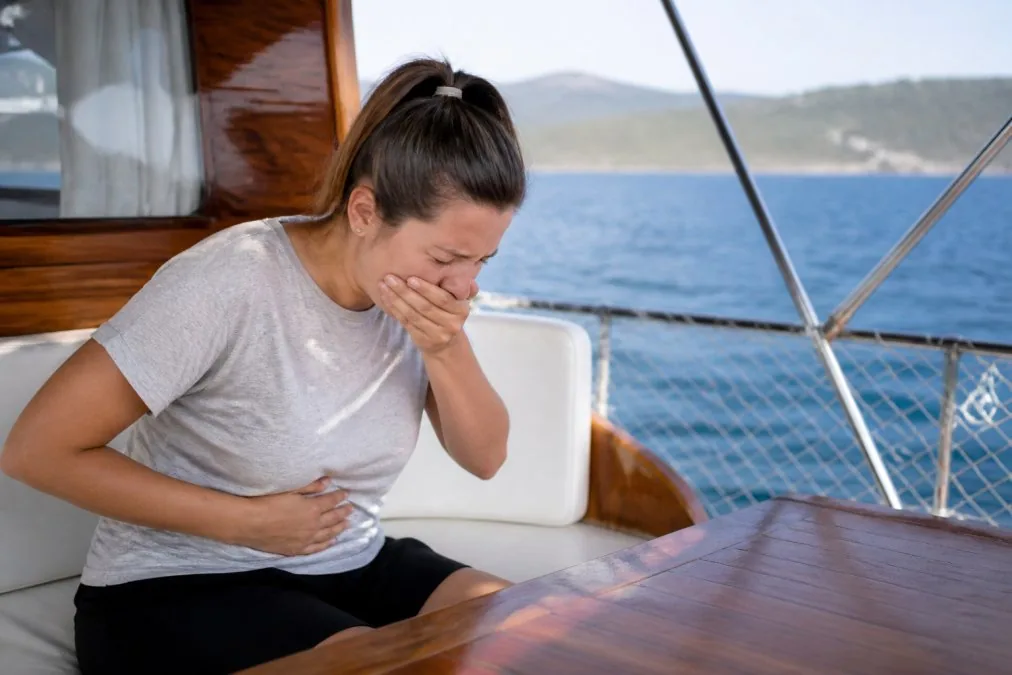
Seasickness is one of the most common problems that can ruin a boat trip. On open-sea crossings both children and adults can be affected.
Seasickness comes from a mismatch between the balance system in your inner ear and what your eyes see. You can't prevent it completely, but the following measures work noticeably well:
• Take seasickness tablets 1–2 hours before departure. Taking them after you set off is usually too late.
• Sit in the middle of the boat at deck level. The bow and stern move the most.
• Look at the horizon. Looking at a phone or a book speeds up nausea.
• Don't set off hungry or too full. A light meal is ideal; avoid fatty, heavy food.
• Snacks containing ginger, or ginger tea, give natural support against nausea. Clinical research on ginger and seasickness backs up this effect.
• Wristband (acupressure band): As it contains no chemicals, it's also safe for children.
Tech, Staying Connected and Sustainable Boat Trip Prep
Here are two topics most guides skip: protecting your phone and its battery, and getting through the trip without harming the environment. Both matter more than you might think.
Power Bank, Waterproof Case and Digital Prep
On Fethiye boat trips the boat usually departs between 09:00 and 10:00 in the morning and returns by 17:00–18:00. Throughout the day your phone is your camera, your map and your way of keeping in touch, so battery life becomes critical.
For your tech kit you'll need:
• Power bank (at least 10,000 mAh): Enough for a one-day trip. There's no way to charge at sea.
• Waterproof phone case: Neck-strap models are practical and secure; you won't have to leave your phone in your bag when you go into the water.
• Offline map: The signal weakens between bays. Download the area on Google Maps in advance.
• Headphones and a playlist: For enjoying the deck on crossings between bays.
If you prefer a camera, a waterproof camera housing or an action camera (water-resistant models, for example) gives much better results.
Sustainable Blue Voyages with Eco-Friendly Gear
A sustainable boat trip is no longer a matter of choice but of responsibility. Fethiye's bays are under serious environmental pressure from visitor numbers that grow every year.
Practical steps for an eco-friendly boat trip:
• Use reef-safe sunscreen. Choose mineral-based creams without oxybenzone or octinoxate.
• Don't bring single-use plastic. Carry a reusable water bottle and snack box.
• Don't throw rubbish into the sea. It may seem obvious, but a significant share of the litter collected on the Muğla coast each year comes from boat trips.
• Don't touch marine life. When snorkelling, avoid touching coral and starfish.
The blue voyage philosophy has deep roots in Turkey's boating culture. Turkey's coastal ecosystem and sustainable tourism guide offers detailed information on this. When your choice of gear fits this philosophy, the trip benefits both you and future generations.
Fethiye Boat Trip Prices and Booking: What You Need to Know
Fethiye boat trip prices vary considerably depending on the route, the length of the trip, the group size and the services included. When comparing prices, don't just look at the figure; look at what's included and how well the trip suits your own needs.
Trip Times and Length: How to Plan Your Day
Most Fethiye boat day trips run to roughly this schedule:
• Departure: Between 09:00 and 10:00 in the morning (from Fethiye or Ölüdeniz pier)
• Return: Between 17:00 and 18:00 in the evening
• Total length: 8–9 hours on average
• Number of swim stops: 4–6 bays, depending on the route
• Time at each bay: 45–60 minutes on average
• Between bays: 20–40 minutes of open-sea or channel crossing
This timing has a direct effect on how you prepare. You need to reach the pier at least 30–45 minutes before departure; in July and August Fethiye harbour is busy in the mornings and finding a parking space can take time. If you're taking seasickness medication, you need to take it 1–2 hours before departure, so plan your morning around that.
Tip: For families with children, put sunscreen on the kids, get the snacks ready and check the life jackets before the morning departure. Leaving preparations until you're at the pier delays both you and other passengers.
What Is and Isn't Included
Use the list below as a reference when comparing prices:
Usually included:
• Boat and crew
• Lunch (on most trips; ask about the menu in advance and mention any special dietary needs your children have)
• Basic equipment at swim stops (some trips include a snorkel set)
• Insurance
Usually extra:
• Personal drinks and alcohol
• Diving equipment hire (bringing your own set is both more hygienic and cheaper)
• Bay entrance fees (may be charged separately in protected areas such as Ölüdeniz Nature Park)
• Transport from your hotel to the pier
• Photo and video services
Note: Some operators advertise a low price and then charge separately for bay entrance fees and drinks. Asking ‘what is the total cost?’ when you book avoids surprise expenses.
Booking: When and How?
Best time to book: at least 2–3 weeks before the summer season. In July and August Fethiye harbour is busy, and finding a place on popular routes – especially the 12 Islands and Butterfly Valley trips – gets harder.
Questions to ask when you book:
1. Which bays will we visit, and how many swim stops will there be?
2. Is lunch included, and is there a children's option on the menu?
3. How many people will be in the group? (Choose a small-group private trip over a crowded group trip)
4. Are bay entrance fees included in the price?
5. Can passengers who get seasick sit in the middle of the boat?
6. Are life jackets available for children, or should we bring our own?
Extra check for family trips: For families with children, the deck layout is critical. Ask in advance about shaded covered areas, toilet facilities and deck space where children can move about safely. If you're bringing a baby or a child under 3, private boat hire offers a much safer and more comfortable experience.
Choosing a sustainable trip: It's now possible to ask about an operator's environmental policy when you book. Operators that enforce a no-waste-in-the-sea rule, encourage reef-safe sunscreen and keep engine noise to a minimum help protect Fethiye's bays in the long term. Choosing such operators is both an ethical choice and a sign of a better-quality trip.
Turkish Ministry of Culture and Tourism: marine tourism safety guide
In short: When booking a boat trip, clarify not just the price but also the group size, what's included and your own special needs (children, seasickness, diet) in advance. Asking the right questions spares you surprises on the day.
What to Watch Out for on a Boat Trip and Common Mistakes
There are some mistakes that even experienced boat trip passengers keep making. Most of them can be avoided at the preparation stage.
The most common mistakes and how to avoid them:
1. Forgetting sunscreen or not applying enough: You may not be able to buy sunscreen on the boat. Carry a spare tube.
2. Missing the boat: Fethiye harbour is busy in the mornings. Reach the pier at least 30 minutes before departure.
3. Carrying too much: Space per person on the boat is limited. Unnecessary items make things harder for you and for other passengers.
4. Bringing valuables: Taking jewellery, expensive watches or high-value electronics on a boat is an unnecessary risk.
5. Not drinking enough water: Sun and time in the sea speed up dehydration. Aim for at least 2 litres of water per person per day.
6. Taking seasickness precautions too late: Medication or a wristband should be used before departure.
Another common mistake is not asking about the route when booking. Very different itineraries are sold under the ‘boat trip’ label. Find out in advance which bays you'll visit, how many swim stops there'll be and whether lunch is included.
The Turkish Ministry of Culture and Tourism's marine tourism safety guide provides official information on the safety rules to follow on boat trips.
Ready for Your Fethiye Boat Trip? Final Checklist
Go through the checklist below before you pack your bag. Tick off each item and add anything that's missing.
Personal items:
• [ ] Waterproof bag or pouch
• [ ] Spare swimsuit / bikini
• [ ] Microfibre beach towel
• [ ] Personal medicines and a small first-aid kit
• [ ] Cash
• [ ] Light snacks and your own water bottle
• [ ] Photocopy of your ID
Clothing and accessories:
• [ ] Quick-drying shorts or skirt
• [ ] Thin long-sleeved shirt (sun protection)
• [ ] Wide-brimmed hat
• [ ] UV400 sunglasses
• [ ] Water shoes
• [ ] Thin cardigan for the evening
Sun protection:
• [ ] SPF 50+ water-resistant sunscreen (plus a spare tube)
• [ ] Reef-safe formula (oxybenzone-free)
• [ ] SPF 30+ lip balm
Swimming and snorkelling:
• [ ] Your own mask and snorkel set
• [ ] Swim fins (optional)
• [ ] Children's own life jackets (if you have them)
Tech:
• [ ] Power bank (at least 10,000 mAh)
• [ ] Waterproof phone case
• [ ] Offline map downloaded
Seasickness:
• [ ] Seasickness tablets or wristband
• [ ] Snacks containing ginger
Sustainability:
• [ ] Reusable water bottle
• [ ] No single-use plastic
The answer to ‘what should I bring on a Fethiye boat trip?’ lies in this list. But just as important as the list is knowing why you're carrying each item. Unnecessary weight tires you out and makes the boat less comfortable.
Planning a boat trip in Fethiye and the Muğla region can be confusing without the right guidance. Prime Turist offers the region's best-value boat trips, with a wide choice of routes from the 12 Islands to Butterfly Valley. Set off on the blue-water day of your dreams with carefully planned day trips for families and adventure seekers alike. Let's get started.
Frequently asked questions
What should I wear on a Fethiye boat trip? Choose light, quick-drying clothes for a Fethiye boat trip. Thin shorts and a T-shirt over your swimsuit or bikini is the ideal combination. Water shoes or trainers are recommended so you don't slip on deck. Keep a thin cardigan or light jacket in your bag for the cool of the evening. A sun hat and sunglasses are essentials too.
Should I bring a towel on a boat trip? Yes, a beach towel is one of the most basic things to take on a Fethiye boat trip. Some boats provide towels, but bringing your own is always more comfortable. Quick-drying microfibre towels are light and practical, which makes them ideal for boat trips. Having a spare towel can be a good idea too.
How should I choose sunscreen for a Fethiye boat trip? The sun can be very strong along Fethiye's boat trip routes. Use a sunscreen of at least SPF 30, preferably SPF 50 or higher. Water-resistant formulas are ideal, as they keep protecting you during swim stops. To protect the marine ecosystem, choosing biodegradable sunscreens that don't harm coral reefs also matters for a sustainable blue voyage.
What should I keep in mind when taking children on a boat trip? When preparing for a Fethiye boat trip with children, a child-size life jacket, high-factor (SPF 50+) children's sunscreen and a sun hat are essential. Ask your doctor about seasickness medication suitable for children. Plenty of water, light snacks, a snorkel set and waterproof sandals should go on the list too. Adjusting children's sleep around the departure time makes the trip more enjoyable.
Should I take cash on a Fethiye boat trip? Yes, it's a good idea to have some cash with you on a Fethiye boat trip. You may need cash for drinks, snacks or extra activities sold on board. Small businesses and beach cafés near the bays also usually take cash. A bank card is fine for bigger purchases, but having 200–300 TL in cash means you won't get caught out.
How long do Fethiye boat trips last? Fethiye boat day trips usually leave Fethiye harbour at around 10:00–11:00 in the morning and return at 17:00–18:00 in the evening. The total length is about 6–8 hours. During this time you stop for a swim at several bays on routes such as the 12 Islands, Butterfly Valley or Ölüdeniz. Timings vary by route and package; it's best to confirm the exact schedule when you book.