Protecting Kayaköy: Conservation and Visitor Rules
Prime Turist local team · Updated: October 2026 · 7 min read
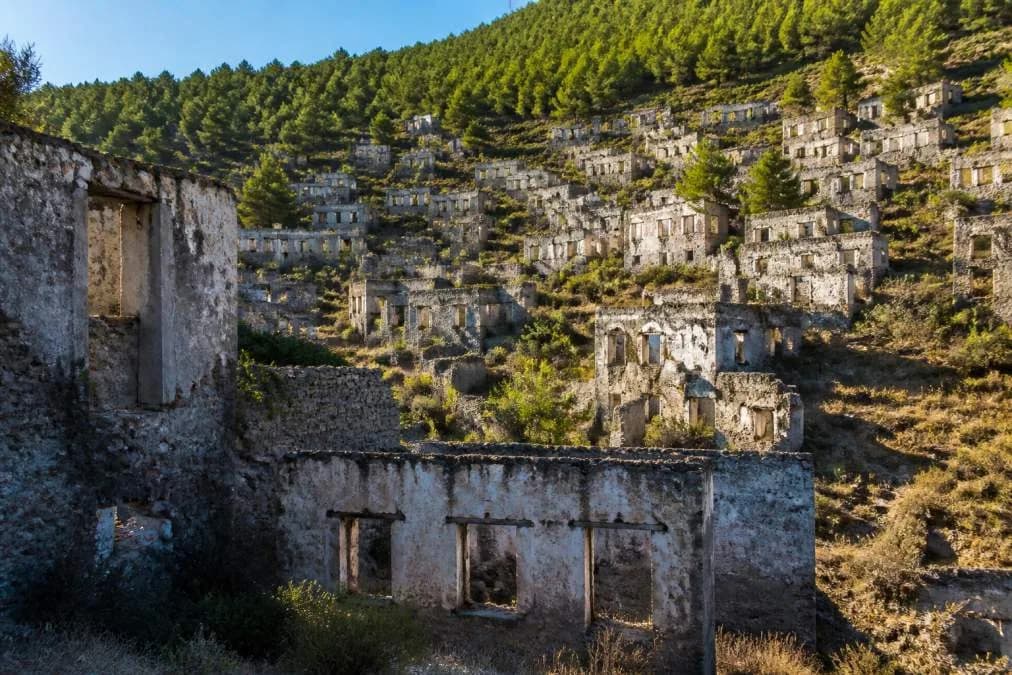
Kayaköy, in the Fethiye district of Muğla, is an abandoned village of stone houses, most of them dating from the 19th century. For centuries it was home to a Greek community; it emptied in the 1923 population exchange, and the 1957 earthquake damaged many of the houses that remained. This historic fabric is a treasure handed down over generations, but every year it is threatened by natural decay, the climate and human impact.
Why Protecting Kayaköy's Historic Fabric Matters
Protecting a historic site like this is about more than saving buildings. Conservation keeps cultural memory alive, it means future generations can get to know this heritage, and the local tourism economy is built on it too.
This unique settlement in Muğla carries the story of the past. Stone walls, doorways and narrow lanes all form a single whole: repair one part the wrong way and the meaning of the whole place changes.
At Prime Turist we believe in raising awareness of how historic sites like this should be protected. Our tours don't stop at Kayaköy, but we care about sharing with guests who explore the village on their own how this heritage should be looked after.
In short: protecting Kayaköy's historic fabric goes beyond saving buildings; it's about keeping cultural memory alive.
Kayaköy Visitor Rules and Responsibilities
Kayaköy has rules for visitors. They are there to protect both the buildings and the natural surroundings, and it matters that every visitor follows them.
Rule one: don't touch the walls and doorways. The stone surfaces are very fragile, and fingerprints and constant contact wear them away. Take photos, but don't touch.
Rule two: don't take anything away. Stone fragments, old bricks and plants are all part of the site. Every piece that's removed damages the whole.
Rule three: stick to the marked paths. There are open paths through Kayaköy, so don't try to get into areas that are closed off. The old buildings can be dangerous.
The responsibility is simple: you are part of the conservation effort too, as is every visitor. Kayaköy's visitor rules aren't just a list of things you can't do; following them is a way of leaving a gift for future generations.
Warning: climbing on the old buildings or entering closed-off areas puts both your own safety and the historic fabric at risk. Crumbling walls and sharp edges can cause serious injuries.
Conserving Kayaköy's Historic Buildings: Restoration and Maintenance
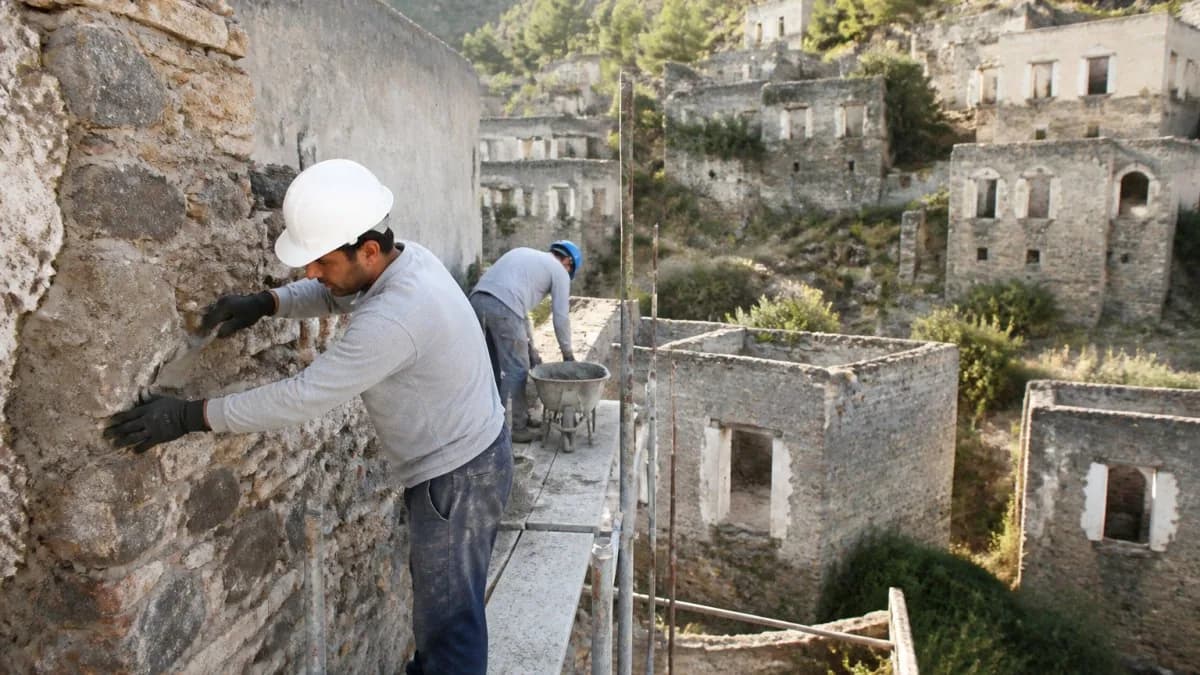
Conserving Kayaköy's historic buildings is specialist work, very different from simple repairs. Every stone and every piece of timber needs care.
Stone and Roof Repairs
Stonework is the most critical part. Kayaköy's houses were built with stone walls that have already stood for well over a century.
During repairs:
• Original stones are kept
• If a stone has to be replaced, the same type of stone is used
• Lime mortar is used instead of cement
• Roof tiles match the old pattern
Roofs matter too. Rain getting in rots the interior, so roof repairs are as important as work on the façade. Old tiles are restored where possible, and new ones are matched to the original colour and size.
Protection from Damp and the Elements
Damp is the biggest enemy of stone buildings. Fethiye's climate is humid and the nearby sea pushes humidity up further, which makes conserving Kayaköy's historic buildings harder.
To control damp:
• Drainage is improved
• Stone surfaces are kept ventilated
• Moisture-absorbing materials are used indoors
• Protective coatings and waterproofing are applied
Salt is another problem. Sea salt seeps into the stone and leaves white crusts on the surface, and these salt crystals gradually break the stone apart.
The solution: the stone surfaces are cleaned and a protective coating is applied to stop salt getting into the stone. Choosing the right product is vital, though, because the wrong material can do the stone even more harm.
Protecting Kayaköy's Cultural Heritage: Community Involvement
Kayaköy's cultural heritage isn't just its buildings; it's a living story. Keeping that story alive needs the whole community to take part.
Local people are the most important guardians of this heritage. They know how the buildings were used, and that knowledge is invaluable during repairs.
Through education programmes, young people learn how historic buildings are conserved, and that knowledge is passed on to the next generation.
Kayaköy's cultural heritage is part of the community's identity. Homeowners restore their own houses, this work contributes to the local economy, and tourism income benefits local people.
Tip: local guides give the most accurate information about Kayaköy's history. Talking to them is about more than getting information; it's also a way of supporting the community.
Conservation Work at Kayaköy: Institutional Responsibility
Conservation at Kayaköy isn't carried out by the state alone. Associations, foundations and private organisations also play a part.
Various organisations in Muğla are active in this field. Archaeological research is carried out, restoration projects are run and documentation work continues.
Institutional responsibility requires long-term thinking. A one-year project isn't enough: conservation at Kayaköy is the work of generations.
Funding matters too. Restoration is expensive and budgets are limited, so priorities have to be set. Which buildings should be restored first? Which areas are most at risk?
Coordination is critical as well. Different institutions need to work together and avoid contradictory decisions, so that conservation at Kayaköy moves forward in harmony.
How Sustainable Tourism Helps Protect the Village
Tourism is at the heart of Kayaköy's economic life. Many visitors who come to Fethiye also visit Kayaköy, but this tourism needs to be managed.
Sustainable tourism is one of the ways a historic site can be protected. Too many visitors damage the buildings; too few mean less income for the area.
A balance has to be found. Visitor numbers could be capped, entry could be restricted at certain times of day, and guided visits could be made compulsory.
Tourism income should be reinvested in conservation, which keeps the whole cycle sustainable. Visitors also need to understand how they can help protect the site.
At Prime Turist we play our part in this balance. Through articles like this one, we tell guests who plan to explore Kayaköy on their own about the visitor rules. That way, tourism and conservation can move forward together.
How to Avoid Damaging the Historic Buildings
As a visitor, you have responsibilities. Kayaköy's visitor rules don't just exist on paper; they're put into practice through the way people behave.
Step one: keep the noise down. Kayaköy is a peaceful place, and loud voices spoil it for everyone, so talk quietly.
Step two: take your rubbish with you. Leave nothing behind: no plastic, no glass, no paper. Anything that doesn't belong there spoils the historic setting.
Step three: take nothing but photos. Bear in mind, too, that photos shared on social media draw more and more visitors, and crowds can quickly get out of hand.
Step four: listen to your guide. If you visit with a guide, they know the area best, and their advice matters for both safety and conservation.
Step five: respect local traditions. Kayaköy is a living heritage site, so treat the local culture and customs with respect.
Not damaging historic buildings isn't hard; it just takes a little care. You are one visitor among thousands, but every visitor is part of the whole.
Protecting Kayaköy's historic fabric needs everyone's involvement: institutions, local people and visitors working together. Although our tours don't stop at Kayaköy, Prime Turist encourages guests who visit the village independently to follow these rules, because we share the responsibility for handing the region's history and natural beauty on to future generations. Explore Kayaköy yourself by car, taxi, dolmuş or on foot, and for the other days of your holiday take a look at our tours: the Ölüdeniz boat trip and the jeep safari run from April to October, and paragliding runs all year round.
Frequently asked questions
What methods are used to protect Kayaköy's historic fabric? Conservation at Kayaköy involves restoration, regular maintenance and protection against the elements. The stone structures need ongoing repair and protection from damp and weather. Visitors are also guided and informed so that the buildings aren't damaged directly, and local people and tourism businesses play an active part in conservation too.
What are the visitor rules at Kayaköy? The rules are there to keep the buildings safe and protected. Visitors should not climb on the structures, write on the walls or touch historic objects. Avoid using a flash when taking photos and move carefully inside the buildings. Visiting with a guide is recommended for the sake of the buildings.
How can local people help protect Kayaköy's cultural heritage? Local people can help by spreading awareness of conservation, working as guides and volunteering to look after the historic buildings. By keeping traditional crafts and cultural practices alive, introducing the heritage to visitors with respect and supporting conservation work, they can play an active part.
Which institutions are responsible for conservation at Kayaköy? Conservation at Kayaköy is led by public bodies, chiefly the Ministry of Culture and Tourism, working with local authorities such as the Muğla Governor's Office and Fethiye Municipality. Civil society organisations and local tourism businesses support this work too. Official institutions provide the legal framework, while community involvement makes conservation more successful.