Historical Sites Near Fethiye: A Complete Guide
Prime Turist local team · Updated: October 2026 · 19 min read
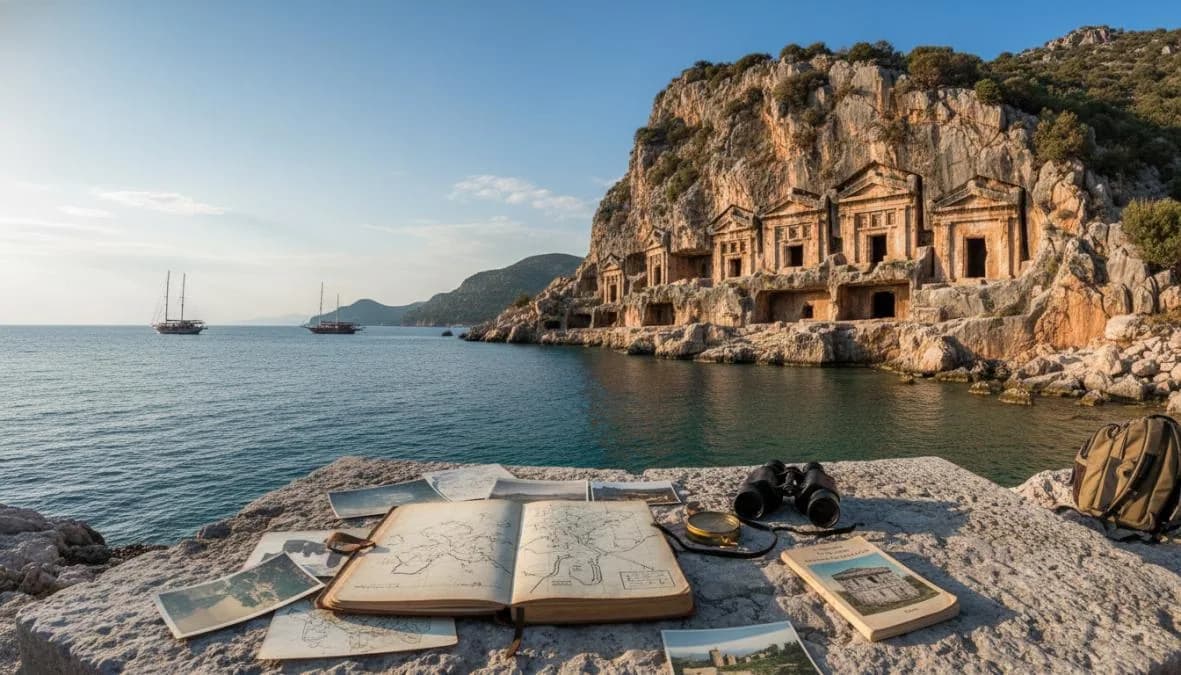
In ancient times Fethiye and the land around it, at the heart of the Lycian League, made up one of the most important centres of civilisation in the Mediterranean. Modern Fethiye, built on top of the ancient city of Telmessos, still bears the marks of that era. Royal tombs carved into the cliffs, acropolises hidden in the forests and ancient harbours scattered along the coast make this region unlike any other destination in Turkey.
Historical Sites Near Fethiye: Why Are They So Special?
The historical sites around Fethiye aren't limited to archaeological ruins. Byzantine churches, Ottoman bathhouses, stone houses left by the area's Greek community and the necropolises along the Lycian Way give the region an extraordinarily rich cultural fabric. Close by are two UNESCO World Heritage sites: Letoon, in Muğla, and Xanthos, at Kınık in the Kaş district of Antalya.
So why are they so special? Because the history here doesn't sit behind glass like objects in a museum; it feels like a heritage that lives on in the landscape. Standing on top of the acropolis at Tlos, you have the Eşen Plain spread out before you. At Pınara you walk among hundreds of tomb chambers carved into the cliffs. You won't find an experience like this anywhere else.
In short: The Fethiye area is one of the regions of Turkey with the densest layers of cultural heritage, where the Lycian, Roman, Byzantine and Ottoman periods intertwine in a single landscape.
Ancient Cities Near Fethiye: The Must-Sees
The list of ancient cities around Fethiye isn't just a catalogue of ruins; it's also a geographical map of Lycian civilisation. Each ancient city in the region represents a different side of the Lycian League. Some were trading centres, some were holy cities and others were strategic strongholds chosen for their natural defensive positions.
Tlos: The Holy City of Lycia
Tlos, one of the six major cities of the Lycian League, held the title of ‘holy and greatest metropolis of Lycia’ in antiquity. It lies about 45 kilometres from Fethiye, in the Seydikemer district of Muğla. The site stretches from the foot of a rocky acropolis down to the valley floor.
The main structures you'll want to see at Tlos are:
1. Acropolis: Lycian walls can be seen beneath a castle dating from the Ottoman period.
2. Rock tombs: The Tomb of Bellerophon in particular stands out for its mythological reliefs.
3. Roman baths: Very well preserved, along with remains of mosaics.
4. Stadium: Seating about 2,500 people, from the Lycian period.
5. Agora: The remains of the square that was the centre of trade and social life.
Accessibility: The site is easy to reach by car, but the climb to the acropolis involves uneven stone paths. The acropolis can be difficult for wheelchair users or visitors with walking difficulties, while the structures on the valley floor are relatively accessible.
Best time to visit: Early morning. In the afternoon the sun on the acropolis gets very hot.
Holders of the Müze Kart (Museum Card) get free entry to this site. See the Turkish Ministry of Culture and Tourism's Müze Kart information for details.
Pınara: A Civilisation Carved into the Cliffs
Pınara offers perhaps the most dramatic sight of all the ancient cities around Fethiye. Why? Because here hundreds of rock tombs have been carved into almost the entire face of a cylindrical rock about 500 metres high. The first time you see it, it doesn't look real.
The history of Pınara goes back to the 5th century BC. The city, which carried significant voting weight in the Lycian League, was founded as a colony of Xanthos. Because it's a little hard to reach today, it offers a quiet visit away from the crowds.
Tip: Sturdy walking shoes are a must for Pınara. The last 3 kilometres to the site are a gravel dirt road that vehicles can't use. The light between 8 and 10 in the morning is ideal for photos.
Letoon and Xanthos: A UNESCO World Heritage Pair
Letoon and Xanthos were added to the UNESCO World Heritage List in 1988. Together they are the best-documented examples of Lycian civilisation. Xanthos was the capital of Lycia, while Letoon, the religious centre of the Lycian League, was home to three temples dedicated to Apollo, Artemis and Leto.
UNESCO World Heritage List – Xanthos-Letoon entry
Highlights at Xanthos:
• Harpy Tomb: The pinnacle of Lycian art, with its relief friezes.
• Nereid Monument of Xanthos: The original is in the British Museum in London; on site you can see the monument's podium.
• Byzantine church: Right next to the ancient theatre, a powerful example of different periods intertwining.
At Letoon, archaeological excavations are still going on. The Nymphaeum (fountain monument) and the remains of the three temples attract the most interest from visitors.
Kadyanda: An Ancient City Hidden in the Forest
Kadyanda, about 25 kilometres from Fethiye, is a site hidden among pine forests. It gets far fewer visitors than the other Lycian cities, which is both its advantage and its drawback.
The advantage: no crowds, no ticket queues, a voyage of discovery all to yourself. The drawback: signposting is poor and some structures are buried in thick vegetation.
Kadyanda's theatre, necropolis and agora remains are a real hidden gem for anyone who wants to add them to a cultural tour of Fethiye.
Kayaköy (Ghost Village): History Written in Stone
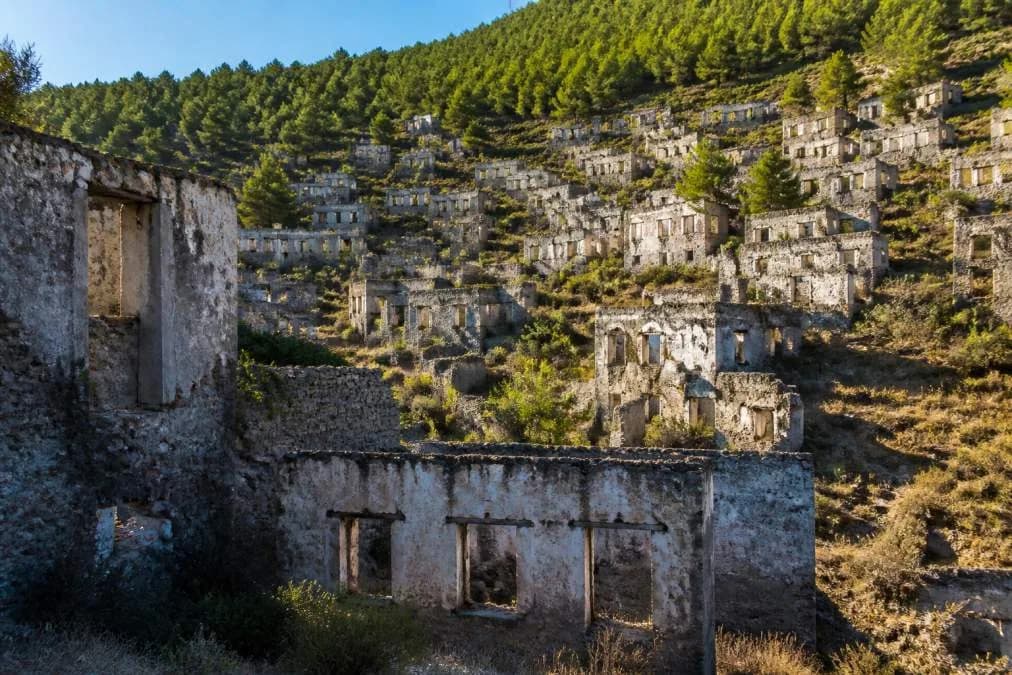
Kayaköy is one of Turkey's most striking open-air museums. Abandoned after the 1923 population exchange, this Greek village lets visitors feel the weight of history first-hand, with the ruins of about 500 stone houses, two main churches and many chapels.
The village's Greek name was Levissi. At the start of the 20th century it was home to a Greek Orthodox community of more than 6,000 people. After the exchange, the Muslim Turks who came from Greece did not want to settle here, as the village lay far from trade routes and was unsuitable for farming. As a result, Kayaköy was left to its fate.
What you'll see on a visit today:
• Taxiarchis Church: The village's ‘Upper Church’, high on the hill; traces of the ceiling frescoes are still visible and it has panoramic views over the village.
• Panagia Pyrgiotissa Church: The ‘Lower Church’, in the lower part of the village.
• Village houses: The craftsmanship of the stone houses' doors and windows reflects the Greek building tradition of the time.
Practical information: Kayaköy is about 8 kilometres from Fethiye town centre. Visiting early in the morning or late in the afternoon is recommended; at midday it's both hot and crowded. Because the ground is made up of uneven stone paths, some parts aren't accessible to visitors with walking difficulties.
Amyntas Rock Tombs and Fethiye Old Town (Paspatur)
In Fethiye town centre, rock tombs and the historic townscape are woven together. Of the historical sites to visit here, the ones with the greatest visual impact are undoubtedly the Amyntas Rock Tombs.
Traces of Telmessos: Necropolis and Acropolis
The Amyntas Rock Tombs were built in the 4th century BC as the necropolis of the city of Telmessos. The largest is the Tomb of Amyntas, which imitates an Ionic-order temple façade with columns. Its Greek inscription states clearly whose tomb it is: ‘Amyntas, son of Hermagios.’
These tombs are carved into the cliffs overlooking Fethiye. At sunset the rock face turns golden, making for an incredible sight. They're about a 15–20-minute walk from the town centre.
Completing Fethiye's historic fabric, Paspatur is a traditional bazaar area built on the remains of the old town. With its narrow streets, stone buildings and Ottoman-era structures, it keeps the town's cultural heritage alive. As you stroll through Paspatur, you can sometimes spot stone blocks from ancient Telmessos in the foundations of modern buildings – concrete proof of just how layered the history is.
Fethiye Museum is also a must-see stop in this area. Archaeological finds from the region, coin collections and works from the Lycian period are on display here.
Note: The path up to the Amyntas Rock Tombs is unlit at night and quite steep. If you're going for sunset photos, bring a torch or use your phone's torch for the way back. The risk of falling on the rocky surface shouldn't be underestimated.
The History of Ölüdeniz, Gemiler Island and the Surrounding Area
Ölüdeniz is world-famous for its turquoise lagoon and as a paragliding centre. But the historical fabric of this stretch of coast genuinely rivals its natural beauty. Brushed off in a few lines by most guides, the area actually sits right in the middle of one of the most important pilgrimage routes of Byzantine Christianity in the Mediterranean.
Gemiler Island (St Nicholas Island): Santa Claus's Hidden Stronghold
Gemiler Island, just off Ölüdeniz, is one of Turkey's least-known Byzantine heritage sites. Locals call it both ‘Gemiler Island’ and ‘St Nicholas Island’, and the two names reflect two different historical layers of the island.
The island's importance in the Christian world goes back to St Nicholas, bishop of Myra (today's Demre) in the 4th century AD. St Nicholas is a legendary figure believed to have secretly given gold to the poor, rescued sailors stranded in storms and protected children. This historical figure, who over time became the ‘Santa Claus’ legend in Europe, is known to have been commemorated on Gemiler Island with a church and a chapel.
Structures you can see on the island today:
• Great Basilica: The island's most impressive building; dated to the 4th–6th centuries AD, this three-aisled basilica reflects the Byzantine architecture of its time. Parts of the apse walls are still standing.
• Small Chapel: A more modest building right next to the basilica. Traces of frescoes remain on the plaster.
• Necropolis: Tomb remains from various periods are found on the island; some are partly under the sea.
• Byzantine cistern: Built in the interior of the island to store rainwater – evidence that pilgrims kept coming to the island over a long period.
• Quay remains: Along the shore, Byzantine stone quay blocks can be seen underwater, showing that the island served as an active harbour in ancient times.
As Arab raids intensified in the region in the 7th century AD, the Christian community on Gemiler Island abandoned it. Some archaeologists believe St Nicholas's original tomb was on this island and that his relics were moved to Myra at this time. In 1087, sailors from Bari took part of the relics from Myra to Bari in Italy; this event forms the basis of the founding story of today's Basilica of St Nicholas in Bari.
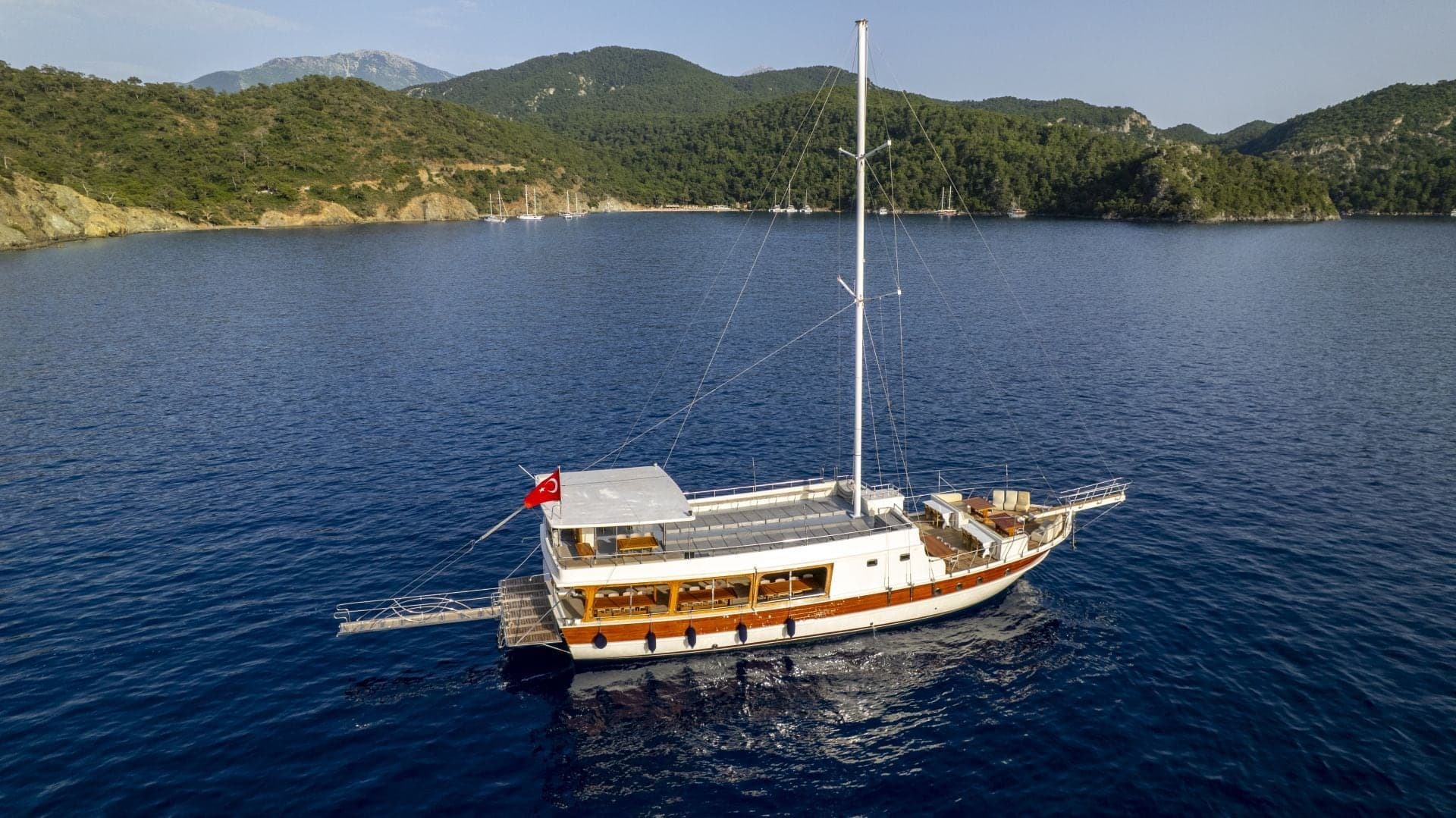
Practical information: Gemiler Island can be reached on daily boat trips from Ölüdeniz or Fethiye harbour. Also an important stop on Blue Cruise routes, the island is usually visited between 10:00 and 12:00 in the morning. Getting onto the island requires a short transfer by small rowing boat, as the shore is shallow and rocky and boats can't come alongside. Sturdy shoes and sun protection are a must.
Tip: To experience Gemiler Island at its best, avoid the crowded day trips. If you hire a private boat from Fethiye and reach the island early in the morning, you can explore the ruins in complete peace and quiet. May and October in particular are ideal in terms of both weather and crowds.
Butterfly Valley: A Hidden Historical Gateway on the Lycian Way
Butterfly Valley (Kelebekler Vadisi) is a cove surrounded by high cliffs, about 30 minutes by boat from Ölüdeniz. The valley is known to take its name from the Jersey tiger moth (Euplagia quadripunctaria), seen here every year between May and October. But its historical importance tends to be overshadowed by its natural beauty.
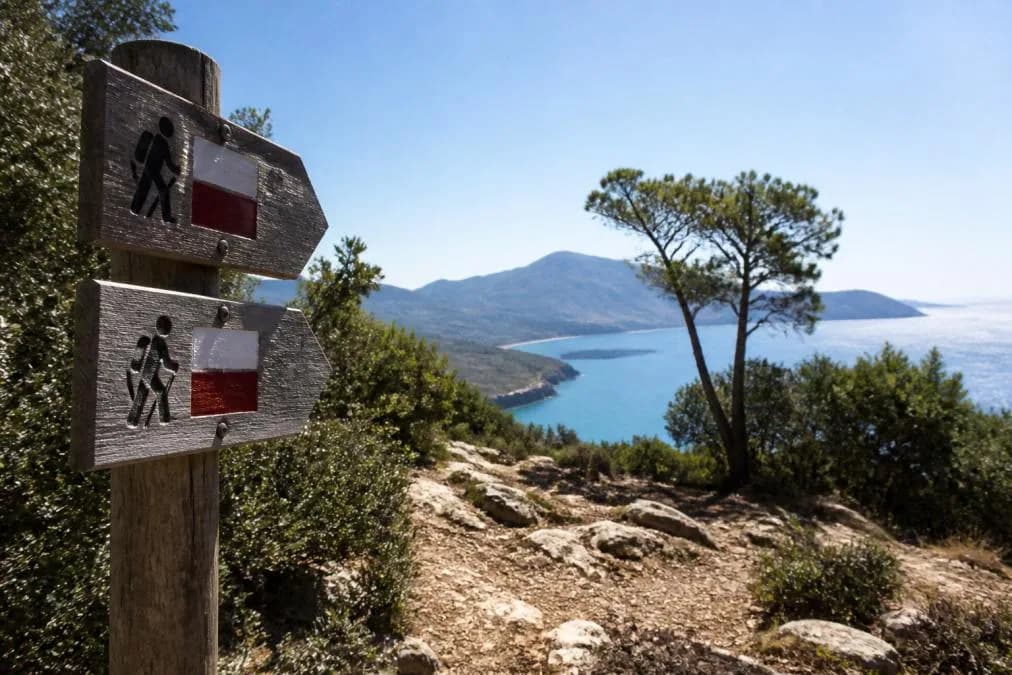
A section of the Lycian Way passes along the upper reaches of Butterfly Valley. In ancient times the valley was one of the trade and transit routes between the coast and the interior. On the plateau above the valley there are traces of small Lycian settlements and tomb remains, but these areas have not yet been systematically excavated.
There is no road to the valley; most people arrive by boat from Ölüdeniz, and a steep footpath also leads down from Faralya village. This has helped preserve both its natural and its historical fabric to a large extent.
Lycian Way: official route and trail information
Underwater Archaeology Around Ölüdeniz
There's another little-known side to the area: in the shallow waters around Ölüdeniz and Gemiler Island, structural remains from ancient and Byzantine times now lie underwater. Changes to the coastline since antiquity and the sinking of some structures in earthquakes make the area valuable for underwater archaeology too. Divers can see underwater stone blocks and quay remains off the north shore of Gemiler Island.
Note: At underwater archaeological sites, touching, removing or moving any object is a crime under Turkish law. If you're diving, only observe; don't interfere with anything.
Cultural Routes Around Fethiye: Timing and Practical Plans
The most common mistake when planning cultural routes around Fethiye is squeezing too many places into one day. Given the distances between the ancient cities and the minimum time each site needs, a good plan both reduces fatigue and deepens the experience.
1-Day Route: Town Centre and Rock Tombs
This route is designed for visitors who have only one day in Fethiye.
Time · Stop · Approx. duration
08:00–09:30 · Amyntas Rock Tombs · 1.5 hours
09:30–11:00 · Fethiye Museum · 1.5 hours
11:00–12:30 · Paspatur (Old Town) · 1.5 hours
14:00–17:00 · Kayaköy · 3 hours
17:30–19:00 · Ölüdeniz beach · 1.5 hours
Practical note: Starting early is key both to avoid the heat and to beat the crowds. You can take a lunch break at a café in Paspatur.
2–3-Day Route: Ancient Cities and the Lycian Way
Visitors with two or three days can explore the historical sites around Fethiye far more thoroughly.
1. Tlos + Pınara on day one (close to each other, so they can be done on the same day) 2. Xanthos + Letoon on day two (UNESCO sites, best planned together) 3. Kadyanda + a boat trip to Gemiler Island on day three
On this route the Müze Kart (Museum Card) brings significant savings. The card is valid for entry to many state-run sites, including Tlos, Pınara, Xanthos and Letoon.
Tip: Visit Xanthos and Letoon on the same day; they're only about 4 kilometres apart. Go to Xanthos in the morning and Letoon in the afternoon. A total of 4–5 hours is enough for both.
Local Legends, Myths and Accessibility Information
The side of historical sites that most guidebooks miss is the legends that live there. A visit to ruins without the stories behind the stones is only half complete. The Fethiye area is extraordinarily rich in this respect: every ancient city has its own mythological origins, every rock tomb its own legend. Below you'll find the region's most important myths together with practical accessibility information.
Leto's Flight: The Founding Legend of Letoon
The name of the ancient city of Letoon comes from one of the most dramatic stories in Greek mythology. Zeus, father of the gods, has an affair with Leto, daughter of the Titans; but Zeus's jealous wife Hera chases Leto across the whole world. Hera warns all the lands and seas on earth to close their doors to Leto.
Searching for a place to give birth to her twins, Leto reaches Lycia. As she tries to rest at a spring, local shepherds drive her away and throw stones into the water to muddy it. Leto pleads with Zeus, and Zeus turns the shepherds into frogs. Frogs still live in the sacred pool at Letoon today; visitors can see them as they explore the site. The legend was first told thousands of years ago, and the frogs are still there.
Leto finally gives birth to Apollo and Artemis on the island of Delos. After this, the people of Lycia adopted Leto as their protective goddess and built Letoon in her honour. This sacred site of three temples became the religious centre of the Lycian League: the western temple was dedicated to Leto, the smaller central one to Artemis and the eastern one to Apollo.
In short: The frogs living in the sacred pool at Letoon still greet visitors today as a living continuation of the myth. Unless you learn about this detail from your guide or the information boards, it's almost impossible to notice it while exploring the site.
Bellerophon and Pegasus: The Winged Hero of Tlos
The most impressive rock tomb at Tlos bears a depiction of the best-known figure in Lycian mythology: Bellerophon. According to legend, Bellerophon is a young hero exiled from Corinth. The Lycian king Iobates tests him with an impossible task: to kill the Chimera (Khimaira), a fire-breathing monster with a lion's head, a goat's body and a serpent's tail.
Bellerophon learns that to accomplish this task he must tame the winged horse Pegasus. With the help of the goddess Athena he obtains a golden bridle, catches Pegasus and flies over the Chimera to slay the monster. The relief on the tomb at Tlos shows this scene: Bellerophon on the back of Pegasus, his spear aimed at the Chimera.
The legend's link to Lycian geography is no coincidence. Yanartaş (the Chimaera), named in ancient sources as the place where the Chimera lived, lies at Çıralı in Antalya province, near the ancient city of Olympos. Burning non-stop for thousands of years thanks to natural gas vents, these flames may well have been interpreted in antiquity as the breath of a monster.
The Prophecy Tradition of Telmessos: The City That Read Dreams
Telmessos, the ancient name of Fethiye, was not just a city but one of the most famous centres of prophecy in the ancient world. The people of Telmessos were known for dream interpretation (oneiromancy); ancient sources record that even Alexander the Great, King of Macedon, consulted seers from Telmessos.
According to legend, the founder of Telmessos was a son of Apollo. This divine origin gave the city its authority in matters of prophecy. The cliffs into which the Amyntas Rock Tombs are carved were the necropolis of this holy city – so the place where the souls of the dead were believed to dwell was intertwined with the sacred area where prophecies were received.
Standing in front of the Amyntas Tombs today, remembering that in antiquity these cliffs were seen both as the home of the dead and as the voice of the gods takes the experience to a whole new level.
The Democratic Legend of the Lycian League: Law Carved in Stone
The Lycian League was one of the most advanced examples of democratic government in the ancient world. In this federal structure, founded in the 2nd century BC and lasting into the Roman period, cities had 1, 2 or 3 votes depending on their population. Historical sources document that America's Founding Fathers studied the Lycian League as a model for federal government.
The Letoon Trilingual, found at Letoon in 1973 and now displayed in Fethiye Museum, played a key role in deciphering the Lycian language. It contains the same text in three languages – Lycian, Aramaic and Greek – just like the Rosetta Stone in Egypt. In other words, these lands around Fethiye shaped the fate not only of a civilisation but of modern linguistics too.
Accessibility for Disabled Visitors: Which Sites Are Easier?
Because most of the historical sites around Fethiye are on rough terrain, accessibility is generally limited. Some sites are relatively better, though, and knowing this before you go makes planning easier.
Relatively accessible sites:
Site · Accessible part · Restricted part
Xanthos · Lower area, around the theatre, main walkway · Acropolis, upper necropolis
Letoon · Levelled path to the temple platform · Around the marsh, outer area
Fethiye Museum · All ground-floor exhibition areas · Upper floor (stairs)
Kayaköy · Main entrance path and lower quarter · Upper quarter, churches
Sites with difficult access:
• Tlos acropolis: Uneven stone ground and a height difference of about 80–100 metres; not suitable for visitors with walking difficulties. The bathhouse and stadium remains on the valley floor, however, are on relatively flat ground.
• Pınara: The last 3 kilometres to the site are a gravel dirt road closed to vehicles. Reaching the rock tombs higher up requires a steep, rocky footpath.
• Kadyanda: The whole site is uneven forest ground with unclear paths; the hardest site in terms of accessibility.
• Amyntas Rock Tombs: There's a footpath from the town centre to the starting point, but the last stretch up to the tombs is steep and stepped.
Tip: Müze Kart holders get free entry to many state-run sites, including Tlos, Pınara, Xanthos and Letoon. Special entry arrangements are possible at some sites for visitors with accessibility needs; contacting the site management directly before your visit is the most reliable way to arrange this.
Before your visit, it's a good idea to check the latest information on the site accessibility page of the Turkish Ministry of Culture and Tourism.
Practical Tips for Visiting Fethiye's Historical Sites
Some practical details that many visitors overlook have a direct effect on your trip.
The Müze Kart is worth considering: if you're visiting Tlos, Pınara, Xanthos and Letoon on the same trip, getting a Müze Kart makes sense. For Turkish citizens the card works as an annual subscription and is valid at many sites; if you're visiting from abroad, check which museum pass applies to you.
Start early: in summer the sites around Fethiye can top 40 degrees at midday. Seeing the most important sites between 8 and 11 in the morning makes a difference to both your comfort and the quality of your photos.
Water and food: at less-visited sites such as Kadyanda and Pınara there are no facilities nearby. Make sure you bring enough water and snacks.
Digital guides: some mobile apps offer audio guides and offline map support for Fethiye and the surrounding area. They're especially useful for Kadyanda and Pınara, where finding your way can be tricky.
A common mistake: planning the ancient cities, Kayaköy and Ölüdeniz all in one day. That means rushing through everything. Split your days to do the historical sites justice.
The most efficient way to plan a visit to the historical sites around Fethiye is with local guides who know the area well. Without someone who knows the context, legends and hidden corners of the archaeological sites, some details can slip by.
Conclusion: Discover the Historical Riches Around Fethiye
The unique cultural heritage of Fethiye and Muğla can't be appreciated at a quick glance. Losing yourself among ancient cities, standing in front of rock tombs, walking through the silence of Kayaköy – all of this takes time and good planning. When it comes to the historical sites around Fethiye, knowing the list isn't enough; you need to know the route.
Prime Turist carefully puts together cultural routes in and around Fethiye for lovers of history and nature. With a wide range of tours, from boat trips to cultural day trips, it helps you discover the region's hidden corners and historical fabric at the best possible price. Get in touch with Prime Turist now to start your dream Fethiye experience.
Frequently asked questions
Which ancient cities can you visit around Fethiye? The most important ancient cities among the historical sites around Fethiye are Tlos, Pınara, Letoon, Xanthos and Kadyanda. All of them are close to Fethiye: Xanthos is in the Kaş district of Antalya, and the others are in Muğla province. Letoon and Xanthos are on the UNESCO World Heritage List. Müze Kart holders can enter most of these sites with a single card.
Why is Kayaköy historically important? Kayaköy, emptied by the population exchange in the early 20th century and known today as the ‘ghost village’, has a unique historical fabric. Its stone houses, Greek Orthodox churches and narrow streets, mostly dating from the 18th century, are still standing, albeit in ruins. One of Turkey's most distinctive heritage sites, Kayaköy is about 8 km from Fethiye and an essential stop on any cultural route.
What period do the Amyntas Rock Tombs date from? The Amyntas Rock Tombs date from the 4th century BC and form the necropolis of the ancient city of Telmessos. Carved in the shape of Ionic temple façades, these royal tombs are among the most impressive examples of Lycian architecture. As they sit on a hillside in Fethiye town centre near Paspatur, they're easy to combine with a walk around town.
What are the important historical stops on the Lycian Way? For cultural routes around Fethiye, the Lycian Way starts at Ovacık, just above Ölüdeniz, passes Faralya above Butterfly Valley and runs past ancient cities such as Letoon, Xanthos and Patara all the way to Antalya. It is one of Turkey's most famous long-distance trails. It offers the most complete experience of the region, for both natural beauty and historical fabric.
What's the best season to visit Fethiye's historical sites? The ideal times for the historical sites around Fethiye are April–June and September–November. In these seasons the temperature is very comfortable for exploring open-air sites. In July–August temperatures can top 40 degrees, so visiting the ancient cities early in the morning or late in the afternoon is recommended. For walking the Lycian Way, spring is the best time.
Can you use the Müze Kart at Fethiye's historical sites? Yes, the Müze Kart is valid at sites run by the Turkish Ministry of Culture and Tourism, such as Tlos, Pınara, Letoon and Xanthos. The card offers fast entry with a QR code via the mobile app and gives unlimited visits for one year. However, it may not be valid at some privately owned sites, so it's best to check with the site before you go.