Lycian Way Starting Points and How to Get There
Prime Turist local team · Updated: October 2026 · 12 min read
The Lycian Way, Turkey's best-known long-distance trail, officially starts at Ovacık, just above Ölüdeniz near Fethiye, and runs for about 540 km east towards Antalya. You don't have to begin at the very start, though: you can join the trail at many points, and each one gives you a different level of difficulty and length of walk. This guide covers three popular starts within easy reach of Fethiye, from ancient ruins to well-equipped resorts: Ölüdeniz, the villages of Faralya and Kabak, and the ancient city of Xanthos.
Where Does the Lycian Way Start?
When you choose where to start the Lycian Way, your fitness, the number of days you have and the historic sites you want to see all play a part. The official start is at Ovacık above Ölüdeniz, but the trail is waymarked all the way, so you can join it or leave it at many villages and sites along the route.
Starting from Ölüdeniz
Ölüdeniz is the most popular and accessible place to start the Lycian Way; the official trailhead is just up the road in Ovacık. The area is known worldwide for paragliding and offers a perfect mix of sea and mountain scenery. From here, the first days take you along cliffs high above the sea to Faralya, above Butterfly Valley, and on to Kabak.
The big advantage of starting at Ölüdeniz is that it's close to Fethiye and has plenty of places to stay, eat and drink. It's an ideal place to pick up last-minute supplies, fill up with water and do a final check of your preparation. If you stay at a campsite or hotel here, you can set off early in the morning and make the most of the day.
Starting from Faralya or Kabak
Faralya and Kabak, a little further along the trail, are a quieter alternative to Ölüdeniz. Starting here skips the first stretch, and the route feels less crowded and more authentic, which is why many nature lovers choose it. Both villages sit high above the sea, south of Ölüdeniz, and still keep traces of traditional village life.
Walkers who start here usually meet fewer tourists and get to enjoy nature at a calmer pace. The village guesthouses and campsites are known for their hospitality, and you'll have the chance to try home-style Turkish cooking. Beyond Kabak the trail climbs into the mountains, so this start suits anyone planning a longer trek.
Starting from the Ancient City of Xanthos
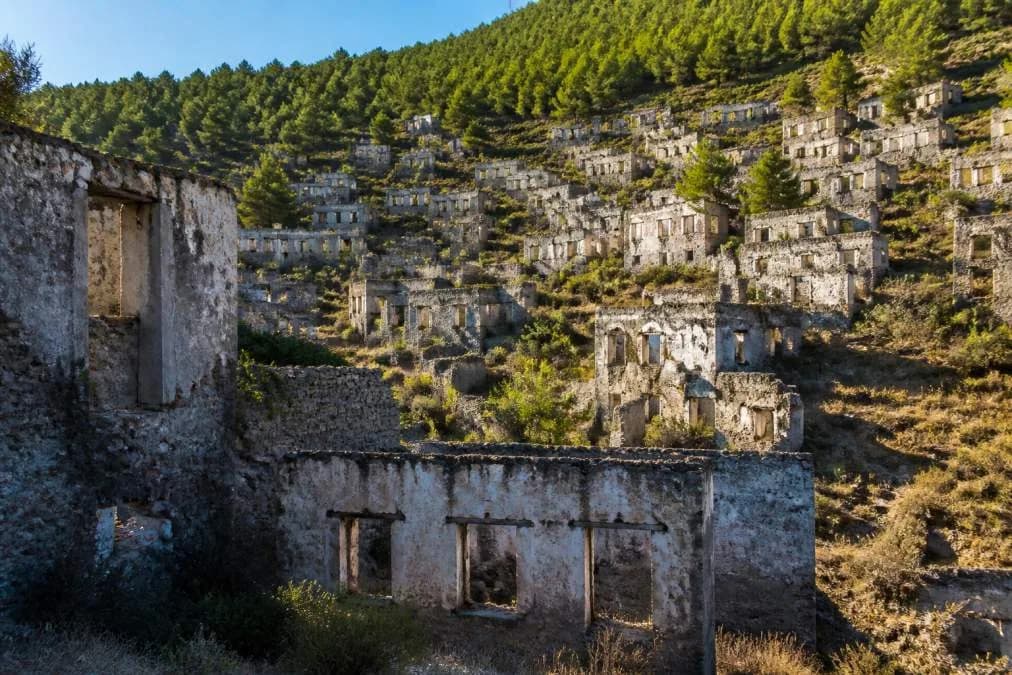
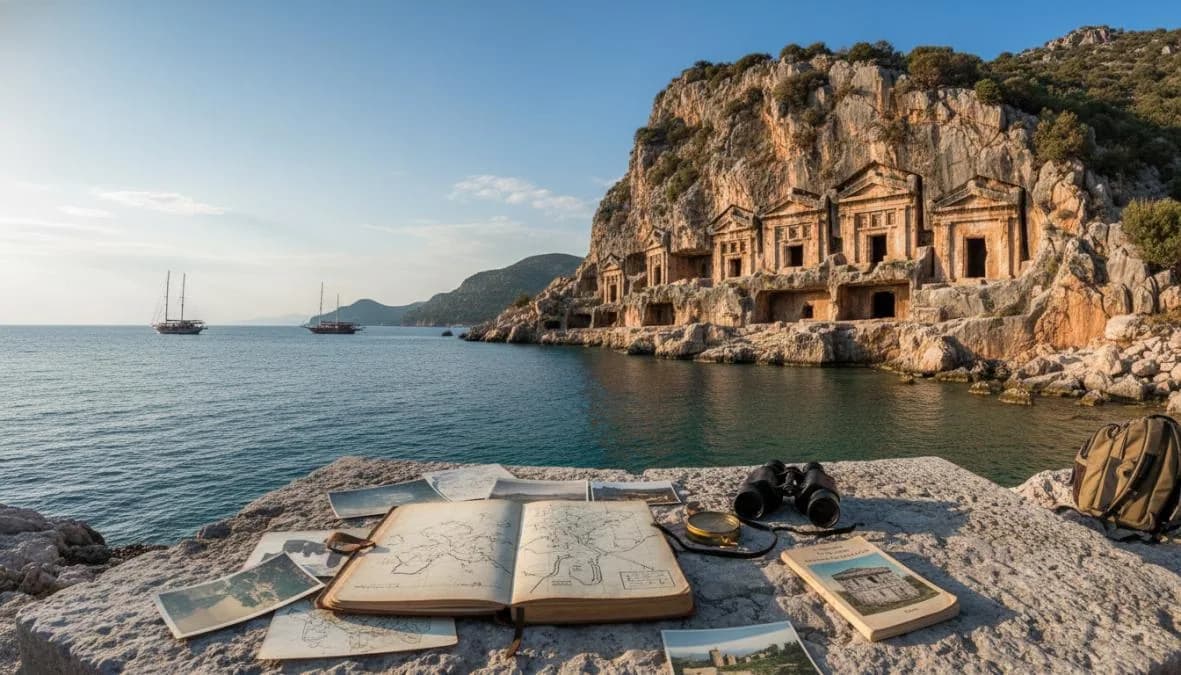
Xanthos is the most historically and culturally rich of these starts. Once one of the most important cities of ancient Lycia, it's on the UNESCO World Heritage List together with nearby Letoon. Starting from Xanthos, you can explore ancient remains up close and then walk on through beautiful countryside.
Xanthos is a great choice if you love both history and nature. The excavation areas, tombs and ruins turn the walk into a journey through the past, so the trail becomes not just a physical challenge but a cultural adventure as well.
Getting to the Lycian Way Starting Points from Fethiye
Fethiye, one of the main tourist hubs on the Muğla coast, is the natural base for reaching the Lycian Way's starting points. There are several ways to get from Fethiye to each one, and you can choose according to your budget and preferences. Good transport planning plays a key part in a successful trek.
Public Transport
Public transport is the cheapest way to get from Fethiye to the Lycian Way starting points. Minibuses (dolmuş) run regularly from Fethiye to Ölüdeniz, and there are also services to Faralya and Kabak; for Xanthos, buses heading towards Kalkan and Kaş stop at Kınık, the village next to the site. Travelling on routes that locals use is also a chance to see the real face of the region.
Besides being cheap, public transport lets you mingle with local life along the way. The downside is fixed timetables and sometimes crowded vehicles, which means giving up some comfort. Check departure times at the bus station in Fethiye in advance and plan around them.
Minibuses start early in the morning, but services to the smaller villages are less frequent and some timetables change with the season, so get up-to-date information locally, for example from your hotel or at the minibus station. With public transport you may need to walk the last stretch from the stop to the trailhead.
Car Hire and Transfer Services
Hiring a car is the most flexible way to reach the starting points. There are plenty of car hire companies in Fethiye offering a range of vehicles. Driving yourself means you arrive at the start exactly when you want and can change your route if needed.
A transfer takes you straight from your hotel or accommodation to the trailhead. Private transfer companies in Fethiye can arrange this based on where you're staying. It's especially handy for groups or anyone carrying a lot of luggage.
The advantages of driving are flexibility and control over your timing; the downsides are the cost of fuel, parking and the rental itself. Parking is limited at some starting points, so do some research in advance.
Taxis and Ride Apps
Taxis are easy to find in Fethiye town, and drivers know the Lycian Way starting points. Taxi apps are spreading in Turkey, but coverage outside the big cities can be patchy, so check before you rely on one.
The advantage of a taxi is that you don't need to hire a car and you benefit from the driver's local knowledge. For longer distances, though, it can work out more expensive than the other options. Agree on the fare with the driver before you set off.
If an app does work where you are, you can see the route and estimated arrival time in advance, which is reassuring, especially in the evening. Otherwise, ask your hotel to call a taxi for you.
How Long Does the Lycian Way Take? Duration and Difficulty
Whichever start you choose, how long the walk takes and how hard it is depends on the route. The full trail is about 540 km long, and walking all of it usually takes around a month. Most visitors walk a section instead, planning anything from 3 to 10 days.
From Ölüdeniz, many walkers cover the first stretch via Faralya to Kabak in two or three days; carrying on towards Patara turns it into a trek of a week or more. If you start from Faralya or Kabak, the trail soon climbs steeply into the mountains and becomes quieter and more demanding.
From Xanthos, a short section via Patara towards Kalkan takes a few days, but allow extra time to explore the ancient sites along the way. When choosing a start, think about how many days of your holiday you want to spend walking. Even with limited time, a short section can be a rewarding experience.
Difficulty depends on where you start and the character of the route. The stretch from Ölüdeniz is moderately demanding, with rocky climbs, and beyond Kabak it gets steeper. Around Xanthos and Patara the ground is lower, and the pace is set more by the time you spend at the ruins.
Preparing for the Lycian Way: What to Check at the Start
Whichever starting point you reach, there are a few things to sort out before you set off. Good preparation is essential for a safe and enjoyable walk; missing or inadequate preparation can cause problems halfway along.
Gear and Clothing
The Lycian Way can throw varied weather and terrain at you, and the right clothing and gear are the key to handling it. Comfortable, sturdy walking boots, breathable socks and clothes that let you move freely are the basics to sort out from the start.
Sun protection is important on the Lycian Way. Sunscreen, sunglasses and a hat are essential, especially in summer. A light, packable rain jacket can be useful in any season.
A trekking backpack lets you carry your things safely. A 30–40 litre pack is enough for day walks, while longer routes may need something bigger. An ergonomic design helps prevent shoulder and back pain.
Water and Food
Water is a strategic issue on the Lycian Way. There isn't always a water source along the route, so carry bottles or a hydration pack. Drinking at least 2–3 litres a day helps prevent dehydration while you walk.
Plan your food according to the length and difficulty of the walk. Portable snacks such as energy bars, dried fruit, nuts and cheese help keep your energy up. On some stretches you'll find small cafés or village restaurants along the way, but it's risky to rely on them.
To keep your electrolytes balanced, it helps to carry sports drinks or salt tablets as well as water. In hot weather especially, a lack of salt can cause muscle cramps. Before you start, ask locals or guides for advice on where you can stock up along the way.
Physical Preparation and Adjusting to Conditions
Getting fit before you go makes the walk much more comfortable. If you're planning a long or tough route, start training 4–6 weeks beforehand. Walking or running for 45–60 minutes two or three times a week helps build a basic level of fitness.
The climate and terrain of the Lycian coast may be quite different from what you're used to, especially the heat and the steep, rocky paths. Taking it easy with a lighter walk on the first day gives your body time to adjust and helps you perform better on the days that follow.
Flexibility and strength help prevent injuries on the trail. Stretching and strengthening exercises before you set off keep your feet, legs and back strong on long walks.
Finding the Waymarks and Following the Route
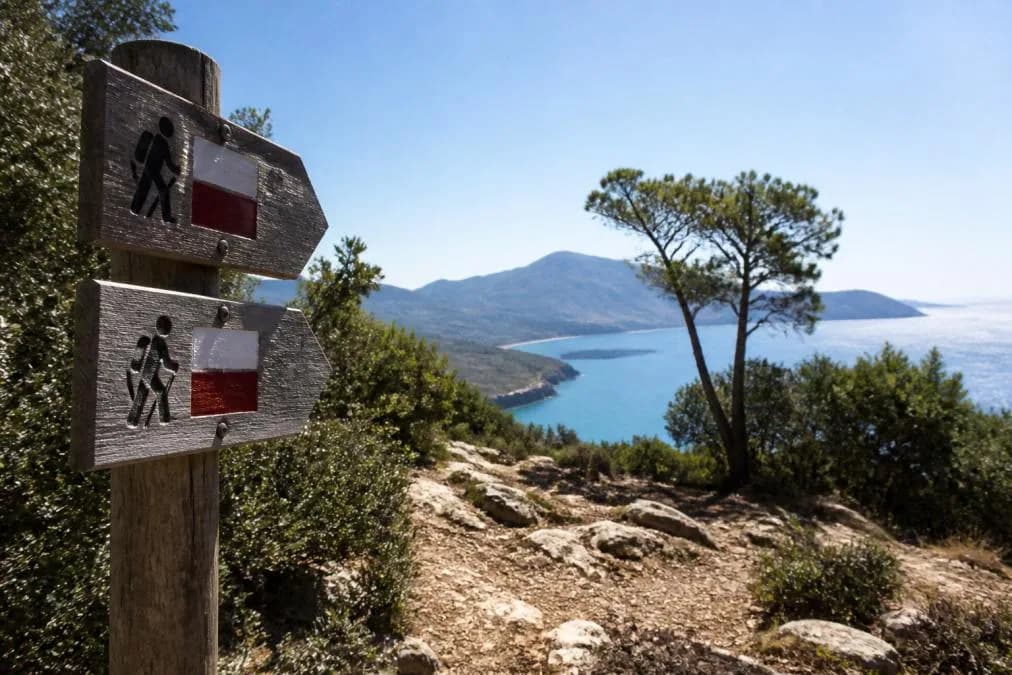
The Lycian Way is waymarked with red-and-white painted marks placed systematically along the main route to keep walkers on the right path. You'll find signs at the main starting points, and most of the trail can be followed using these marks.
Route maps and information boards are often found at the starting points. Reading them carefully helps you plan your walk. Map-reading skills help you find the way, especially where the waymarks are unclear.
GPS apps on your phone are widely used for following the Lycian Way. If you download offline maps, you can follow the route even without a signal. Battery life is limited, though, so carrying a paper map or guidebook and a compass as a backup is recommended.
On some sections the waymarks may be faded or missing. In that case, getting help from local guides can keep you from losing the route.
Best Season and Timing
The best seasons for the Lycian Way are spring (April–May) and autumn (September–October). Temperatures are ideal for walking and the chance of rain is relatively low. Summer heat makes walking hard and raises the risk of dehydration.
In winter the trail is still accessible, but some sections can become slippery and dangerous. Rain is frequent and streams run higher. On the other hand, there are far fewer people around, and nature shows a different kind of beauty.
Checking the weather forecast before you set off makes your trip safer. Seasonal changes can affect how hard the route is and how long each stretch takes. Local guides and guesthouse owners can suggest which sections suit the season.
Weekdays or weekends also make a difference to crowds. On weekdays there are fewer people at the starting points and the walk is calmer. During public holidays and religious festivals (bayram), these areas get very busy.
Season · Temperature · Chance of rain · Crowds · Best for
Spring · 15–25°C · Medium · Low · Long sections or the full trail
Summer · 25–35°C · Low · High · Short routes
Autumn · 18–28°C · Medium · Low · Long sections or the full trail
Winter · 8–18°C · High · Very low · Partial routes
The Lycian Way's starting points near Fethiye are ideal gateways to Turkey's most famous trekking route. From the easy access of Ölüdeniz to the village calm of Faralya and Kabak and the history of Xanthos, each start offers something different. Good transport planning, the right season and thorough preparation are what make a walk a success. And if you'd like to see the same coastline from the sea on a rest day, a boat trip from Fethiye, such as Prime Turist's 12 Islands tour, is an easy way to do it. Get ready to discover the stunning nature of the Fethiye region!
Frequently Asked Questions
Where exactly does the Lycian Way start? The official start is at Ovacık, just above Ölüdeniz near Fethiye; from there the trail heads south along the coast and then east towards Antalya. Ölüdeniz is the most popular place to begin, but you can also join the trail further along, for example at Faralya, Kabak or Xanthos. Each start has different route options and difficulty levels. When planning, consider your fitness and how much time you have.
How do I get from Fethiye to a Lycian Way starting point? You can use public transport, a hire car or a transfer. Minibuses run regularly to Ölüdeniz, and there are also services to Faralya and Kabak. For Xanthos, buses towards Kalkan and Kaş stop at Kınık, though a hire car is often more practical. A transfer takes you straight from your hotel to the start and can also be arranged to pick you up at the end of your walk.
How long does the Lycian Way take? Walking the whole Lycian Way usually takes around a month. By choosing your own start and end points, you can walk shorter sections instead. The difficulty and the route you choose directly affect the total time.
Do I need a permit to walk the Lycian Way? You don't need an official permit to walk the Lycian Way. Some areas, such as ancient sites or private land, may have their own rules or an entrance fee. Ask the local tourist office or guides about the current situation on your chosen route. Some sections may be closed at times because of bad weather or, in summer, high fire risk.