7 Best Hiking Trails in Fethiye: 2026 Walking Guide
Prime Turist local team · Updated: October 2026 · 9 min read
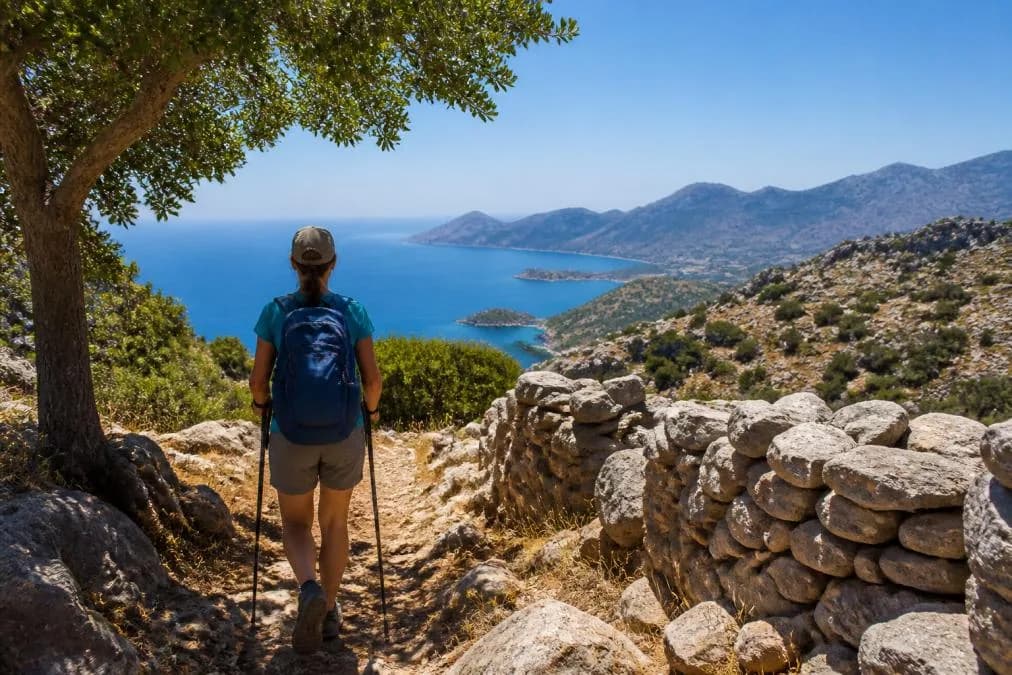
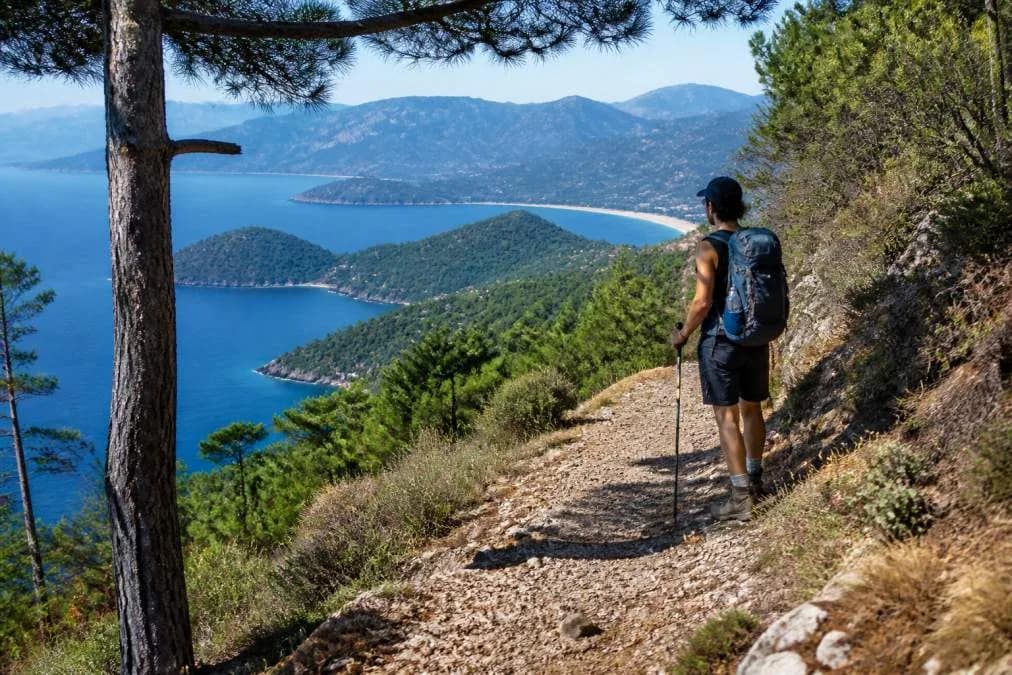
Fethiye's hiking trails range from easy coastal paths to steep cliff-edge stages. What almost all of them have in common is that, sooner or later, the sea comes into view. That's why, when choosing a trail, we suggest looking at the height gain rather than the distance.
Fethiye Hiking Trails: Difficulty Levels and Distances
If you're new to hiking, start with trails of no more than 8–10 km a day and less than 300 metres of total climbing. If you're experienced, the Faralya and Babadağ stages are the ones that will really test you. Some routes in the area are waymarked; others are local footpaths. If you're walking without a guide, Wikiloc's archive of Fethiye hiking routes is a good place to check recent GPS tracks.
Important: The most common mistake is setting off in the cool of the morning and ending up on open ground in the midday heat. In summer, midday temperatures around Fethiye get seriously high and shade is hard to find. If you don't start at sunrise, running out of water on the way back is a real risk.
1. Faralya to Butterfly Valley: A Breathtaking Cliffside Path
The path from Faralya down to Butterfly Valley is the most talked-about route in the area, and the most underestimated. Most people think it's ‘a short way down’; in reality a steep, stony and in places slippery descent awaits. Remember from the start that you'll have to climb back up the same way.
For views, it has no equal around Fethiye. The valley drops steeply below you, with the open sea stretching out ahead. Start early in the morning and you'll walk in the shade while the light over the valley is at its clearest.
What to bring: shoes with a good grip, at least 1.5 litres of water, salty snacks, sunscreen and walking poles. The climb back up is long, so spare energy is a must.
Tip: On the last part of the descent the ground is loose. Put your weight on your heels and take small steps to protect your knees. Most injuries happen on the way down, not on the way up.
2. Kayaköy to Ölüdeniz: Where History Meets the Sea
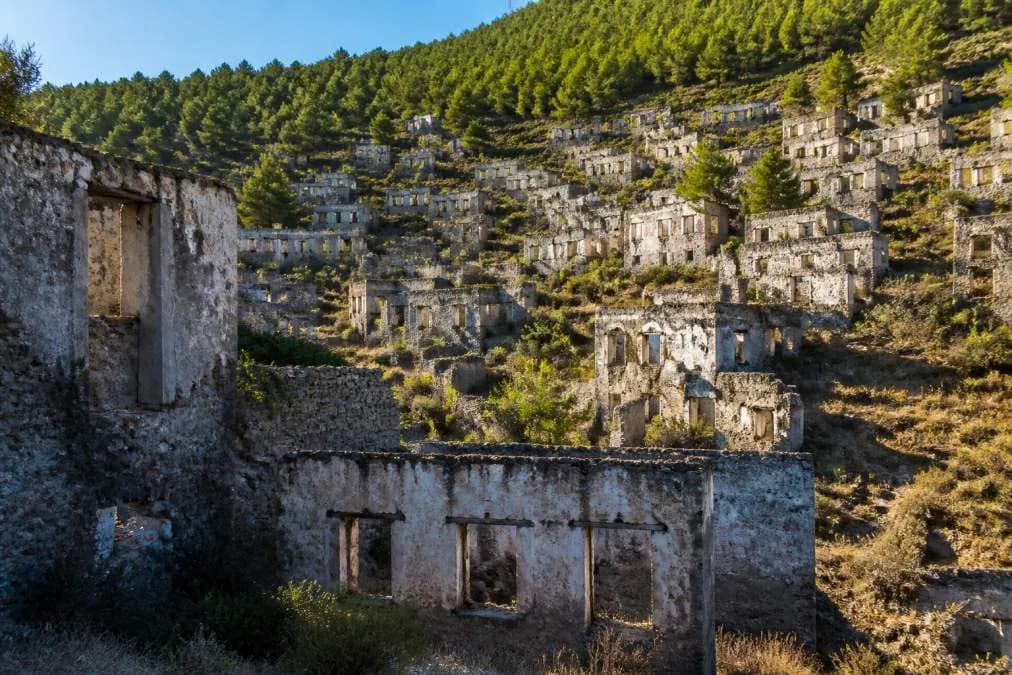
The trail from Kayaköy to Ölüdeniz starts among abandoned stone houses and ends with a view of the lagoon. Of all Fethiye's hiking routes, it's the most balanced way to combine history and the sea in a single day. It's of moderate difficulty; anyone who walks regularly will manage it comfortably.
Along the way you pass the ruins of old Greek houses, olive groves and pine forest. On the final stretch the blue lagoon of Ölüdeniz appears ahead, so keep your camera handy. For the story behind the village, have a look at our guide to Kayaköy's history.
Difficulty: moderate. The total climb is limited, but you're exposed to the sun on open ground.
Best time: April–May and September–October. Walking at midday in July and August isn't recommended.
3. Around Saklıkent Gorge: A Nature Walk in Cool Water
The area around Saklıkent Gorge is the most sensible choice if you want to walk in the summer heat. The stream water inside the gorge stays noticeably cooler than the air outside, so it feels less like a mountain hike and more like a ‘cool valley walk’.
The route is easy to moderate. On the floor of the gorge there are stretches where you have to wade through water, so non-slip shoes that can get wet are a must. People who turn up in flip-flops or ordinary trainers usually struggle within the first half hour.
What to bring: water shoes, spare socks, quick-drying clothes and a waterproof phone case.
In short: Saklıkent is one of the few places around Fethiye where you can walk safely in the hottest part of the day. Keeping the other trails for the morning and planning Saklıkent for the afternoon is the easiest way to make the most of your day.
4. The Slopes of Babadağ: A High-Altitude Panoramic Walk
The paths on the slopes of Babadağ are for anyone who wants a bird's-eye view of Ölüdeniz and its surroundings. The higher you go, the wider the view, but the wind gets stronger too. If you're walking in this area, famous for paragliding, always check the weather beforehand.
Difficulty: moderate to hard. The height gain is significant, so set your pace from the start. For experienced walkers it's a half-day outing; for beginners, a full day is more realistic.
Best time: early morning. In the afternoon clouds tend to build and visibility drops.
Important: The weather changes quickly at altitude. Always have a windproof jacket and a light extra layer in your bag.
5. Göcek to İnlice Beach: A Gentle Coastal Walk
The stretch of coast between Göcek and İnlice Beach isn't one of the tough trails that come to mind when you hear the word ‘hiking’ around Fethiye. It's easy and relaxed, with open views most of the way, which makes it ideal for families and anyone who wants to keep the pace gentle.
The route mostly runs close to the coast, past olive groves, clumps of pine and small coves, and there are a few spots where you can get down to the sea for a swim. It isn't a waymarked trail and parts of it may follow roads or tracks, so check a recent GPS track before you set off.
Difficulty: easy. Allow a few hours at a relaxed pace, depending on how far you go.
Best time: spring and autumn. In summer there's little shade, so go early in the morning.
6. The Path to Ancient Kadyanda: A Climb into History
The path up to the ancient city of Kadyanda is the most overlooked of Fethiye's hiking routes, and the one that surprises people most. Starting near Üzümlü, it takes you through the forest to the ruins of the ancient city. The theatre, city walls and tombs make the climb worthwhile.
Difficulty: moderate. Most of the way is in the shade of the forest, but the last part takes you out onto open ground. Starting in the morning is better for both the temperature and the light.
What to bring: water, snacks, a hat, walking poles and a short note on the site to help you make sense of the ruins.
Important: Climbing on the ruins and moving stones at ancient sites is forbidden, both to protect the heritage and for your own safety. Don't climb on the ruins.
The Lycian Way from Fethiye: First Steps from Ovacık
The Fethiye start of the Lycian Way is at Ovacık, from where a long-distance route stretches towards Antalya. Turkey's first long-distance walking route, it follows ancient Lycian paths. The whole route is more than 500 kilometres long, but the Fethiye section can be walked on its own.
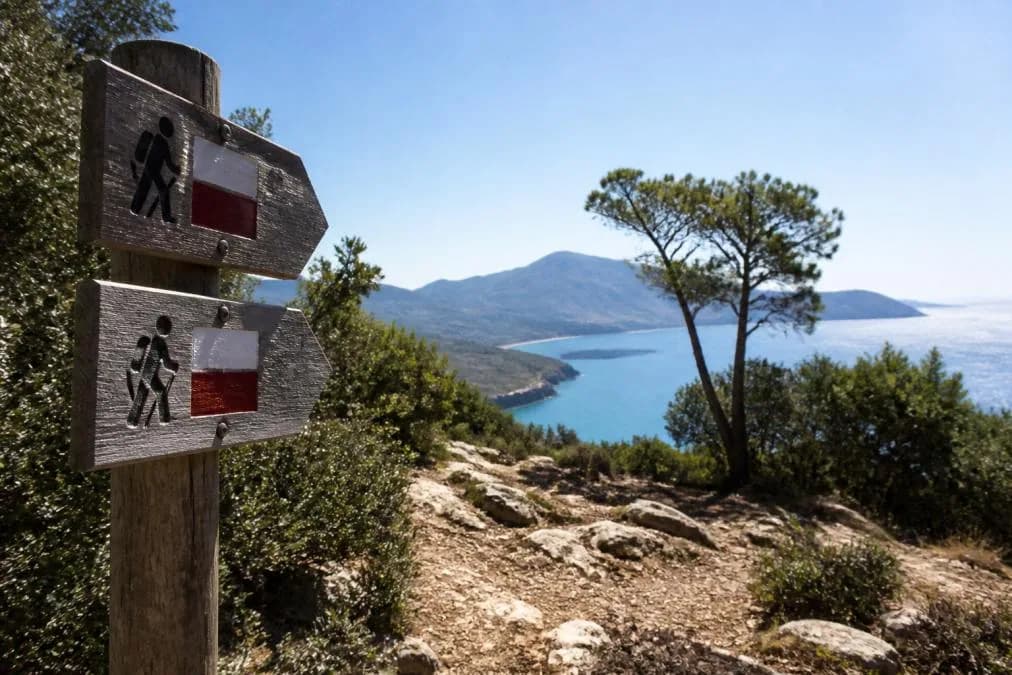
If it's your first long-distance walk, don't aim for the whole route. The first stages around Ovacık make a good start, with good waymarking and great views. Because you need to plan accommodation and logistics between stages, starting with a well-planned itinerary is much safer. For official information and the latest news on the route, follow the Culture Routes Society's Lycian Way page.
Difficulty: varies. Depending on the stage you choose, it ranges from easy to hard.
Best time: spring and autumn, roughly March to May and September to November. Long stages aren't recommended in summer.
Fethiye Hiking Gear Checklist
Your Fethiye hiking checklist should take the area's steep terrain and hot climate into account. Go through this list before every walk:
• [ ] Non-slip walking shoes with ankle support
• [ ] At least 1.5 litres of water (2 litres on long stages)
• [ ] Salty snacks and dried fruit
• [ ] Sunscreen and a wide-brimmed hat
• [ ] A light windproof or rain jacket
• [ ] Walking poles (to protect your knees on descents)
• [ ] A fully charged phone and an offline map
• [ ] A small first-aid kit
As across Muğla, the risk of forest fires around Fethiye is high in summer. Don't light fires, don't leave cigarette ends behind and follow official warnings.
When planning your walks, you may want to combine them with other activities in the area. Around Fethiye you can also plan boat trips, safaris and cultural day trips. Prime Turist doesn't run hiking tours, but between your walking days you can add a boat trip, the Saklıkent tour or a day trip to Kaş and Kalkan. And if you'd like to see Butterfly Valley without the steep path, the Ölüdeniz boat trips stop there (entry to the valley is extra).
The biggest challenge on the trails around Fethiye is choosing the right route and sorting out the logistics in advance. The wrong trail can turn a lovely day into needless exhaustion. Prime Turist brings together nature, history and adventure trips in the Fethiye and Muğla area in one place, and its wide range of boat trips, safaris and sightseeing tours makes planning your holiday easier. Start planning today!
Frequently asked questions
When is the best season for hiking in Fethiye? The best times for Fethiye's hiking routes are spring, roughly March to May, and autumn, from September to November. Temperatures are comfortable for walking, and in spring nature is at its liveliest; February can still be wet and June is already hot. In July and August it gets extremely hot at midday, so if you want to walk then, go early in the morning.
Where does the Lycian Way start in Fethiye? The Fethiye start of the Lycian Way is at Ovacık. The route, more than 500 kilometres long in total, runs from Fethiye towards Antalya. You can reach the start from Fethiye town centre by dolmuş (minibus) or taxi. The first stages head towards Faralya, above Ölüdeniz; if you'd like a day walk, you can do just part of this section.
What should you watch out for on hiking trails around Fethiye? The most important thing on Fethiye's nature trails is to carry water, as many routes have no drinking fountains. Follow the waymarks and take particular care near cliff edges. Sunscreen, a hat and sturdy shoes are a must. If you're walking alone, tell someone your route and make sure your phone is fully charged.
Are there easy hiking trails in Fethiye for beginners? Yes. Göcek to İnlice is an easy, gentle walk, and Kayaköy to Ölüdeniz is fairly short, though it includes a climb, so it's moderate rather than flat. Both suit a day walk, with places to stop and rest along the way.
What should I take on a nature walk in Fethiye? At the top of your Fethiye hiking checklist are at least 1.5 litres of water, sunscreen and a hat. Pack sturdy walking shoes, a spare T-shirt, small snacks and basic first-aid supplies too. Walking poles and a power bank help on longer routes, and in summer we also recommend insect repellent.