Lycian Way Preparation: 8 Steps to Get Ready
Prime Turist local team · Updated: October 2026 · 9 min read
Every season on the Lycian Way offers something different, but they're not all equally hard. Choosing the right time is the foundation of all your Lycian Way preparation. Below are eight practical steps, from season and kit to training, logistics and food. Prime Turist doesn't organise Lycian Way walks; this is a planning guide for independent walkers.
Step 1: Choose the Right Season
April and May are ideal for the Lycian Way. Temperatures range between 18 and 25°C, the rain has eased off and the countryside is at its greenest. Late September and October are also very good; from November the rain picks up noticeably, and December is the wettest month of the year.
In summer (June to August) temperatures go above 30°C, the sun is fierce and water sources are limited. If you're thinking of walking in summer, start early and rest through the middle of the day. In winter (January and February) some paths can be muddy and wet, and the risk of slipping goes up.
The climate varies along the trail, which runs through both Muğla and Antalya provinces: milder on the coast near Fethiye, colder on the higher inland stretches. When choosing your season, think about the whole section you'll be walking, not just where you start.
Step 2: Put Together Your Lycian Way Kit List
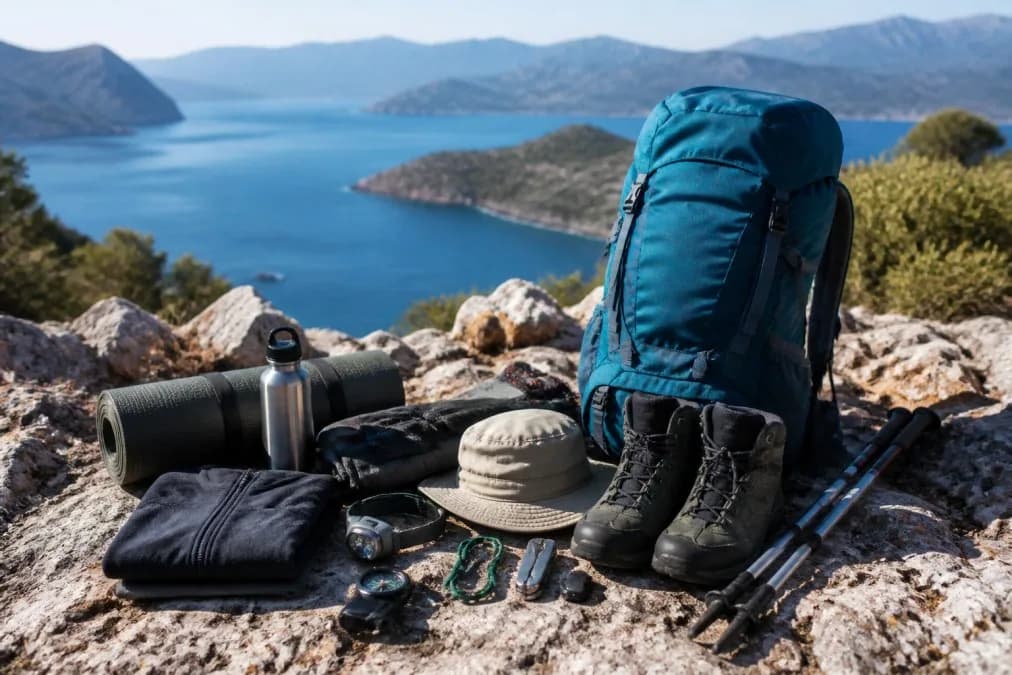
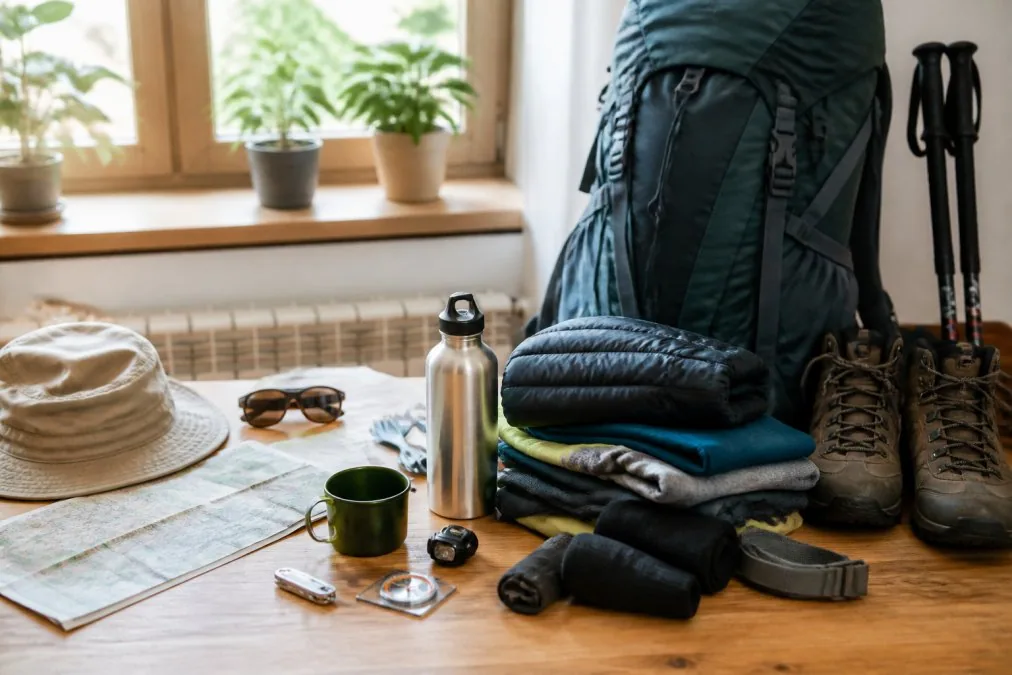
Good kit is the key to a comfortable, safe walk, and a Lycian Way kit list is about much more than boots.
If you're carrying your own gear from stage to stage, a 40–50 litre rucksack is about right: bigger packs add to the fatigue, smaller ones won't fit what you need. Keep the loaded weight under 15% of your body weight. Choose boots with ankle support, which help prevent twisted ankles on rocky ground, and break them in over around 50 km before you set off.
Dress in layers: a base layer that wicks away sweat (merino or synthetic), a warm mid layer and a wind- and waterproof outer layer. On the coast the weather changes fast: cold in the morning, hot at midday and cool again in the evening.
Your water bottle or hydration pack should carry 2–3 litres. A map and compass (or a GPS device) stop you getting lost. Sunscreen, a hat and sunglasses are essential, and the glare off the sea makes the sun feel even stronger. A first-aid kit, blister plasters, painkillers and energy bars are must-haves.
Step 3: Assess Your Fitness Honestly
On the Lycian Way you'll usually walk 12–20 km a day. This is no stroll in the park: the ground is stony, often steep and sometimes very steep.
Before you start, take an honest look at your fitness. If you've never done a long-distance walk, allow at least 6–8 weeks to prepare. If you lead a fairly sedentary life and are over 40, see your GP for a check-up first.
A simple test: can you walk 5 km on flat ground at a comfortable pace? If not, the Lycian Way is a little early for you. If you can, move on to the next step.
Older walkers (65+) and people with long-term health conditions can shorten the route or walk at a slower pace. Part of the Lycian Way's beauty is that it can be enjoyed at any level: the aim isn't to finish fast, but to enjoy the journey.
Step 4: Build a Lycian Way Training Plan
Training for the Lycian Way shouldn't be left to chance. A structured plan helps prevent injuries and builds your stamina.
An 8-week cycle is an ideal starting point. Weeks 1–2: walk 5–8 km on the flat three days a week. Weeks 3–4: increase the distance to 10–12 km, still three days a week. Weeks 5–6: add hills and practise climbing. Final two weeks: walk the full daily distance (15–20 km) on hilly ground.
Alongside the walking, work on strengthening your legs and core. Two 20-minute sessions a week of simple exercises (squats, lunges, planks) are enough, and stretching helps prevent injuries.
While you train, look up the elevation profile of the section you'll walk. Some days on the Lycian Way involve around 1,000 metres of ascent, so build that into your training.
Step 5: Work Out How Many Days the Lycian Way Takes
'How long does the Lycian Way take?' often gets the wrong answer. Walking the whole trail, which is about 540 km long, takes most people 25–30 days, roughly a month. Depending on your pace and rest days, it can stretch to 5–6 weeks.
The distance is 540 km, but the climbs complicate the sums. At a steady 18–22 km a day you need around 25–30 walking days, and any rest days come on top.
The smartest approach is to split the trail into sections rather than walk it all in one go: for example Fethiye to Kaş (about 180 km, 8–10 days), Kaş to Finike (about 100 km) and Finike to Antalya (about 260 km). That way you can take breaks and give your body time to recover.
Specialist trekking companies offer set daily stages, which makes planning easier and secures your accommodation. If it's your first time, aim for one section, such as Fethiye to Kaş in 8–10 days, rather than the whole trail. Rushing spoils the experience.
Step 6: Plan Accommodation and Logistics
Accommodation along the Lycian Way is limited. Some stages end in small villages, others in coastal towns, so the logistics need planning in advance.
You have three options: camping, staying in guesthouses or hotels, or using a guided trekking company. Campers stay light and independent but have to carry a tent and sleeping bag. If you're staying in guesthouses, book ahead, as they can be full in high season.
A guided trekking company takes care of all the logistics: accommodation, meals and moving your luggage to the next stop are all arranged, which makes for a more relaxed trip. Several specialist operators in the region offer this; Prime Turist isn't one of them.
Water is critical. On some stages there's no water for 10–15 km, so plan carefully how much you can carry. You can buy pide and water in the villages, although prices can be higher than in town.
Step 7: Prepare Your Navigation and Maps
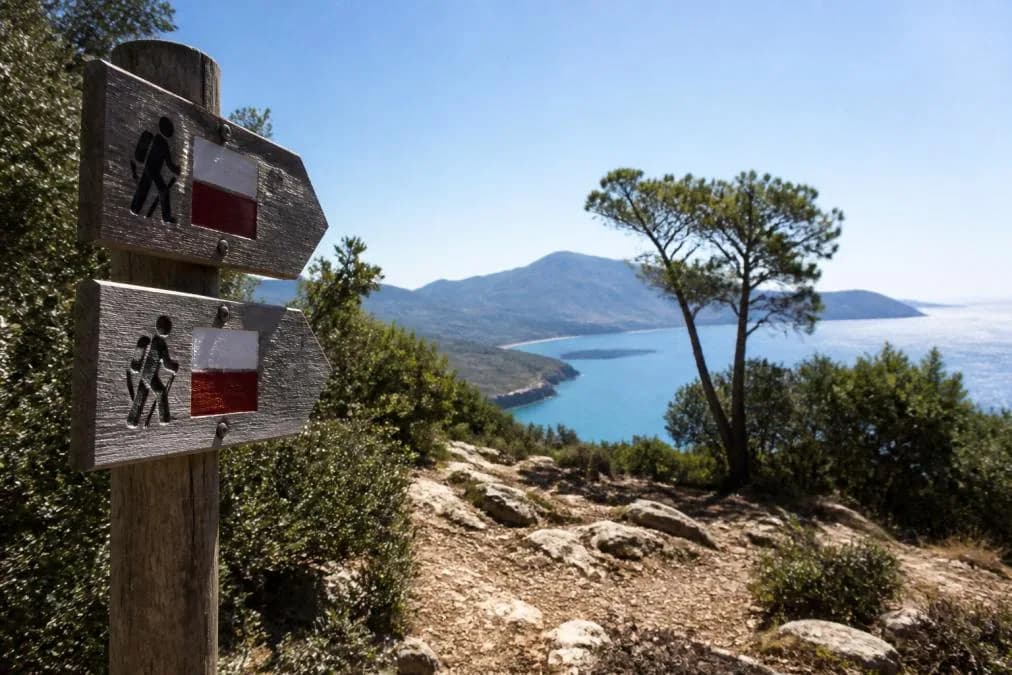
The Lycian Way is a waymarked trail, with red-and-white markings painted on trees and rocks. Even so, the markings can sometimes be unclear, especially in summer when they disappear among the greenery.
Download a digital map (Google Maps, AllTrails, Komoot) and switch on offline mode, as without it the map won't work where there's no signal. Carry a paper map too, since electronic devices can always run out of battery.
Experienced walkers often carry a GPS device. A smartwatch or phone app tracks your daily distance and ascent, and a compass is a basic but much-used tool.
Getting lost is rare but possible. If the trail becomes unclear, turn back: carrying on along the wrong path only costs more time and energy. On a guided trek, this is one worry you won't have.
Step 8: Plan Your Water and Food
Walking 15–25 km a day burns a lot of energy, and what you drink and eat has a direct effect on how well you walk.
Water comes first. Drink at least 3 litres a day; in hot weather that can rise to 4–5 litres. Replacing lost salts matters too: electrolyte tablets or a sports drink help prevent cramp and fatigue.
Breakfast should be high in calories and protein: eggs, cheese, bread and fruit are ideal. Lunch can travel in your rucksack: nuts, energy bars and something sweet such as chocolate. Dinner should be hot and filling; along the Lycian Way you'll find pide, soup, meat dishes and hearty village breakfasts.
Micronutrients matter too, as a lack of vitamins adds to fatigue. Bananas (potassium), oily fish (omega-3) and green vegetables (vitamins) help you keep a balanced diet throughout the trip.
Stomach upsets are common, as water quality varies. A filter or purification tablets help you avoid illness. If you're camping, follow hygiene rules strictly.
Type of day · Suggested calories (approx., depends on body weight) · What to eat
Easy day (15 km) · 2,500–2,800 · Light breakfast, medium lunch, normal dinner
Moderate day (20 km) · 2,800–3,300 · Big breakfast, filling lunch, big dinner
Hard day (25+ km) · 3,300–3,800 · Very big breakfast, extra energy bars, big dinner
The Lycian Way is as much a mental journey as a physical challenge. Good preparation doesn't just protect you from injury, it lets you experience the walk to the full. On this trail, following the traces of the ancient Lycians with the Mediterranean below you, every step has a story.
Prime Turist doesn't organise Lycian Way walks, but we know how much good preparation matters. If you'd rather not deal with the logistics, a specialist guided trekking company can take care of them so you can simply enjoy the walk. And for your rest days, our day trips from Fethiye, from boat trips around the bays and islands to the Saklıkent Gorge Tour, are an easy way to see more of the region.
Frequently Asked Questions
Q: When is the best season to walk the Lycian Way? A: April–May and September–October are the ideal seasons. Temperatures are mild, there's little rain and the nights are more comfortable. In June–August the heat can be extreme, and from November to March heavy rain and cold weather can make walking harder. Adjust your training plan to the season you choose.
Q: What basic kit do I need for the Lycian Way? A: A good rucksack (40–50 litres if you carry your own gear, 25–35 litres if you stay in guesthouses), walking boots, at least two pairs of socks, T-shirts and shorts, a light jacket, sunscreen, a hat, sunglasses, a water bottle or hydration system, a basic first-aid kit and a head torch are essential. You'll also need a map and compass or GPS, plus a sleeping bag and mat if you're camping. When putting your kit list together, think about the conditions on the section you'll walk.
Q: How many days does the Lycian Way take, and how far should I walk each day? A: The Lycian Way is about 540 km long and the whole trail usually takes 25–30 days. Most walkers cover 15–20 km a day, less on tough terrain. Beginners may prefer shorter stages or a single section, such as Fethiye to Kaş (about 180 km, 8–10 days). In the end it depends on your fitness, the section you choose and how many rest days you take.
Q: How far in advance should I start training for the Lycian Way? A: Start at least 8–12 weeks before you go. Spend the first four weeks building basic fitness, the next four on harder sessions and the last four on trail-specific preparation. Train at least 3–4 days a week, starting with walks on flat ground and gradually adding hills and rough terrain.