Lycian Way Gear Guide: What to Pack and Wear
Prime Turist local team · Updated: September 2026 · 8 min read
How do you choose the right gear for the Lycian Way? It's the first question for anyone planning to explore this historic trail of around 540 km. Your kit has to cope with conditions that swing between the fierce Mediterranean sun and the cool high pastures of the Taurus Mountains. On a trail running from Fethiye towards Antalya, the right gear can make the difference between a comfortable adventure and a gruelling test.
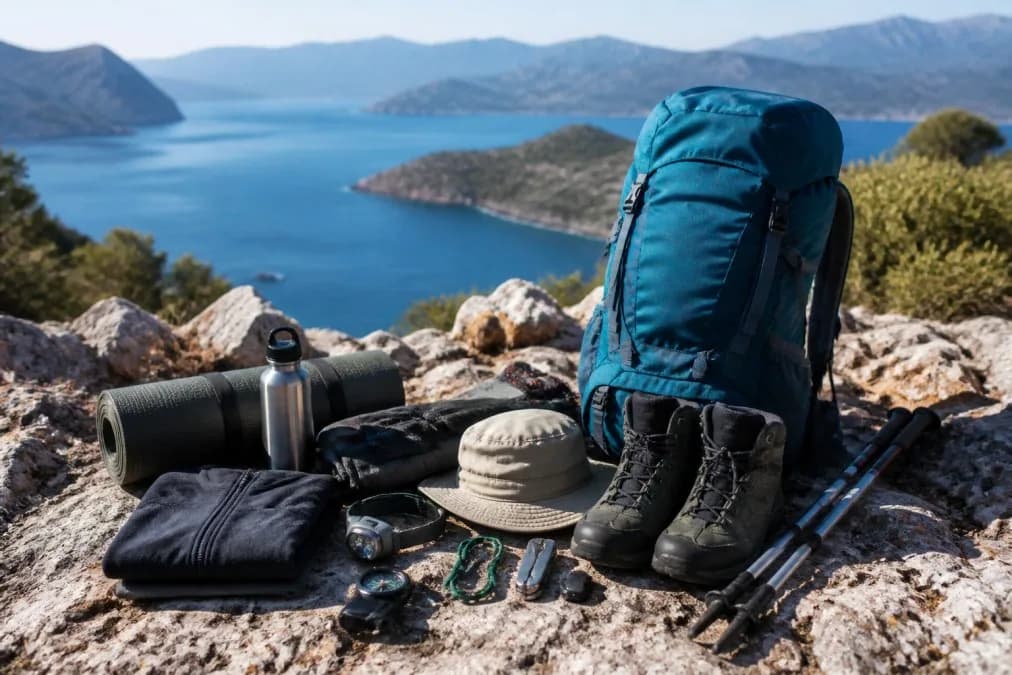
What Gear Do You Need for the Lycian Way?
This guide sorts everything you'll need on the trail's tougher stages into categories. It covers the layering system experienced walkers swear by, what to look for in boots and why safety kit matters, and gives you a practical checklist to read before you take your first step. Prime Turist doesn't organise walks on the Lycian Way; this guide is for walkers planning their own trip.
The Best Footwear for the Lycian Way
Footwear is the most important item on your Lycian Way kit list. The trail is full of sharp, stony paths, loose scree and slippery limestone, so walking boots with ankle support are a better choice than light running shoes. Ankle support helps prevent sprains on rough ground, while a thick sole softens the jab of sharp stones.
When choosing boots, strike a balance between waterproofing and breathability. In summer, boots with a waterproof membrane can make your feet sweat, while in winter waterproofing is essential. Once you've bought them, wear them for at least 30–40 km at home and on easy trails so they're properly broken in before you hit the path. Starting a long stage in new boots is the most common cause of blisters.
Note: on the high mountain stages the temperature can drop sharply at night. Parts of the Lycian Way climb from sea level to around 1,800 metres, and even in midsummer you can get rain and cold wind up there. Always keep a waterproof jacket and a thin fleece in your pack.
Lycian Way Kit List: Gear by Category
How many days you'll be walking has a direct effect on the size of your pack. The whole trail takes 25–30 days and the most popular section, Fethiye to Kaş (about 180 km), usually takes 8–10 days; if you have less time, you can choose a shorter stretch of 3–5 days. Your kit list will change with the length of the walk, but the categories below are the basis in every case.
Clothing and Layers
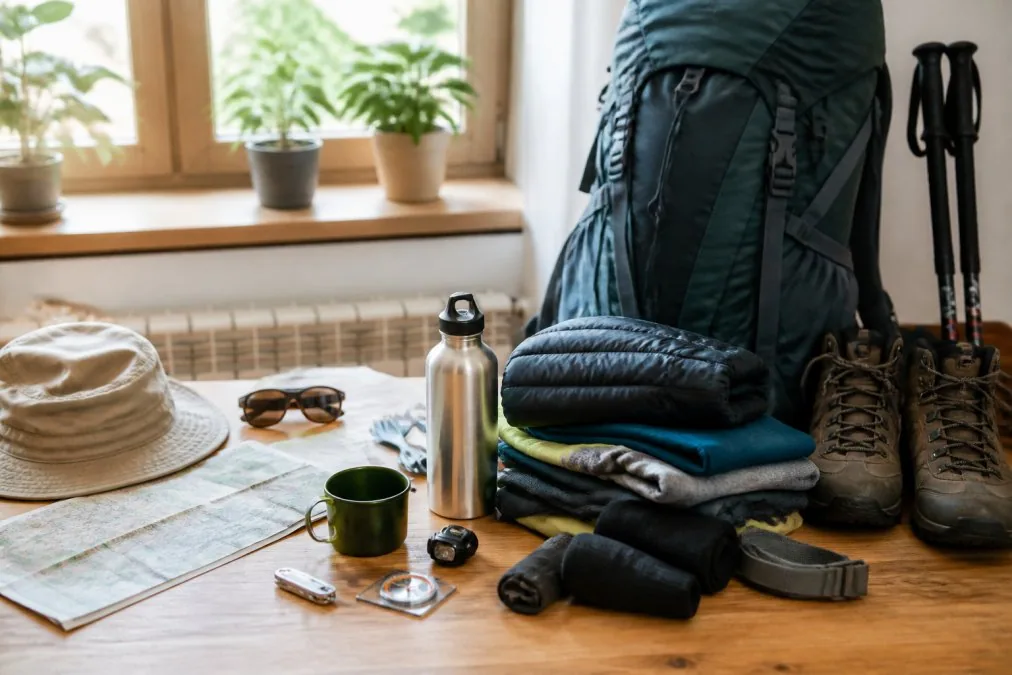
A layering system is the most useful approach of all. Think in three layers: a base layer next to the skin that wicks moisture away, a mid layer that traps heat, and an outer layer that keeps out wind and rain. For the base layer, choose synthetic fabrics or wool rather than cotton: cotton stays wet when you sweat and leaves you cold.
Sun protection is a detail you can't afford to overlook in the Mediterranean climate. A wide-brimmed hat, sunglasses with UV protection and SPF 50 sunscreen protect your skin through long hours in the sun. In winter, a thin beanie and gloves make a real difference on the high passes.
Rucksack and Storage
For day stages, a 25–35 litre rucksack is enough. Make sure it has a hip belt: most of the weight should sit on your hips, with your shoulders just keeping you balanced. A rain cover or dry bags keep your gear dry in a sudden downpour. Your pack should always have room for 2 litres of water.
Water and Food
The distance between water sources along the Lycian Way varies, and on some stages you can go more than 10 km without water. Plan to drink at least 3 litres a day and carry purification tablets or a filter. Water from village fountains is usually drinkable, but mountain springs can carry a risk of bacteria. Nuts, dried fruit and energy bars keep your energy steady between meals.
Safety and Health Kit
Just as important as the best boots for the Lycian Way is your safety kit, which should always be in your pack. A basic first-aid kit should include blister plasters, painkillers and antiseptic. A whistle, a compact torch and a power bank can be lifesavers if you don't reach the end of a stage before dark.
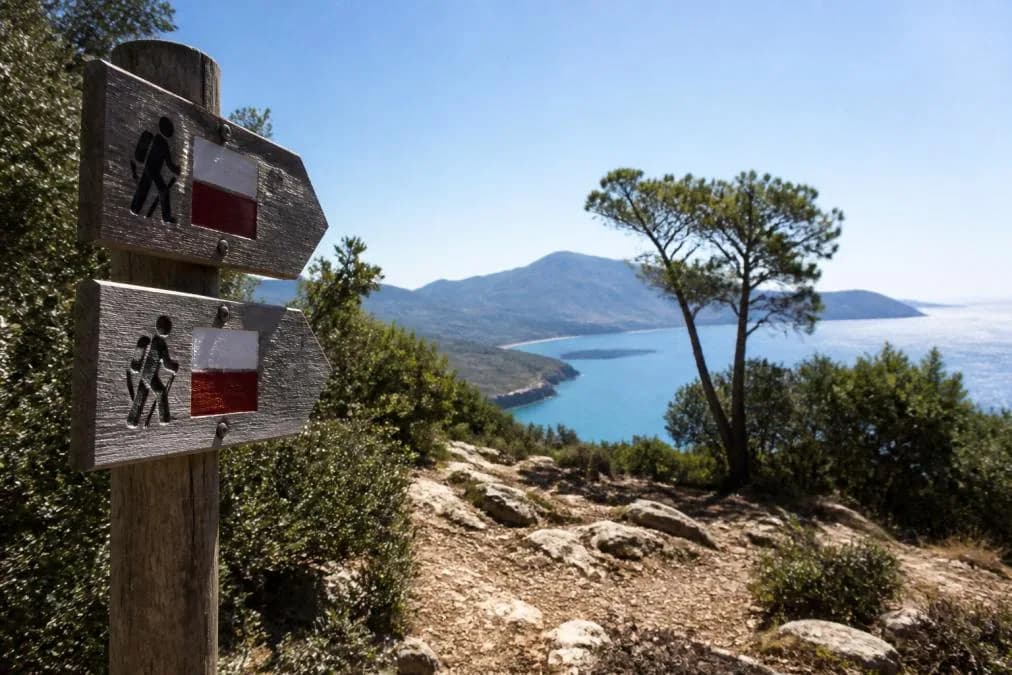
Rather than relying on the waymarks alone, always carry a paper map or a navigation app that works offline. Lycian Way markings can sometimes disappear or point you the wrong way. For the latest on trail conditions, it's wise to ask locally, at your guesthouse or in the villages along the route.
How Long Is the Lycian Way, and What Gear Does That Mean?
How many days you'll walk is the biggest factor in choosing your gear. The whole trail takes 25–30 days, while the popular section between Fethiye and Kaş is usually done in 8–10 days. That difference completely changes how much you carry and where you sleep.
On short sections you can stay in guesthouses and pensions, so there's no need to carry a tent and sleeping bag. On long, independent walks you'll need to add a tent, mat and sleeping bag, which can push your pack above 15 kg. Plan your stages with an up-to-date Lycian Way map or guidebook to pin down exactly what kit you need.
Length of walk · Accommodation · Core kit · Extra kit
1–3 days · Guesthouse · Walking boots, 25–30 L pack, layered clothing · First-aid kit, water filter
4–7 days · Guesthouse + camping · All of the above + sleeping bag · Tent, mat, camping stove
10+ days · Mostly camping · All of the above + full camping kit · Spare battery, bigger pack
Gear for Different Walking Conditions
The gear you need depends on the season and which part of the trail you walk. In spring the paths are covered in wild flowers, but there's a good chance of rain, so waterproof boots and a waterproof jacket are a must. In summer temperatures can go above 35°C; start early in the morning and rest in the shade through the midday heat.
Autumn is an ideal time for the Lycian Way: temperatures are mild and the sea is still warm enough for a swim. In winter there's a risk of snow and ice on the high passes, so stick to the lower coastal stages and carry microspikes. Whatever the season, trekking poles take the strain off your knees and help you keep your balance on steep descents.
Common Mistakes and How to Avoid Them
The most common mistake is planning to walk too far each day. The Lycian Way is a tough trail where even stages that look flat on the map involve serious climbs. Rather than planning 20 km a day, start with 12–15 km and 500–700 metres of ascent, which is far more realistic. The first stages around Fethiye are a good way to test your fitness.
The second common mistake is underestimating how much you need to drink. Drinking at regular intervals, before you feel thirsty, helps prevent heatstroke and dehydration. The third is relying too heavily on navigation devices: your phone battery can die at the worst possible moment. Knowing how to use a paper map and compass is a basic skill every walker should have.
Tip: don't fill your pack 'just in case'. Every extra kilo is felt on your back and knees on long stages. Choose multi-purpose items: a buff, for example, works as a neck warmer, headband and sweat rag all in one.
Conclusion
Choosing gear for the Lycian Way is perfectly manageable when you plan it around the difficulty and length of your walk. With the right boots, a layering system and basic safety kit, you can have an unforgettable time on this historic trail. Prime Turist doesn't run walks on the trail, but our guided day trips from Fethiye make a good addition to your walking days: the Saklıkent Gorge Tour takes in the ancient city of Tlos, and the Kaş & Kalkan Tour visits Patara. With Prime Turist's boat trips you can also see the Lycian coast from the sea. Set off with the right gear and explore thousands of years of Lycian heritage safely.
The right gear is what keeps you safe and comfortable on a demanding trail like the Lycian Way. Alongside your walking, Prime Turist's boat trips, safaris and sightseeing tours around Fethiye can round off your holiday, with a wide choice of tours at good prices. Start planning and discover the unique beauty of Lycia.
Frequently Asked Questions
What kind of footwear should I choose for the Lycian Way? Go for proper walking boots or trekking shoes. They should give extra support on rocky, stony ground, come high enough to protect your ankles, have a non-slip sole and be made of moisture-resistant material. Always test your boots and break them in before the walk: the wrong footwear leads to blisters and sore feet.
How heavy should my pack be on the Lycian Way? Your rucksack shouldn't weigh more than 10–15% of your body weight. For an average adult, 8–12 kg is the ideal range. Leave out anything you don't really need: a heavy pack tires you out faster and increases the risk of injury.
What's the best season for the Lycian Way? Spring (April–May) and autumn (September–October) are the best seasons, with milder temperatures and less rain. March and early November can also work on the lower coastal stages, but rain is more likely. In summer the heat can be extreme, and in winter heavy rain and slippery paths make walking harder.
How do I find water on the Lycian Way? Plan to drink at least 3 litres a day, more in hot weather. Carry as much water as you can and research the water sources on your route in advance, as some sections have none at all. Purification tablets or a filter make the water you find along the way safe to drink.